History of YOSHINO WOOD
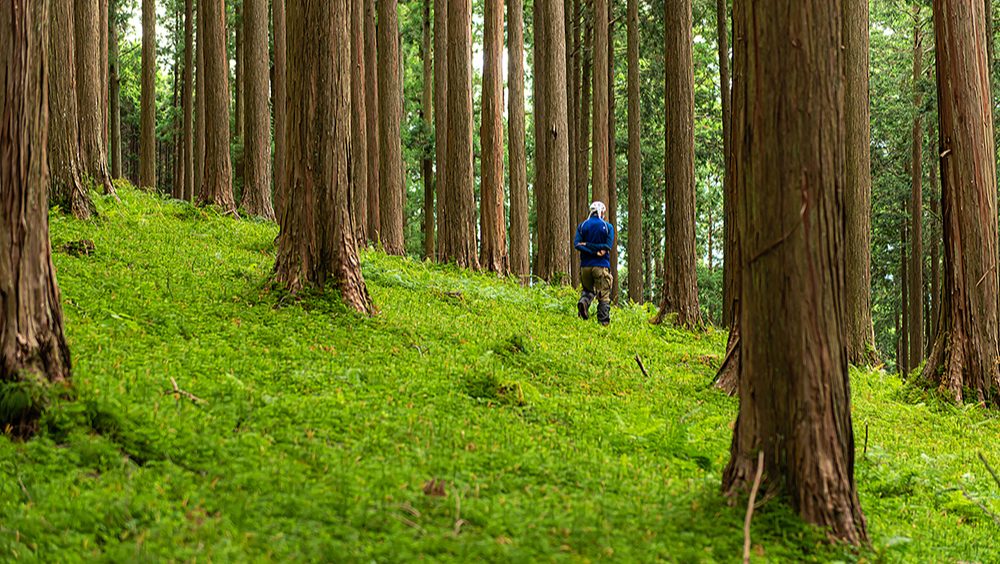
The Yoshino forestry region of Nara Prefecture—encompassing Kawakami Village, Higashiyoshino Village, and Kurotaki Village—has long been known as one of Japan’s leading timber-producing areas. For more than 500 years, this region has practiced a distinctive form of forestry in which forests have been carefully cultivated by human hands.
Yoshino forestry is characterized by techniques such as high-density planting, in which saplings are planted more closely together than in general forestry practices in Japan; repeated thinning, carried out multiple times to regulate the density of the forest without leaving excessive space between trees; and long rotation periods, in which trees are grown for extended lengths of time before being harvested. Through these methods, timber with narrow growth rings, high strength, and beautiful grain has been produced consistently over generations.
Yoshino timber cultivated in this way has been used for a wide range of purposes, including castle construction and materials for sake barrels. As a result, the region has developed as an important timber-producing area that has supported Japan’s traditional culture, architecture, and craftsmanship.
From the 1500s: The Origins of Yoshino Forestry—Forests That Supported Castle Construction
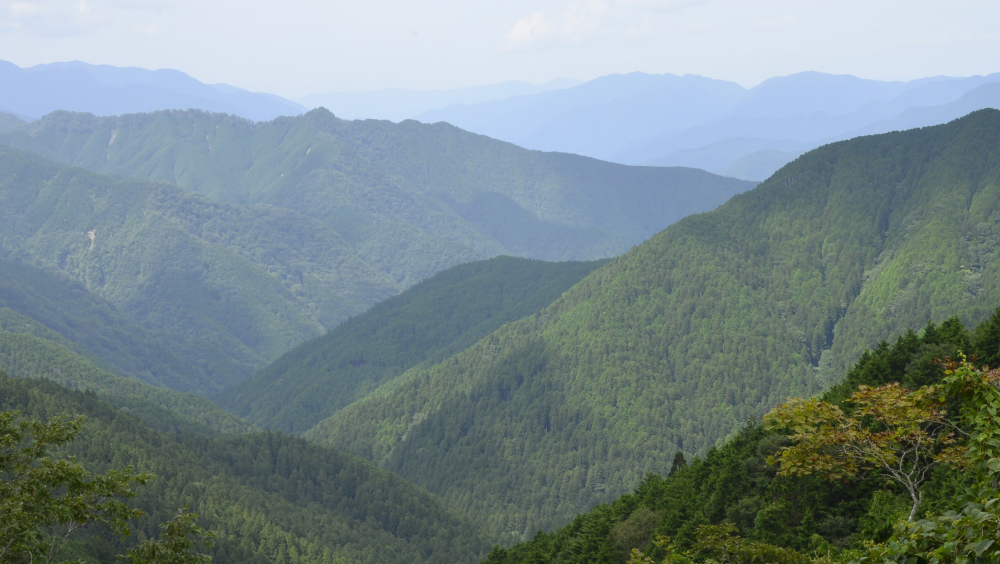
Records indicate that around the year 1500, trees were first planted by human hands in the Yoshino region of Nara Prefecture. Yoshino timber came to be widely used in the construction of Osaka Castle, Fushimi Castle, and temples and shrines under Toyotomi Hideyoshi, the warlord who advanced the unification of Japan in the late 16th century. These achievements enhanced the reputation of Yoshino as a reliable timber-producing region. Even after entering the 17th century, forestry continued to take deep root in the area as a livelihood of local residents.
Yoshino also benefited from its advantageous location along the Yoshino River, which allowed timber to be transported easily to Osaka, then the largest center of timber consumption. The development of river transport, in which felled trees were floated downstream and assembled into rafts, created a stable system for supplying mountain timber to urban areas. This system promoted the commercialization of timber and forest products and supported the development of advanced forest cultivation practices.
Around the early 18th century, the Yoshino region also established a distinctive system known as the yamamori system*, in which specialized caretakers managed forests over the long term on behalf of landowners. This system has continued to the present day. The presence of such well-organized structures for producing high-quality timber is one of the defining characteristics of Yoshino forestry.
*Related article:Interview with Two Contemporary Forest Owners: A New Form of Forestry to "Protect the Mountains"
From the 1720s: The Expansion of Yoshino Forestry Through Sake Barrel Production
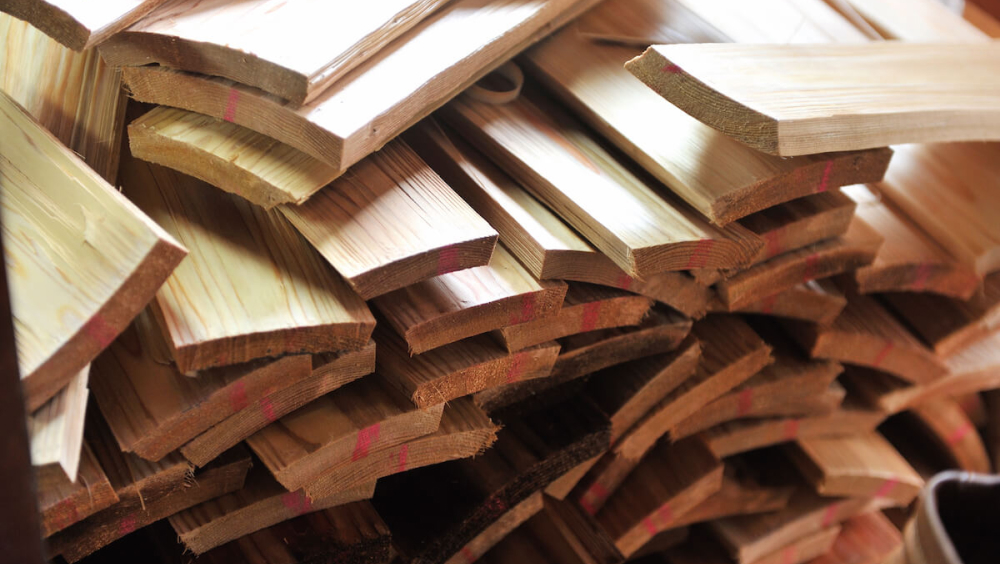
From the 1720s onward, the production of tarumaru —wooden staves used to make sake barrels—expanded in the Yoshino region, marking a new phase in the development of local forestry. At the time, sake barrels were highly valued as containers because damaged parts could be replaced individually, allowing them to be used for long periods. Yoshino cedar was ideally suited for this purpose, as it had few knots, fine and uniform growth rings, and excellent resistance to water leakage.
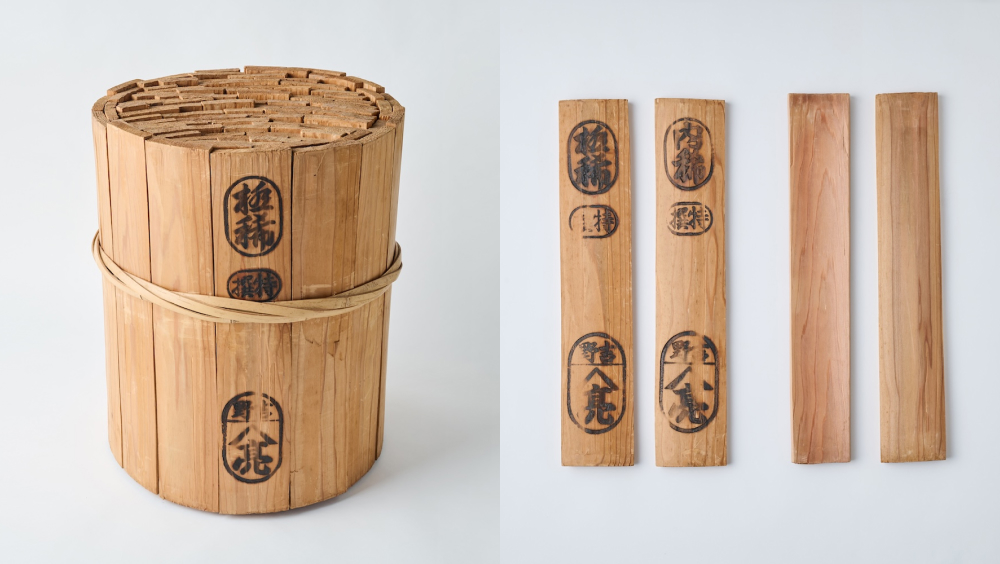
Sake stored in barrels made from Yoshino cedar was transported by ship to Edo (present-day Tokyo). During this journey, the sake absorbed the subtle fragrance of the cedar, giving it a distinctive aroma and flavor that was highly appreciated by the people of Edo. As demand for this high-quality sake increased rapidly, the Yoshino region grew into an important production area supporting Japan’s sake culture.
In response to this growing demand, the Yoshino region further refined its distinctive forestry practices. Trees were planted densely to encourage straight, slender growth, repeatedly thinned over time, and cultivated over long periods. Through this process, a highly developed system of forest management was established, supporting the continued production of high-quality timber.
From the 1860s: Yoshino Timber Becomes a Core Material for Architecture
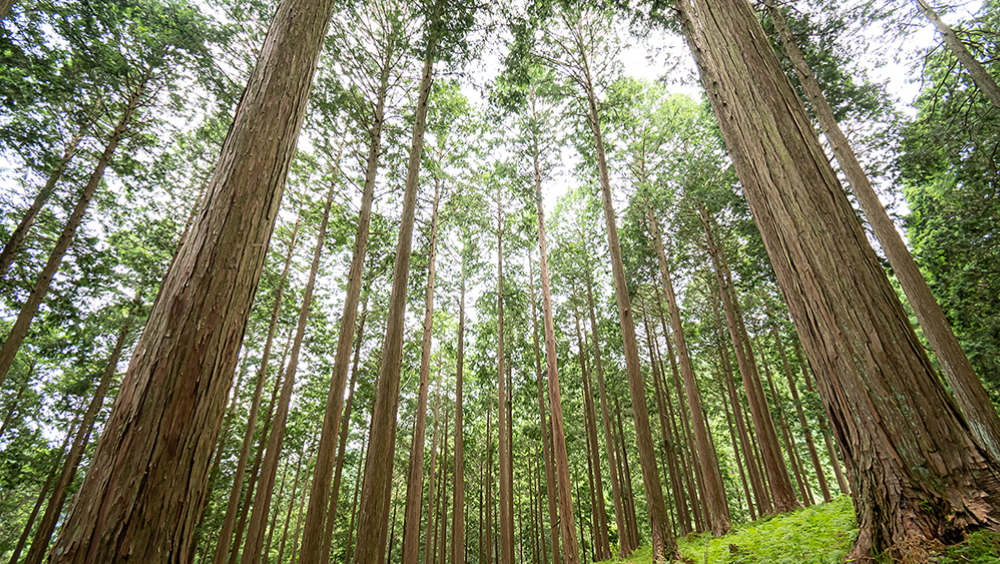
Around the time of the Meiji Restoration (1868), Japan experienced a rapid increase in timber demand driven by modernization. At the same time, the lack of established forest conservation systems led to widespread overlogging across the country. In contrast, the Yoshino region continued its long-standing practices of long-rotation forestry—cultivating trees over extended periods—and systematic reforestation. As a result, planned production forests of cedar and cypress steadily expanded.
During this period, the production of migaki-maruta—polished round logs finished by carefully smoothing their surfaces—also began on a limited scale. As society changed, Yoshino timber came to be used in increasingly diverse ways, adapted to a wide range of purposes.
In 1939, the Yoshino Timber Storage Yard (Yoshino Chobokujo) was established in Yoshino Town as a facility for the temporary storage and trading of timber. Surrounding this facility, the Yoshino Wood Industry Complex developed, bringing together processing, drying, and sawmilling functions. This marked a significant step toward the modernization of the region’s timber production system.
Around 1940, in response to changes in societal demand for wood, production shifted from barrel staves to architectural timber, such as posts and structural members. Shorter rotation periods were also introduced, representing a major turning point as Yoshino forestry adapted to the growing demand for housing.
From the 1970s to the Present: The Yoshino Forestry Region Responds to Diverse Architectural Needs
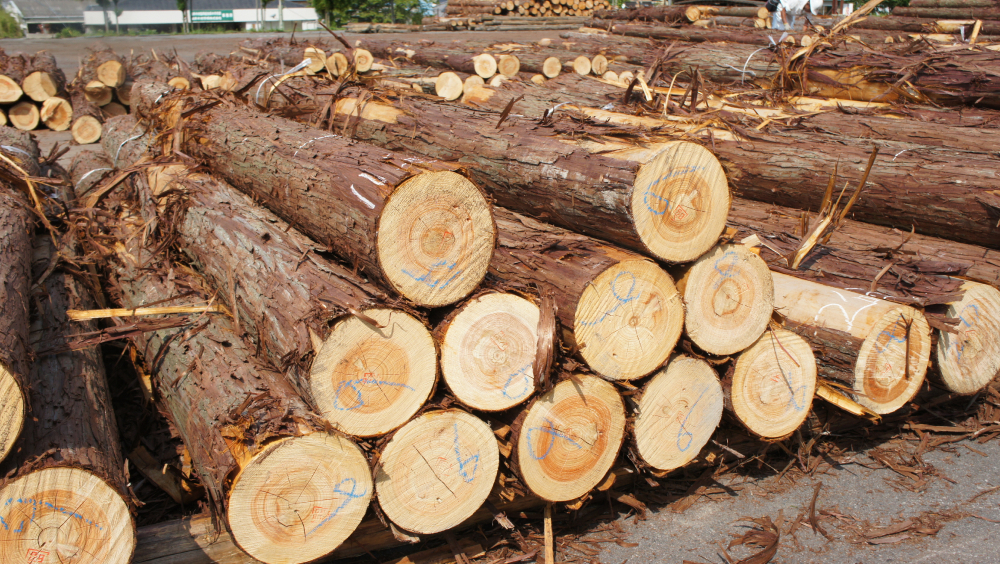
From the 1970s onward, Yoshino timber gained nationwide recognition for its uniformity and high quality. Timber prices rose, and the brand value of Yoshino timber increased significantly. In the 1980s, further changes in the market—such as the growing demand for engineered wood products—led the Yoshino forestry region to establish a foundation as a production area capable of responding to an increasingly diverse range of architectural needs, a role it continues to fulfill today.
At the same time, however, new challenges have emerged in recent years, including a decline in the number of forestry workers and delays in reforestation. These issues have underscored the importance of sustainable forest management. In response, the Yoshino region continues to address contemporary challenges while inheriting and building upon the forest stewardship philosophies cultivated over its long history.