Yoshino Forestry and Its Traditions
Tools
This section presents forestry-related tools used in the southern region of Nara Prefecture, including Yoshino District and nearby areas, along with tools used in the manufacture of forest products.
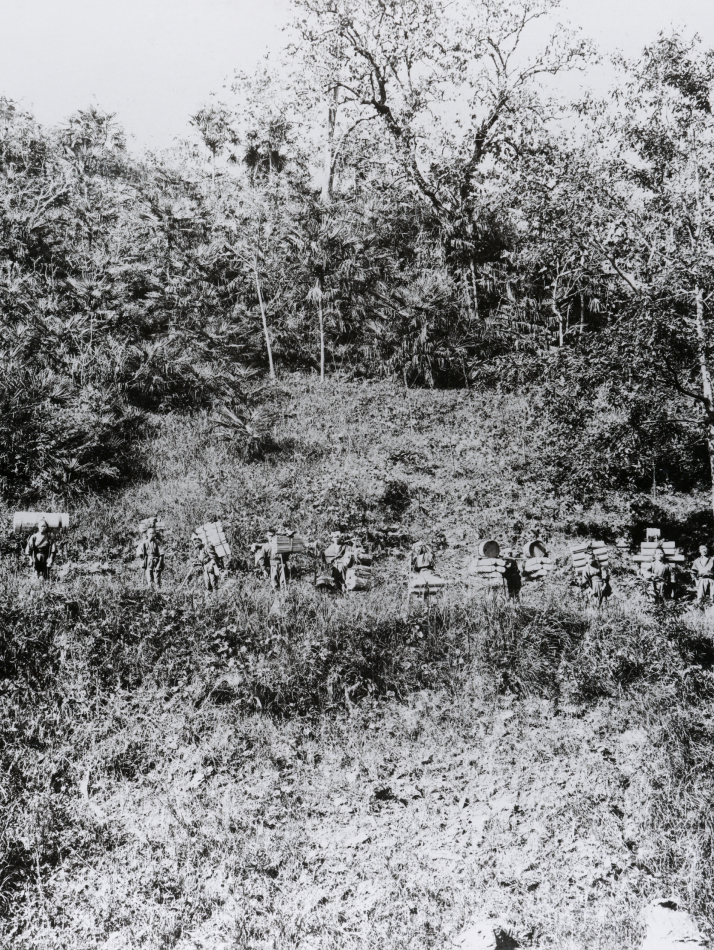
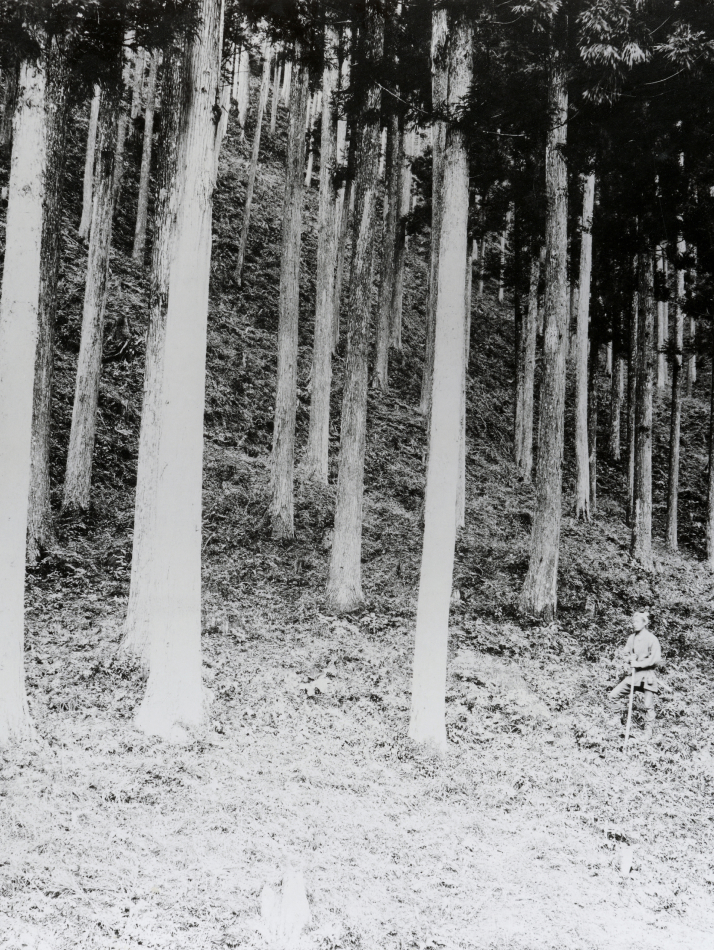
The development of Yoshino’s distinctive forestry was shaped not only by the people engaged in forestry, but also by the wide variety of tools they used. At the same time, refined woodworking techniques that made use of local resources were cultivated, giving rise to a unique regional culture.
This section introduces a range of forestry tools—including those used for sawing, processing, felling, and transporting timber—that were employed in the southern part of Nara Prefecture, particularly in Yoshino District and its surrounding areas. It also presents tools used in the production of forest-based products such as barrel components and chopsticks.
Cut
-

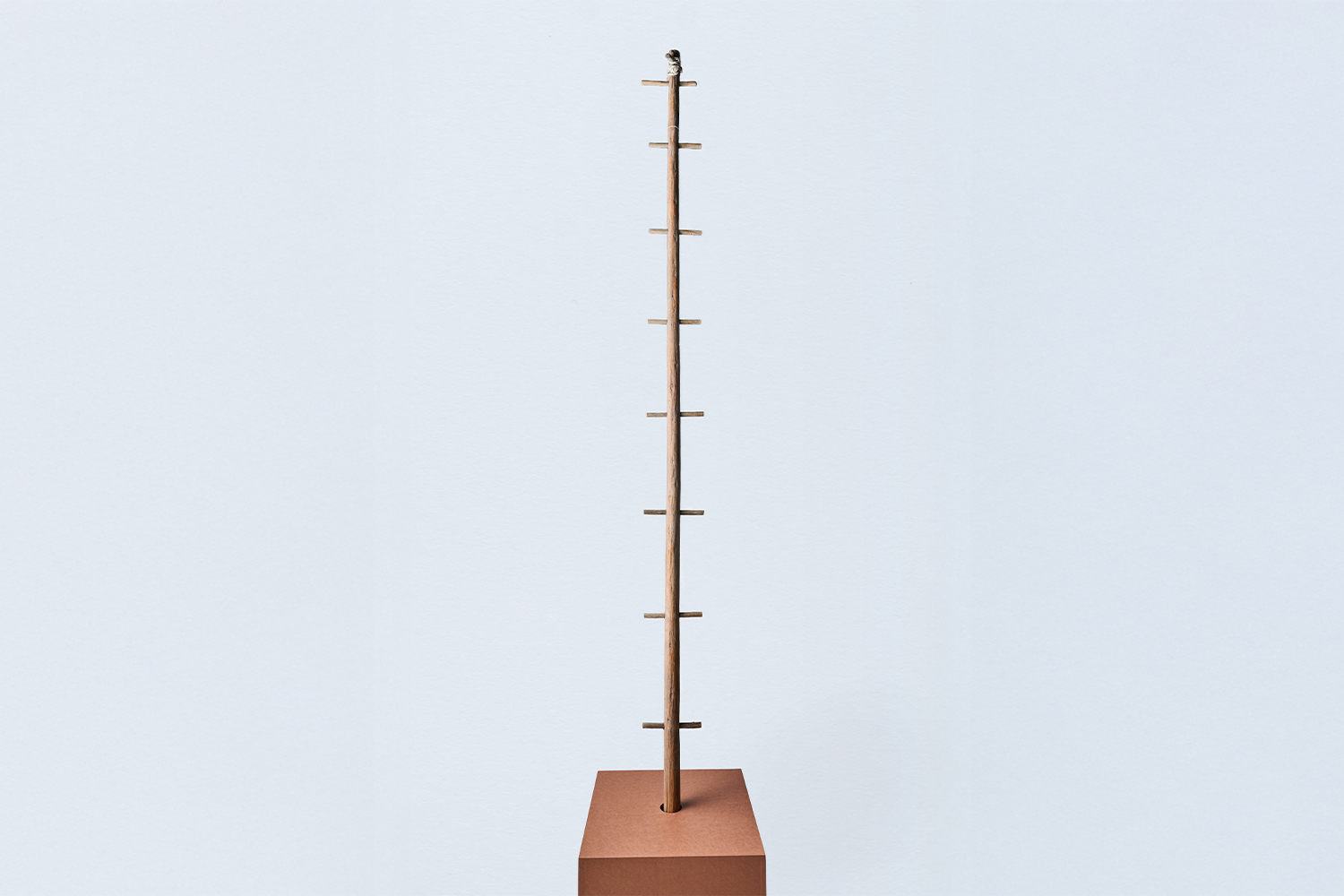
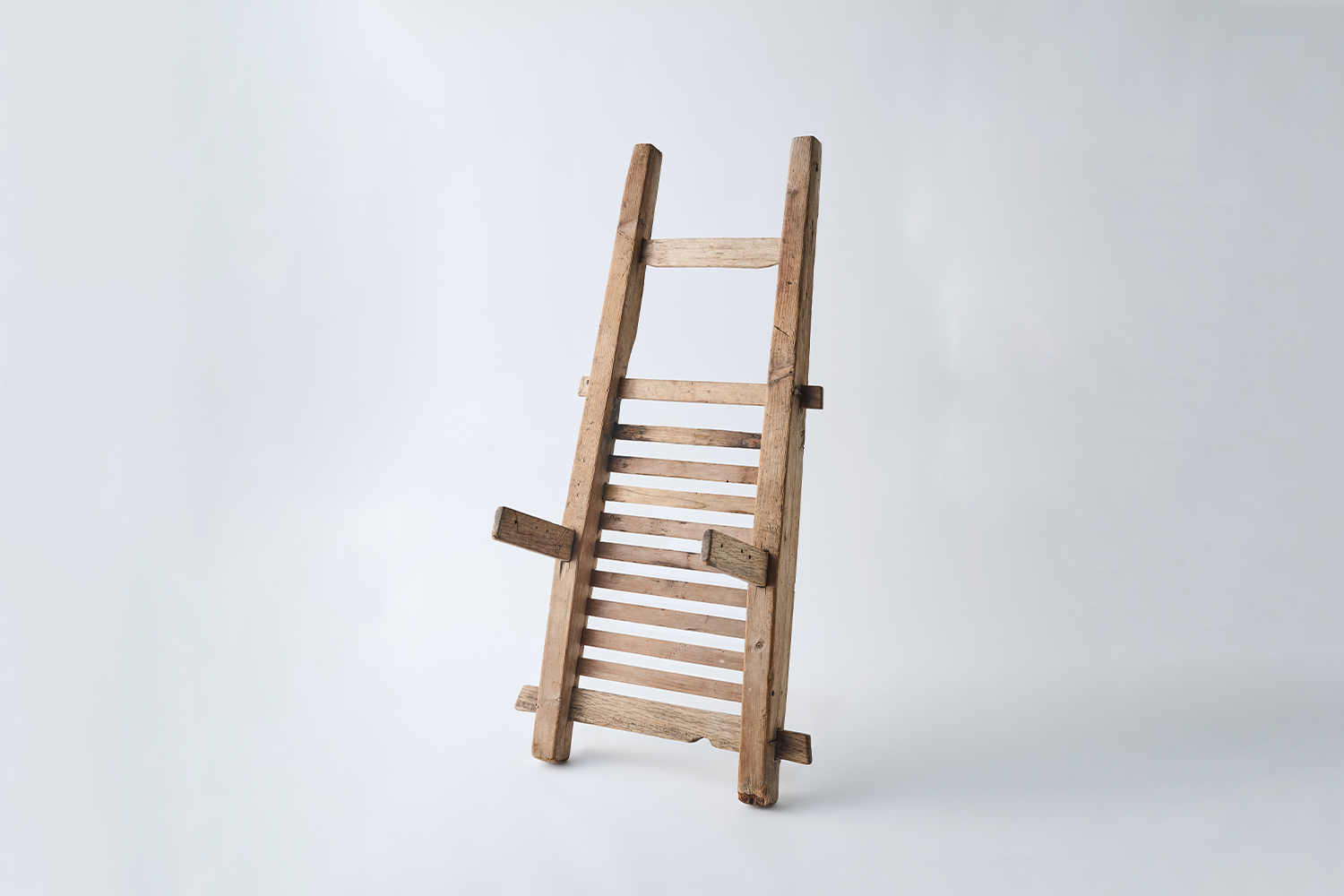
Edauchi-bashigo
A type of ladder used as scaffolding when cultivating Yoshino cedar and Yoshino cypress, specifically for pruning lower branches. It is also known as a mukade-bashigo (centipede ladder).
Place Collected:Shimoichi Town, Yoshino District
-
Onoko
A traditional saw used for felling trees. Its blade has finely arranged teeth and is designed to be held at a right angle to a standing tree, allowing the user to cut across the wood grain by slicing through the fibers.
Place Collected:Oto Village, Yoshino District
-
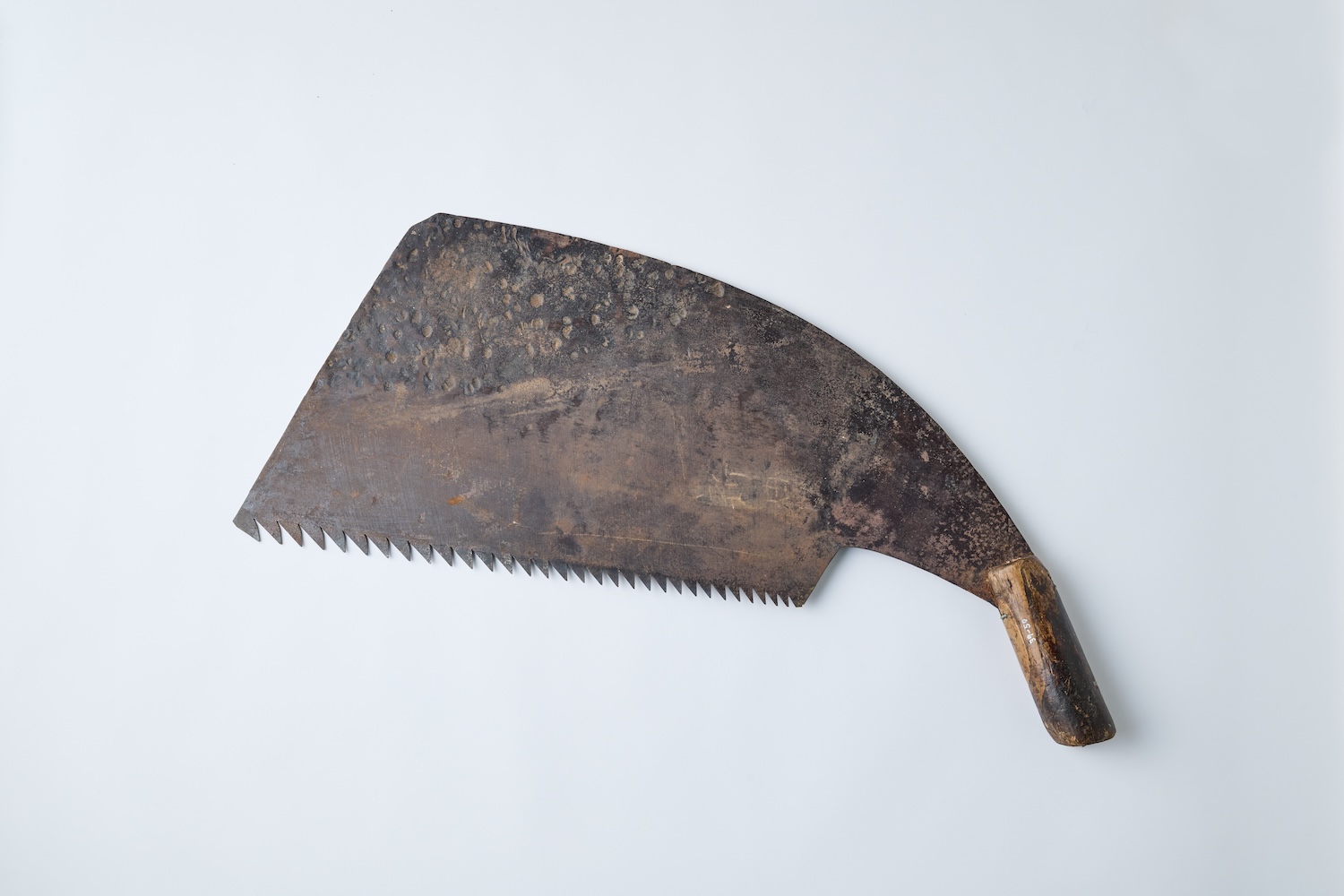
Maebiki Nokogiri
A saw used to produce planks from logs. The blade is applied vertically from the cut end of the wood and used to process the timber lengthwise. It is made wide and heavy so that it can cut in a straight line with stability.
Place Collected:Nishiyoshino Village, Yoshino District
-
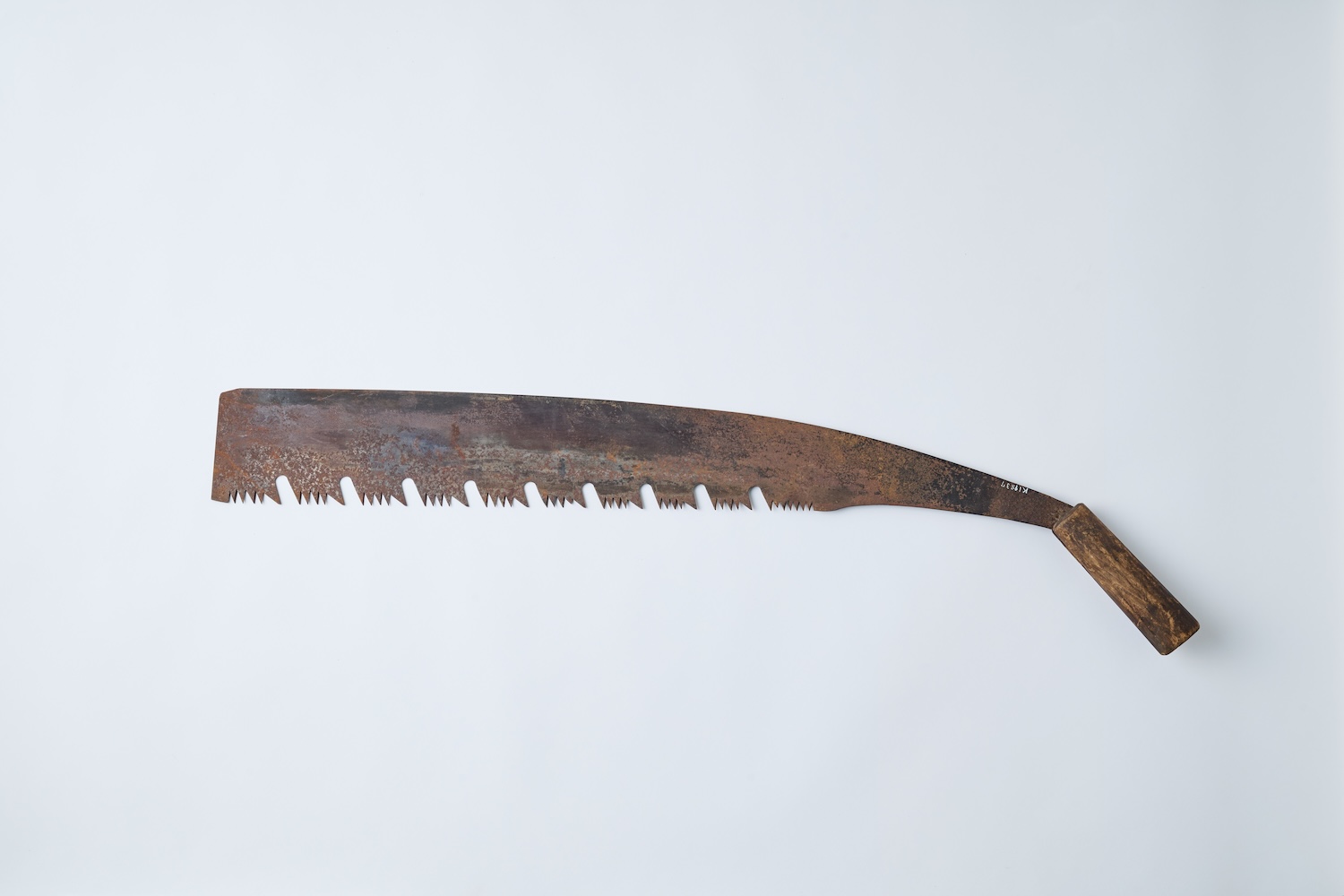
Nekiri Noko
A saw used for felling standing trees and for cutting felled logs into smaller pieces. This tool, also known as a kairyo-noko (improved saw), features several large grooves that help remove wood chips that accumulate during cutting.
Place Collected:Oto Village, Yoshino District
-
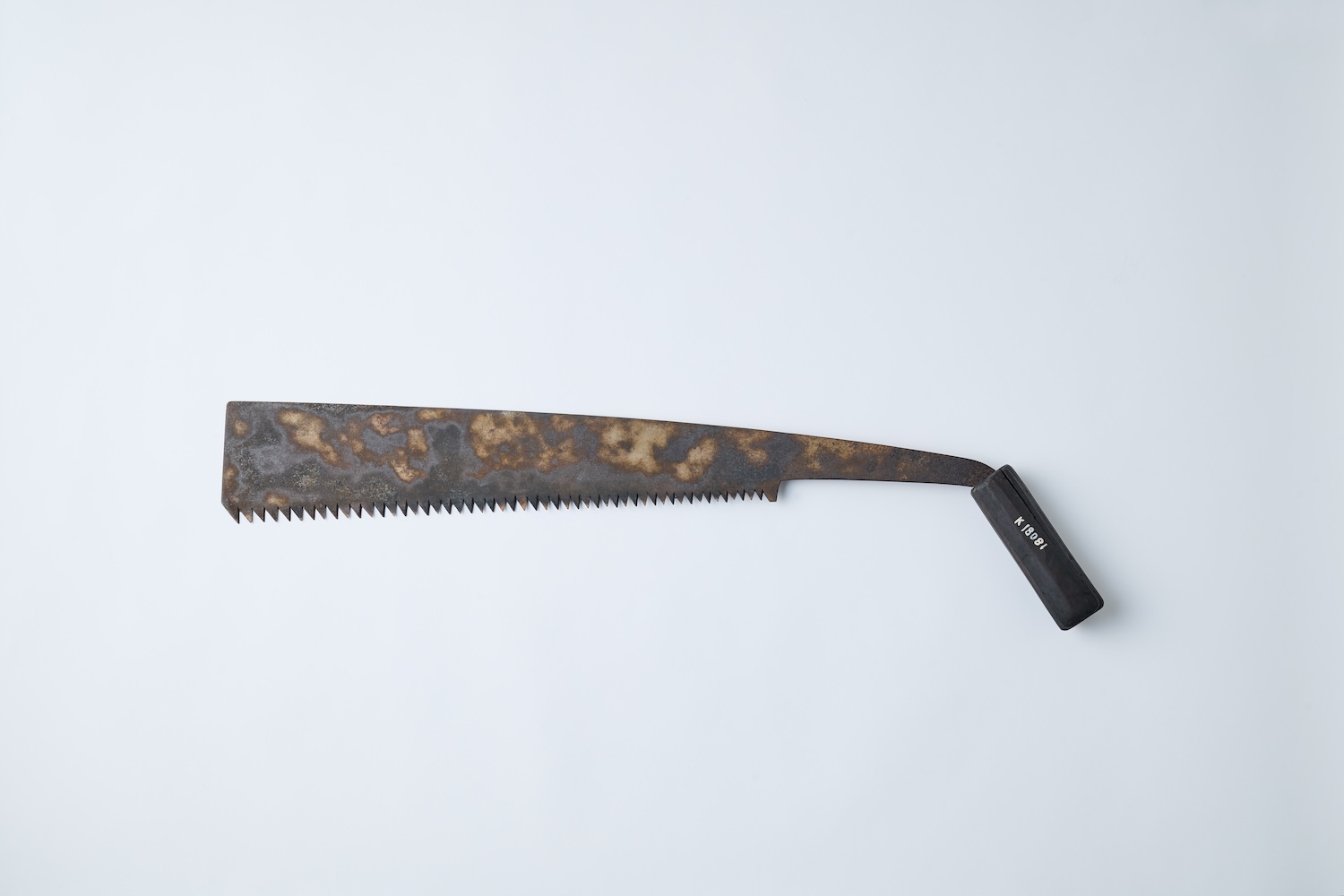
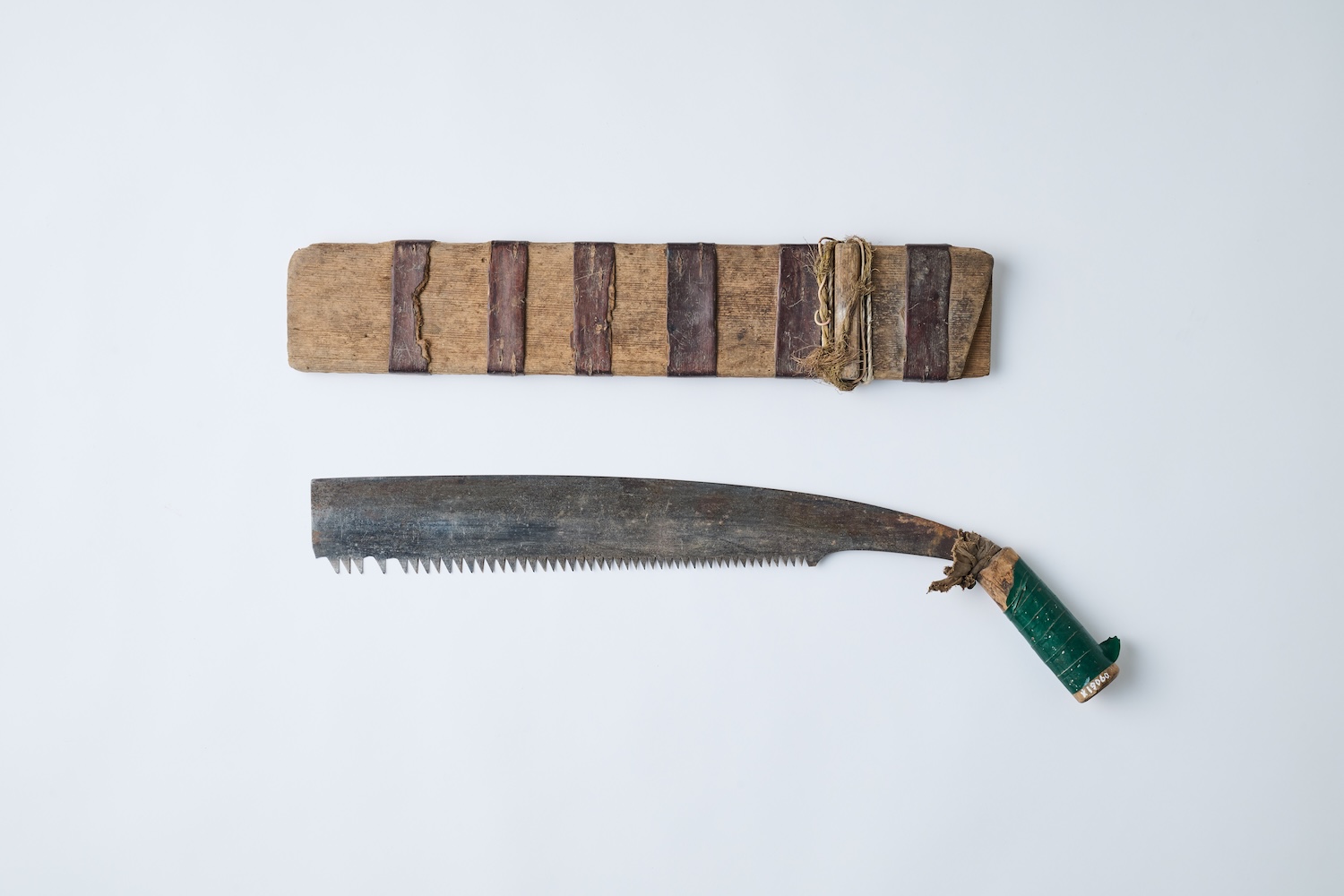
Koshi Noko
A small saw carried at the waist when entering the mountains, used for cutting branches from felled trees or removing branches that obstruct paths. Designed with portability in mind, it is stored in a box-shaped sheath to ensure safety even if it is bumped.
Place Collected:Kawakami Village, Yoshino District
-
Somayoki
An axe used when processing logs into squared timber, specifically for cutting away the corners of a round log. In some cases, the user would stand on top of the log and trim off its edges. It is generally also known as a hatsuriyoki.
Place Collected:Kawakami Village, Yoshino District
-
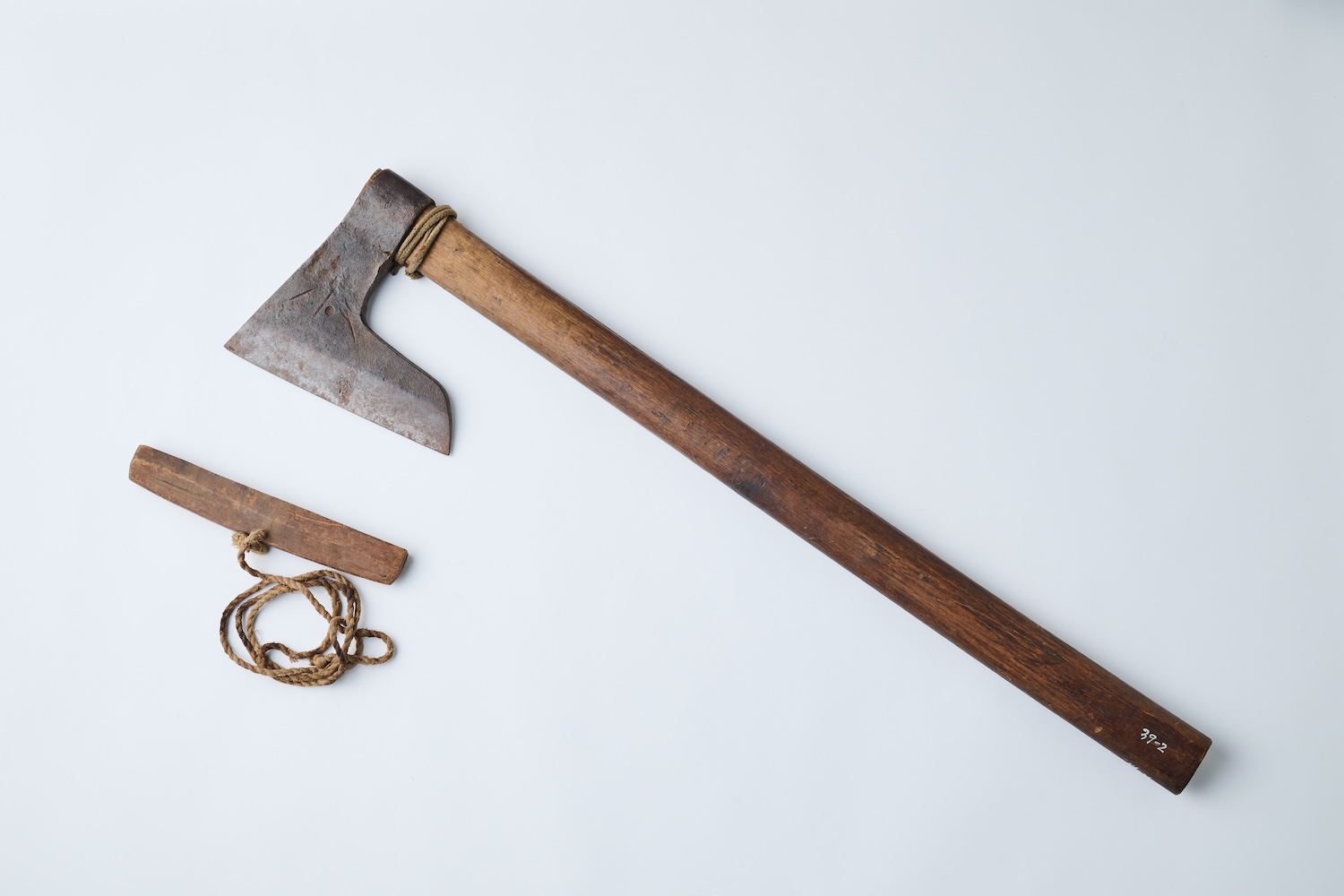
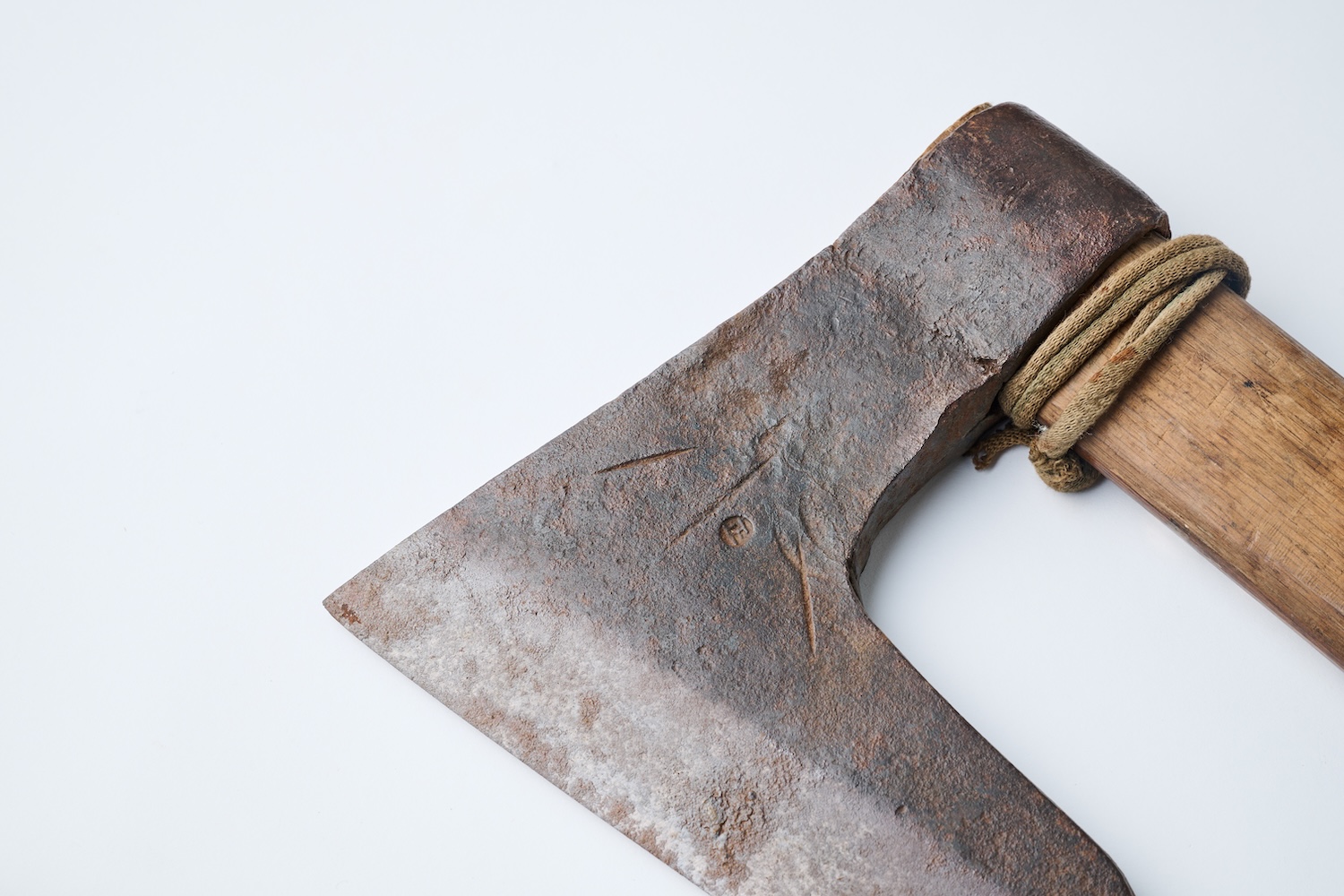
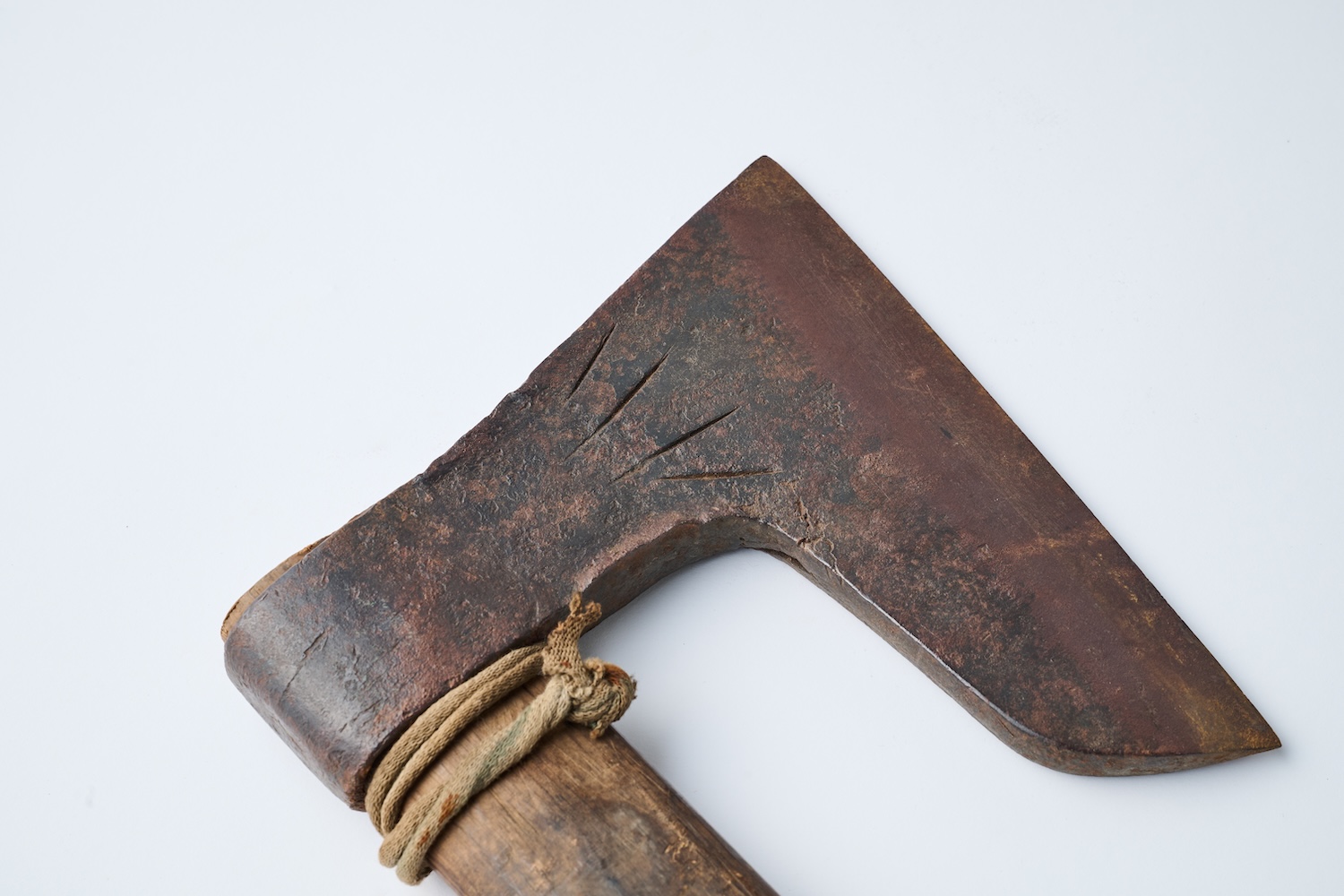
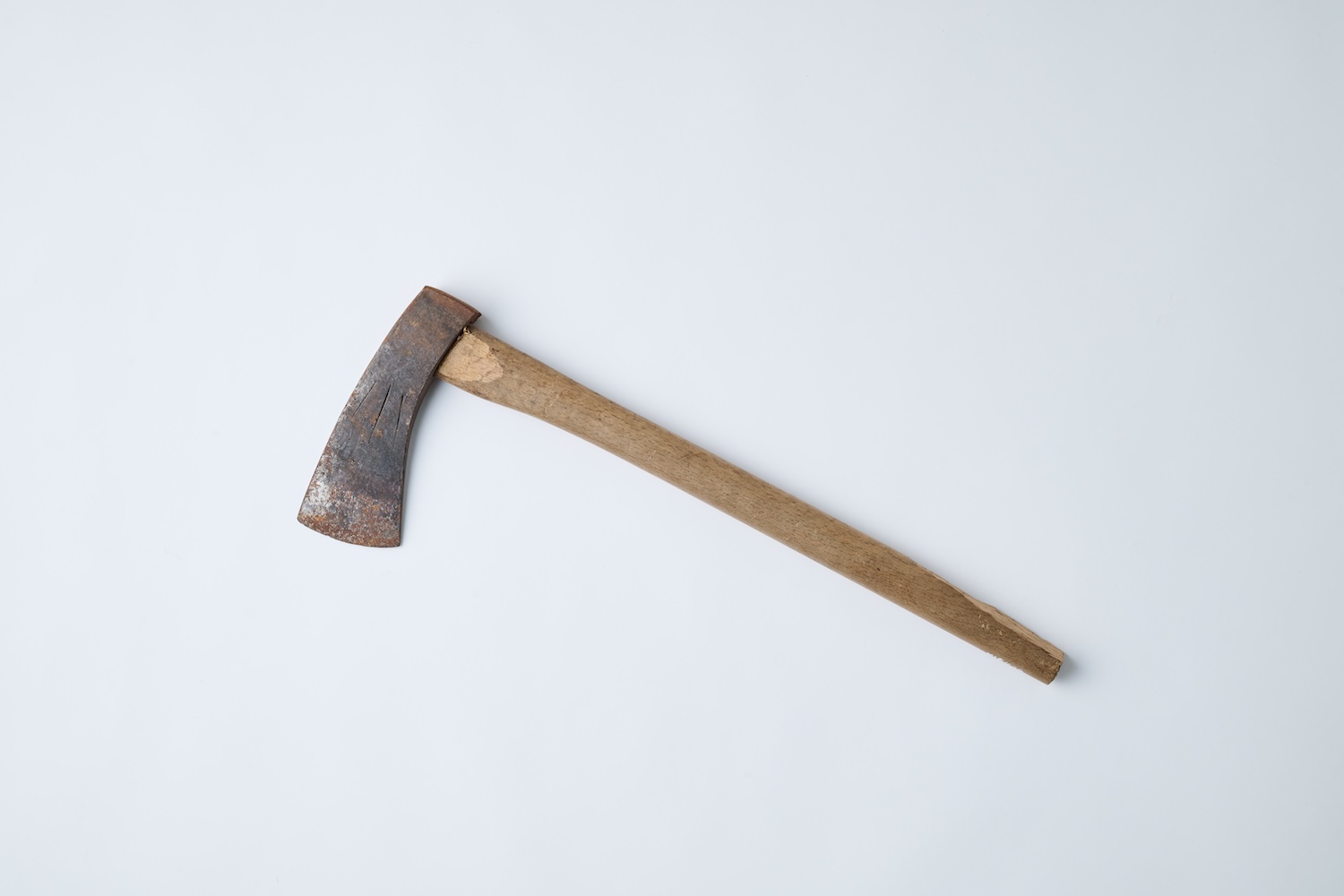
Kiriyoki
An axe used when felling trees. It is struck into the tree from the direction in which the tree is intended to fall. Finally, the user moves to the opposite side and uses a saw to complete the felling.
Place Collected:Oto Village, Yoshino District
-
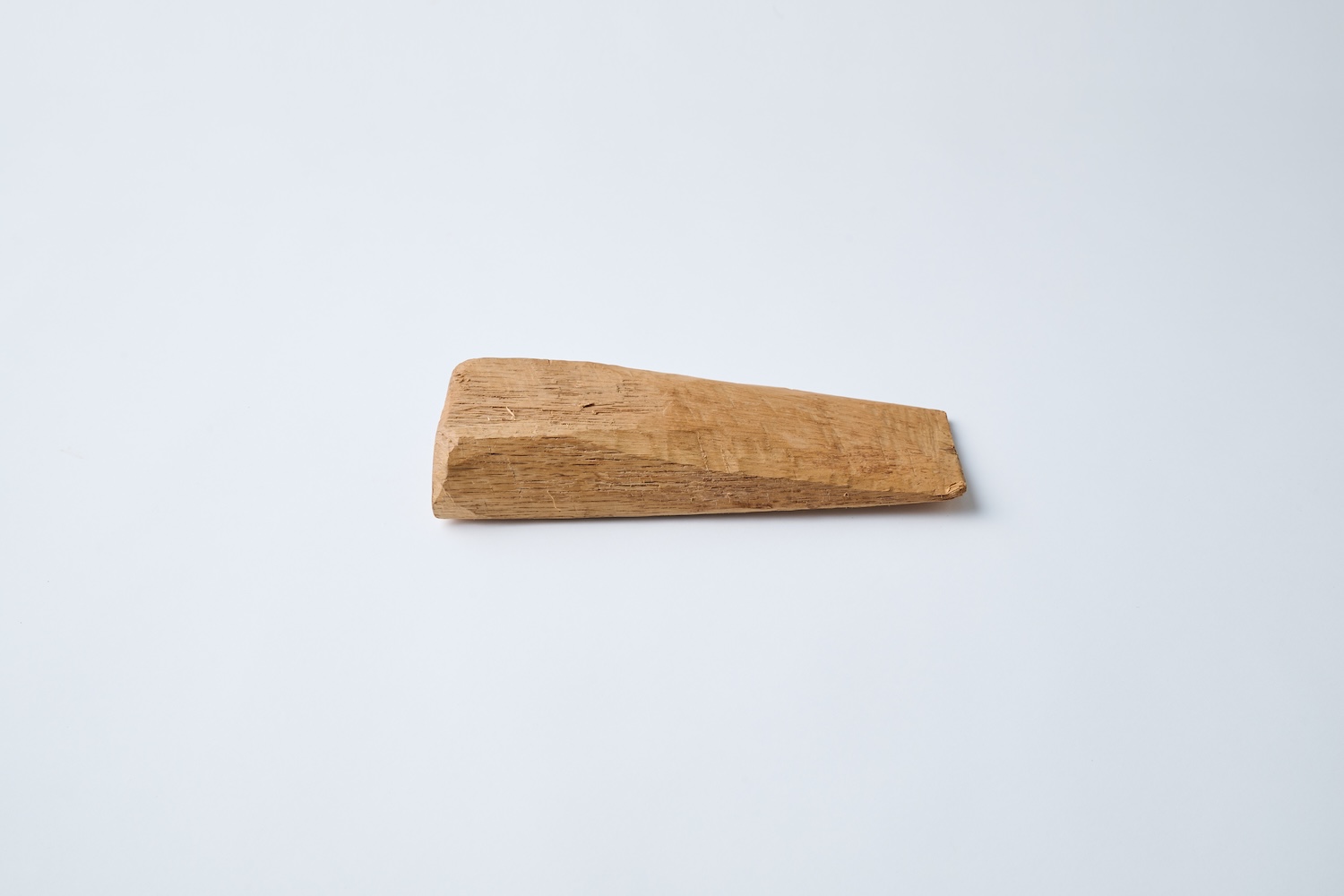
Ya (Wedge)
A tool inserted into the cut made by a saw when felling a tree. It helps control the direction in which the tree falls and prevents the saw from becoming pinched by the weight of the wood. It is made of hard oak.
Place Collected:Kurotaki Village, Yoshino District
Carry
-
Oiko
A carrying frame used to transport thin wooden sheets (kyogi) made in the mountains by carrying them on the back.
Place Collected:Nosegawa Village, Yoshino District
-
Ikizue
A support stick used when carrying an oiko. By placing it under the oiko and leaning body weight against it, the carrier could rest without removing the load from their back.
Place Collected:Nosegawa Village, Yoshino District
-
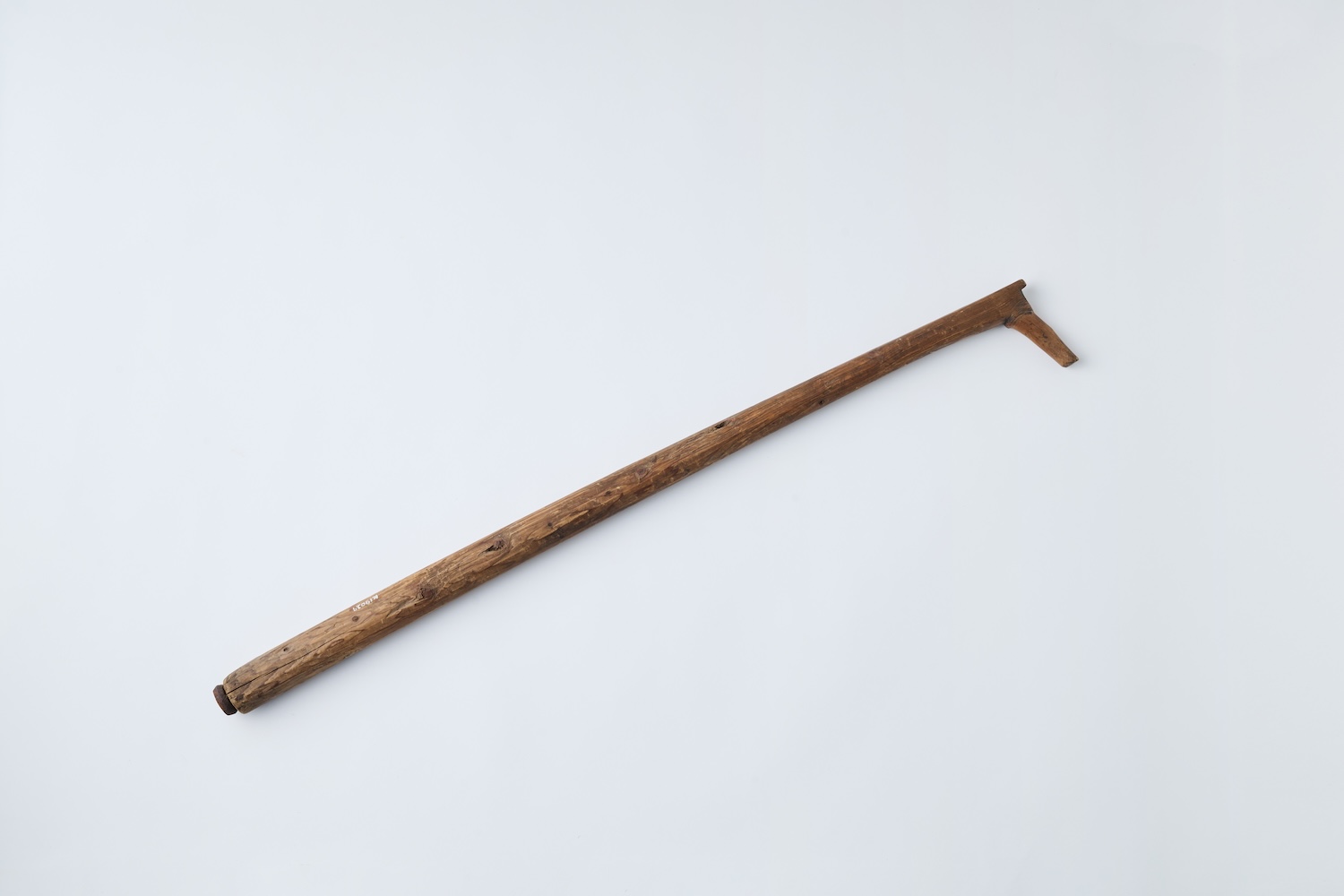
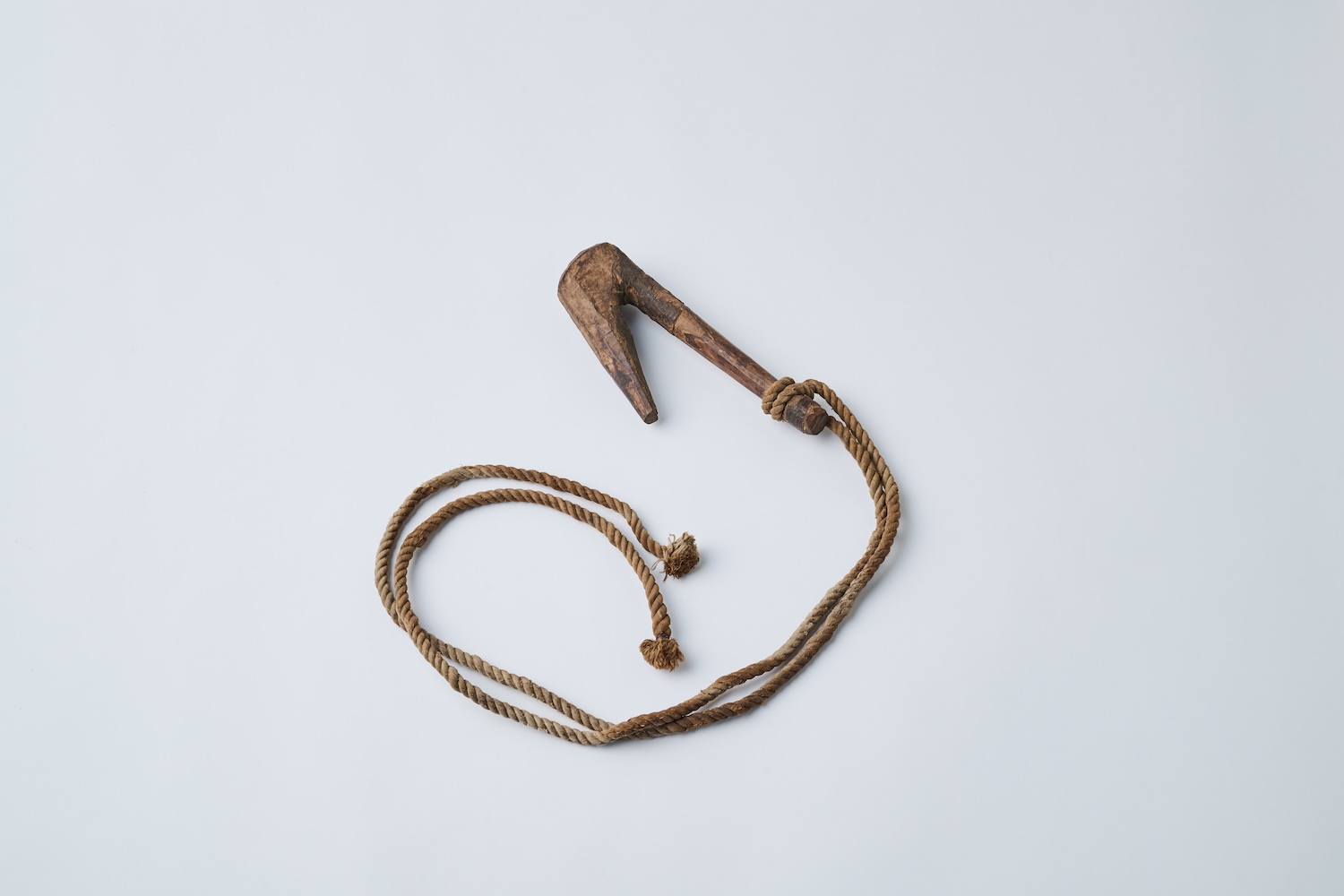
Kagi (Hook)
A wooden hook used with a tobashi (also called yaen), an elevated wire line. Timber, charcoal bales, or firewood were hung on the wire and slid along it for transport.
Place Collected:Kurotaki Village, Yoshino District
-
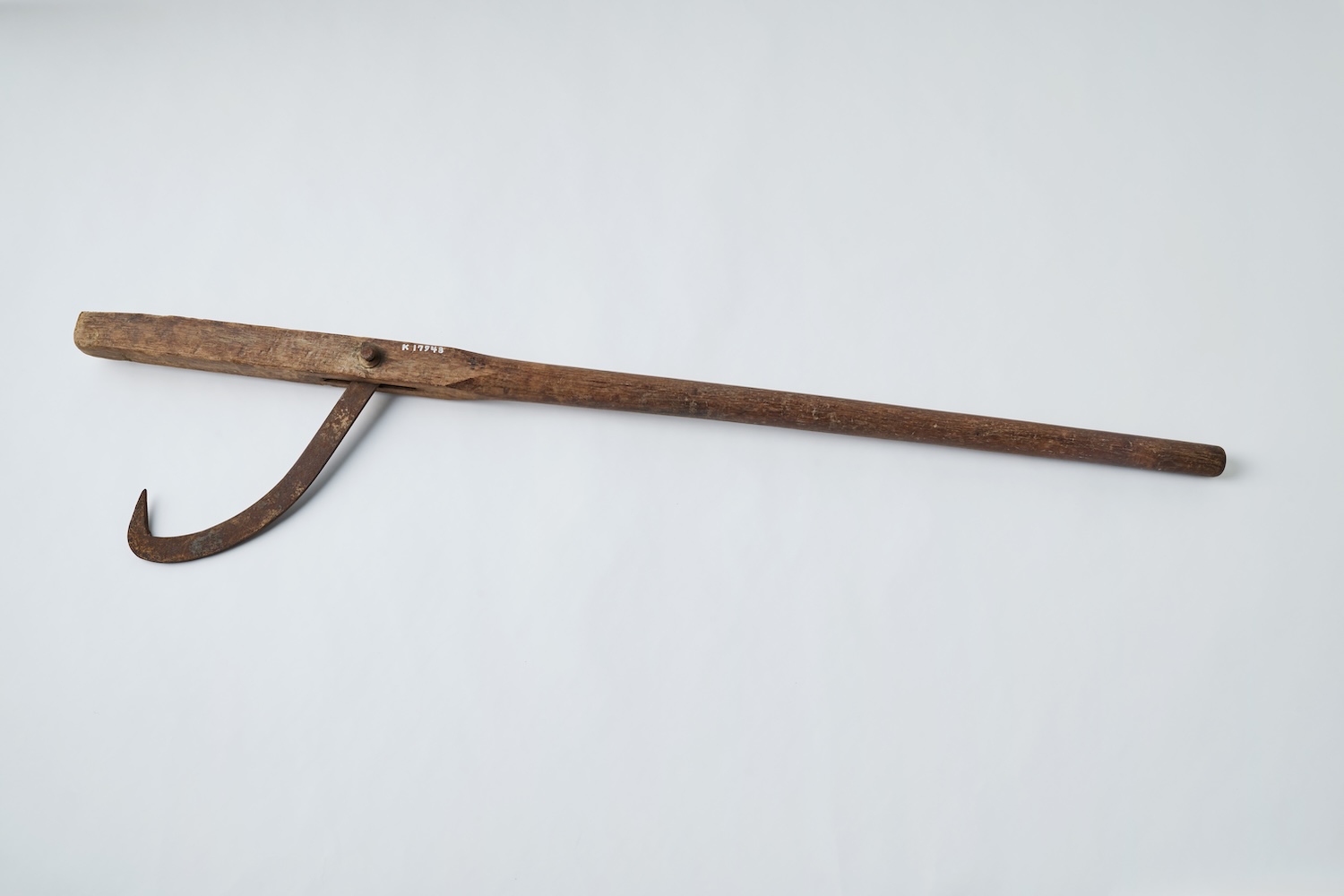
Kimawashi
A tool used to move timber by hooking its metal tip onto the wood and using leverage to change the direction or position of the log.
Place Collected:Kurotaki Village, Yoshino District
Make
-
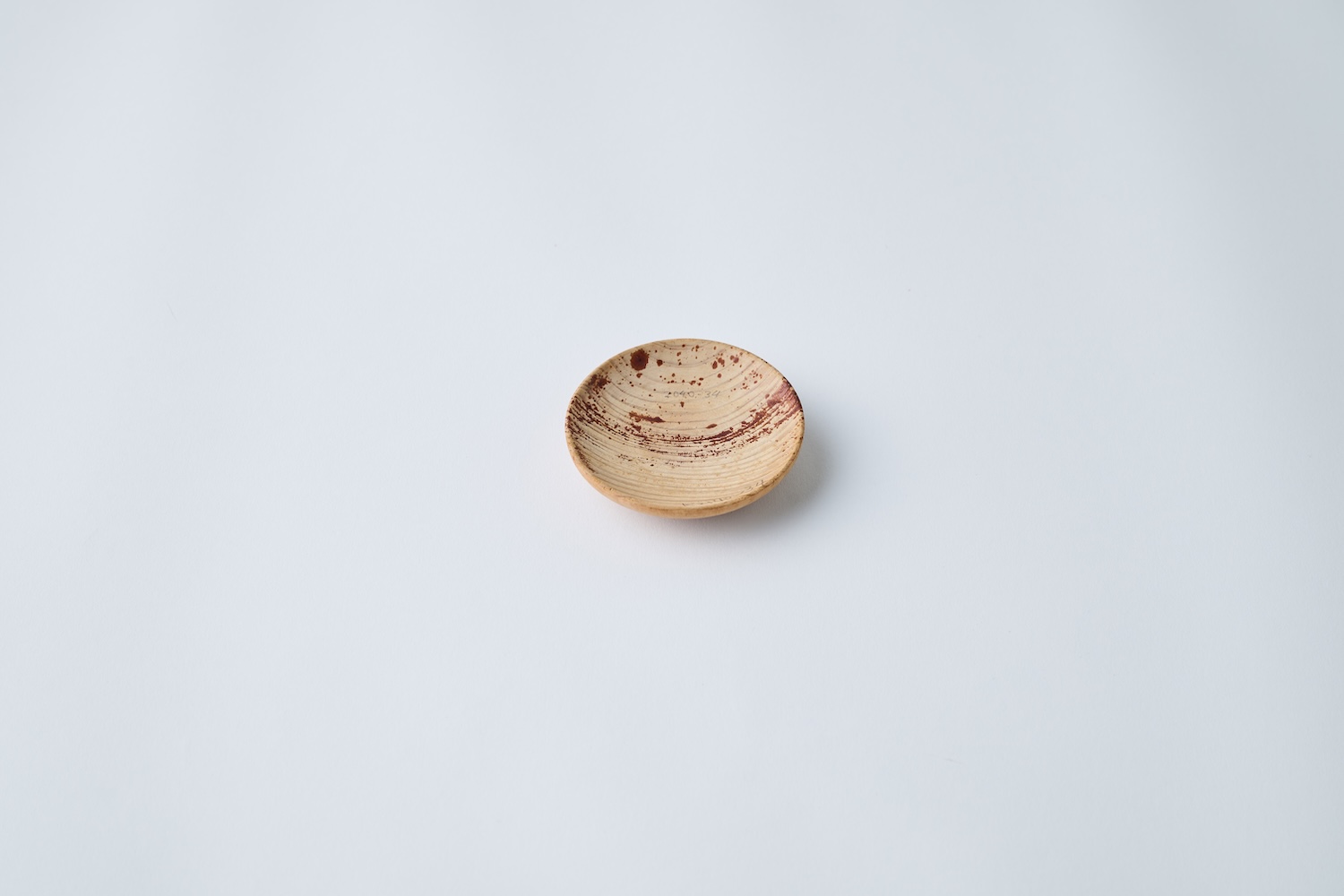
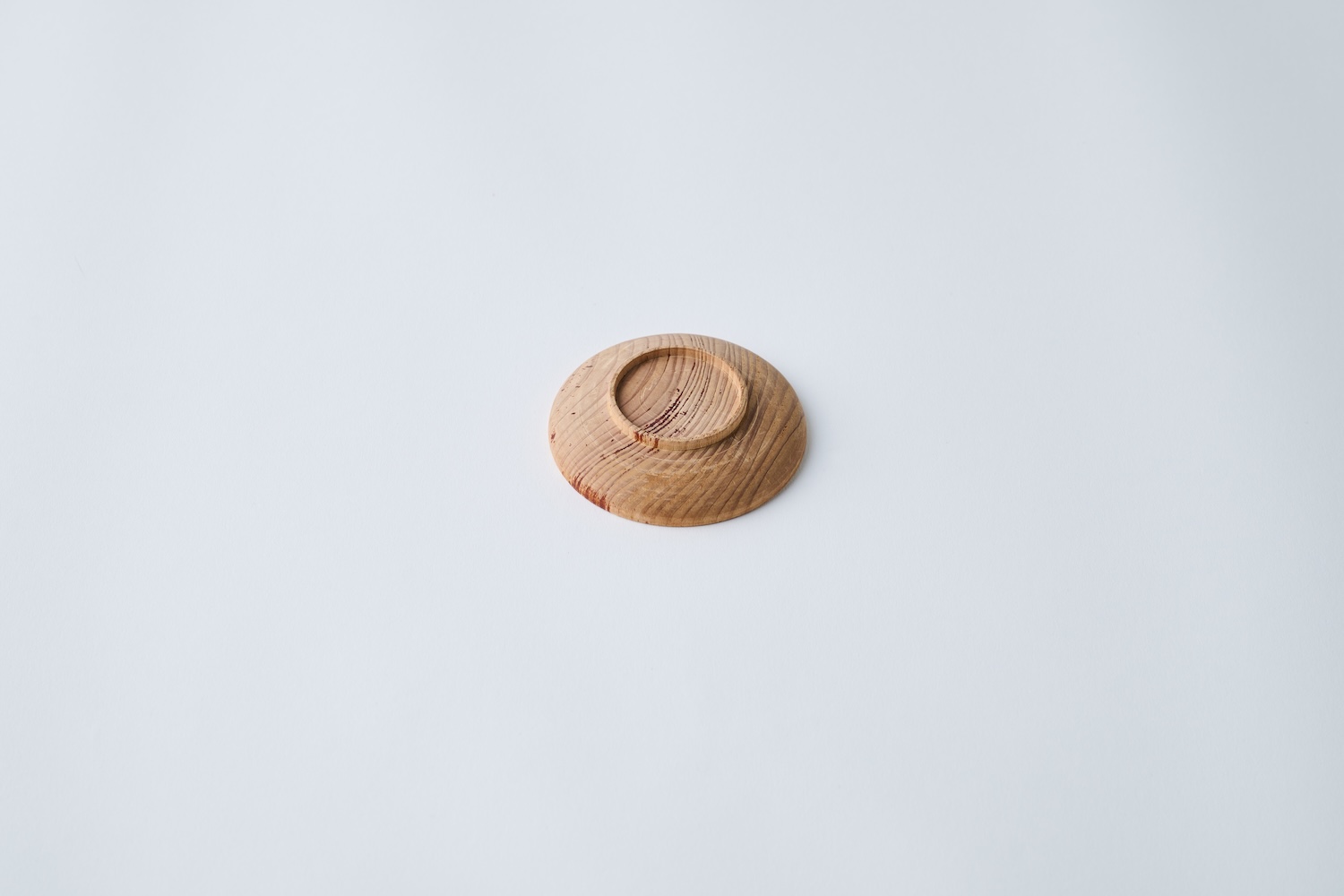
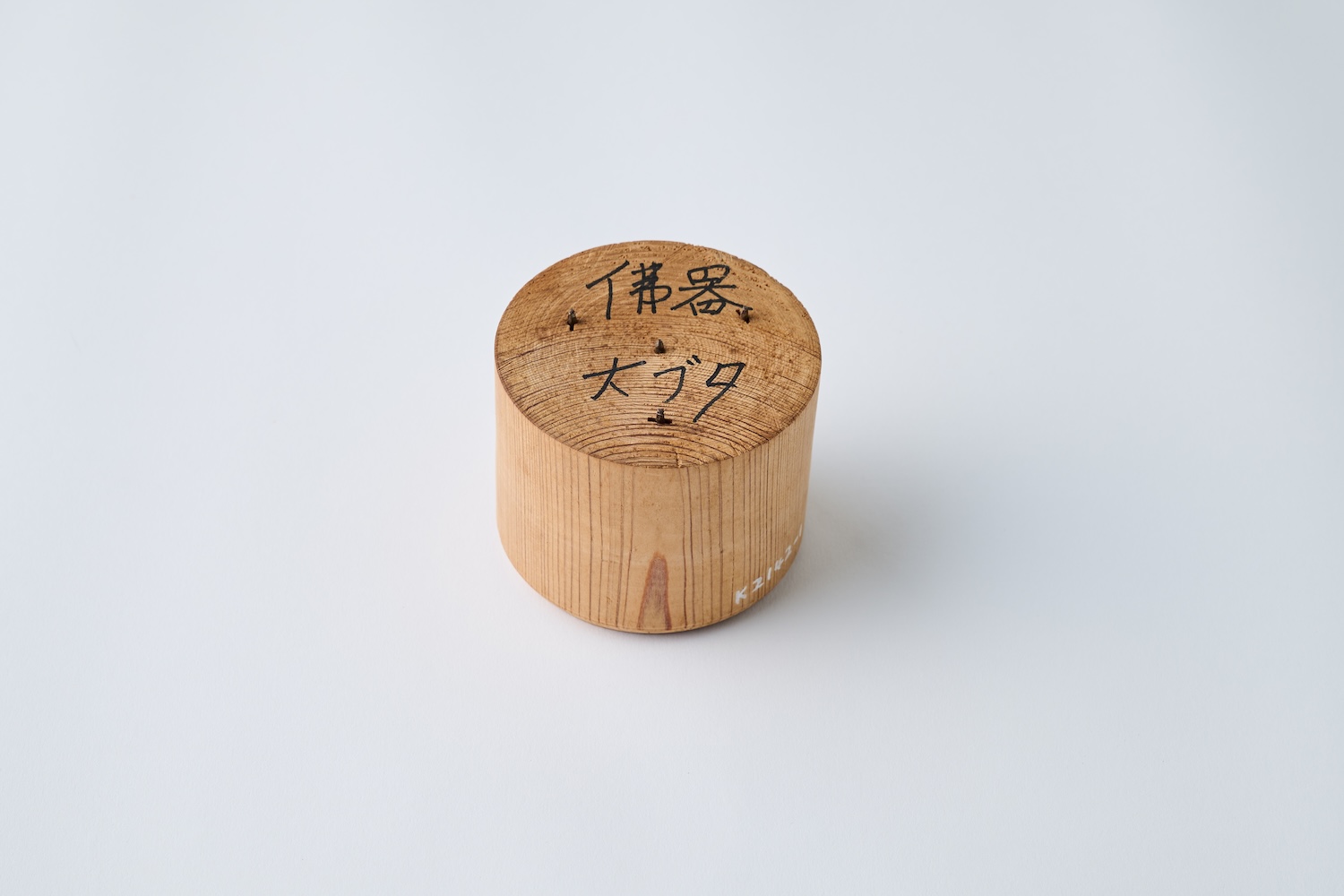
Kogiri
A wooden component used in the making of bowls. This particular piece is used as a lid for a child’s bowl.
Place Collected:Yoshino Town, Yoshino District
-
Arakidori
A wooden component used in the making of bowls. This particular piece is used as a lid for a child’s bowl.
Place Collected:Yoshino Town, Yoshino District
-
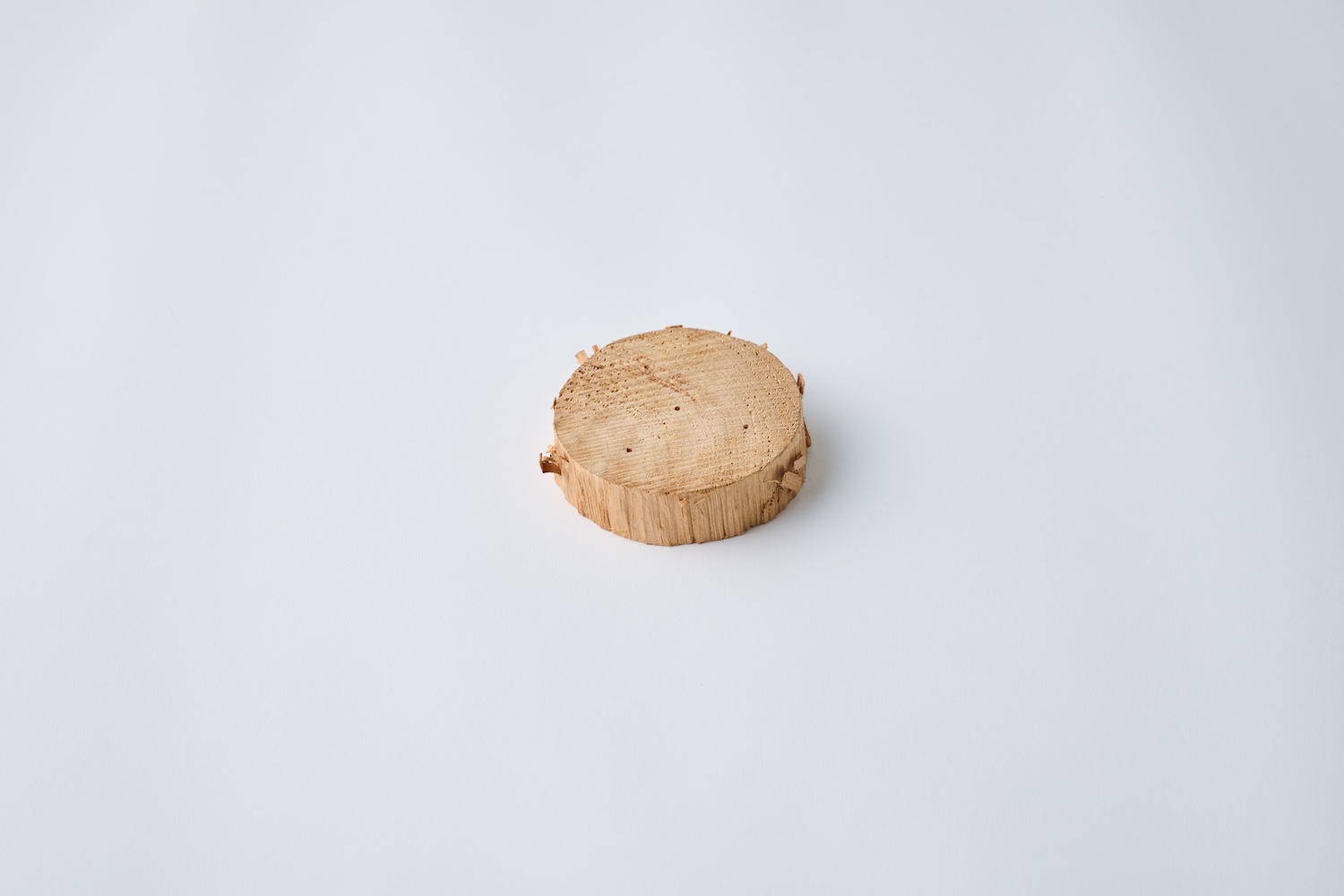
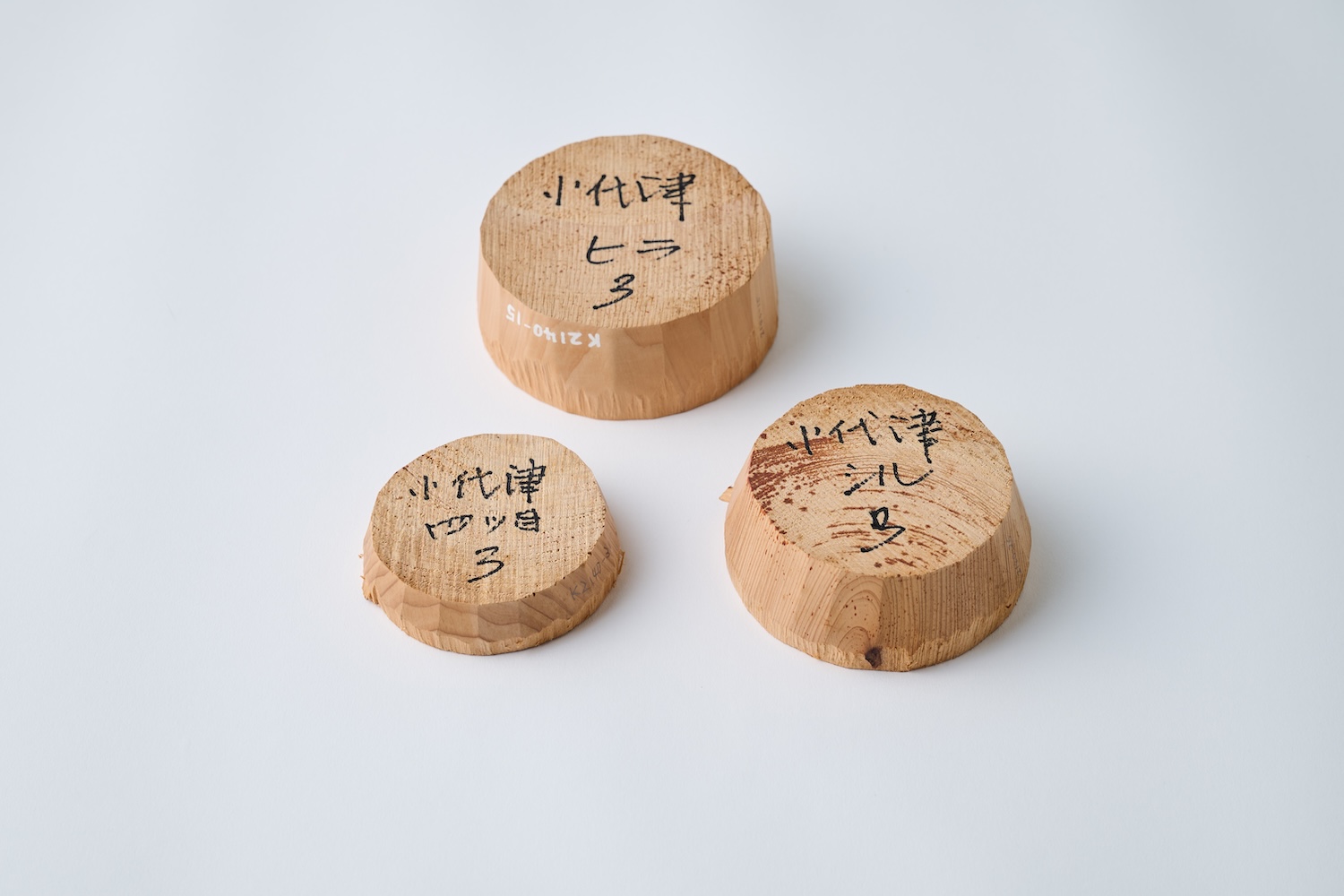
Marume
The rough blank used as the base for making a bowl. It is shaped into a finished bowl by carving and turning it on a lathe.
Place Collected:Yoshino Town, Yoshino District
-
Koyotsu no Yotsume
A piece in the intermediate stage of making a bowl lid.
Place Collected:Kurotaki Village, Yoshino District
-
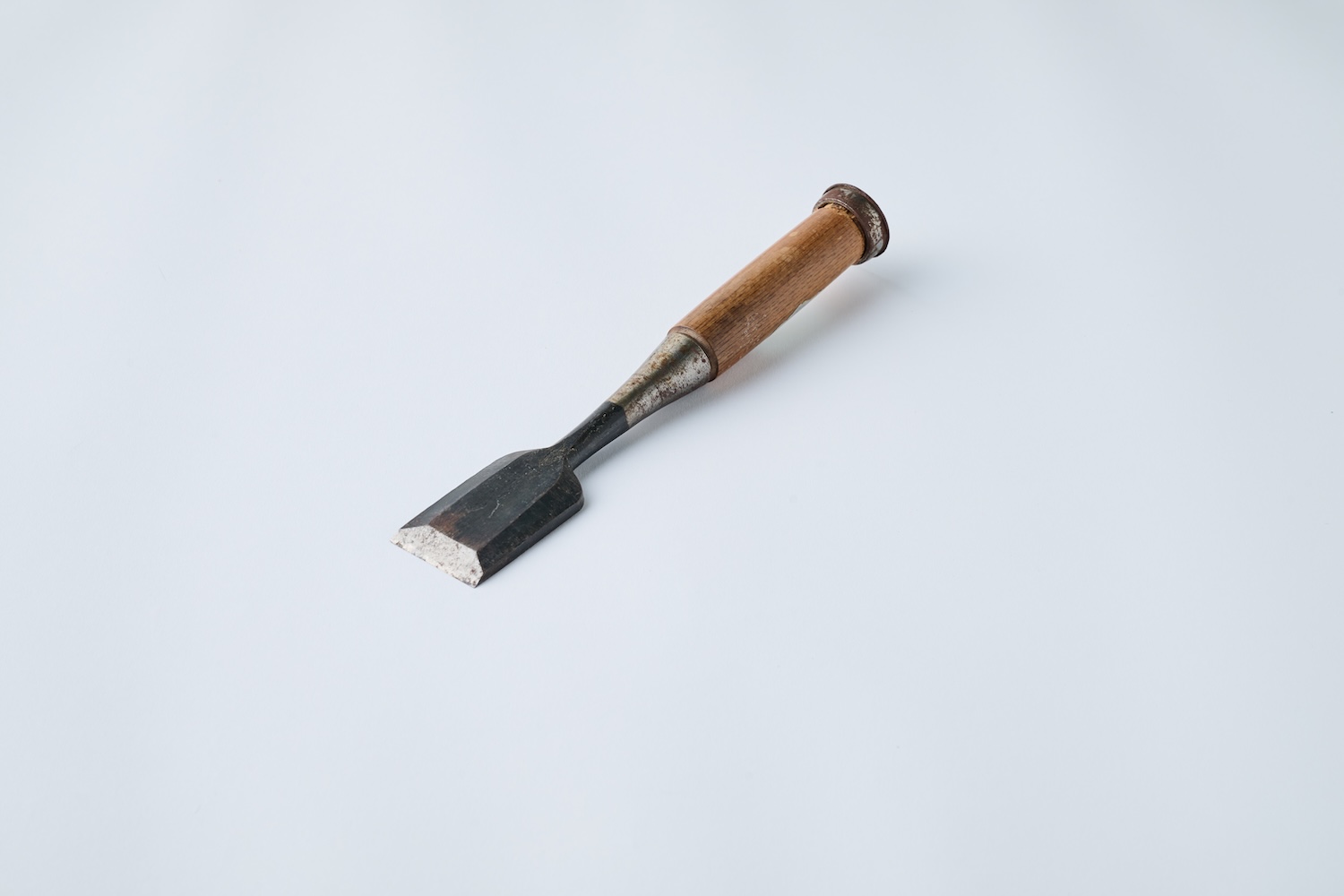
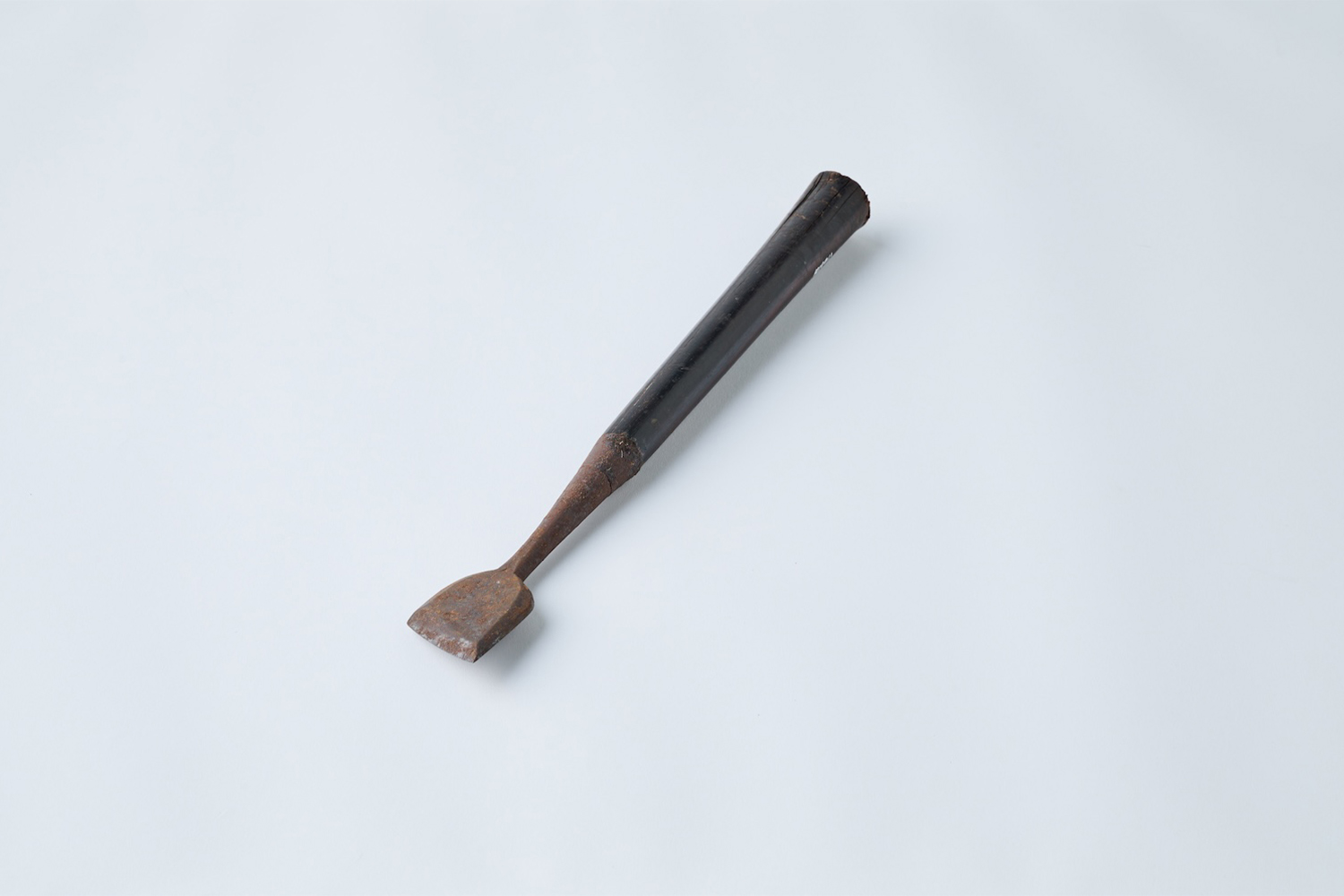
Kaku-nomi (Square Chisel)
A chisel with a squared cutting edge, used to refine and shape detailed areas of wooden items such as bowls.
Place Collected:Yoshino Town, Yoshino District
-
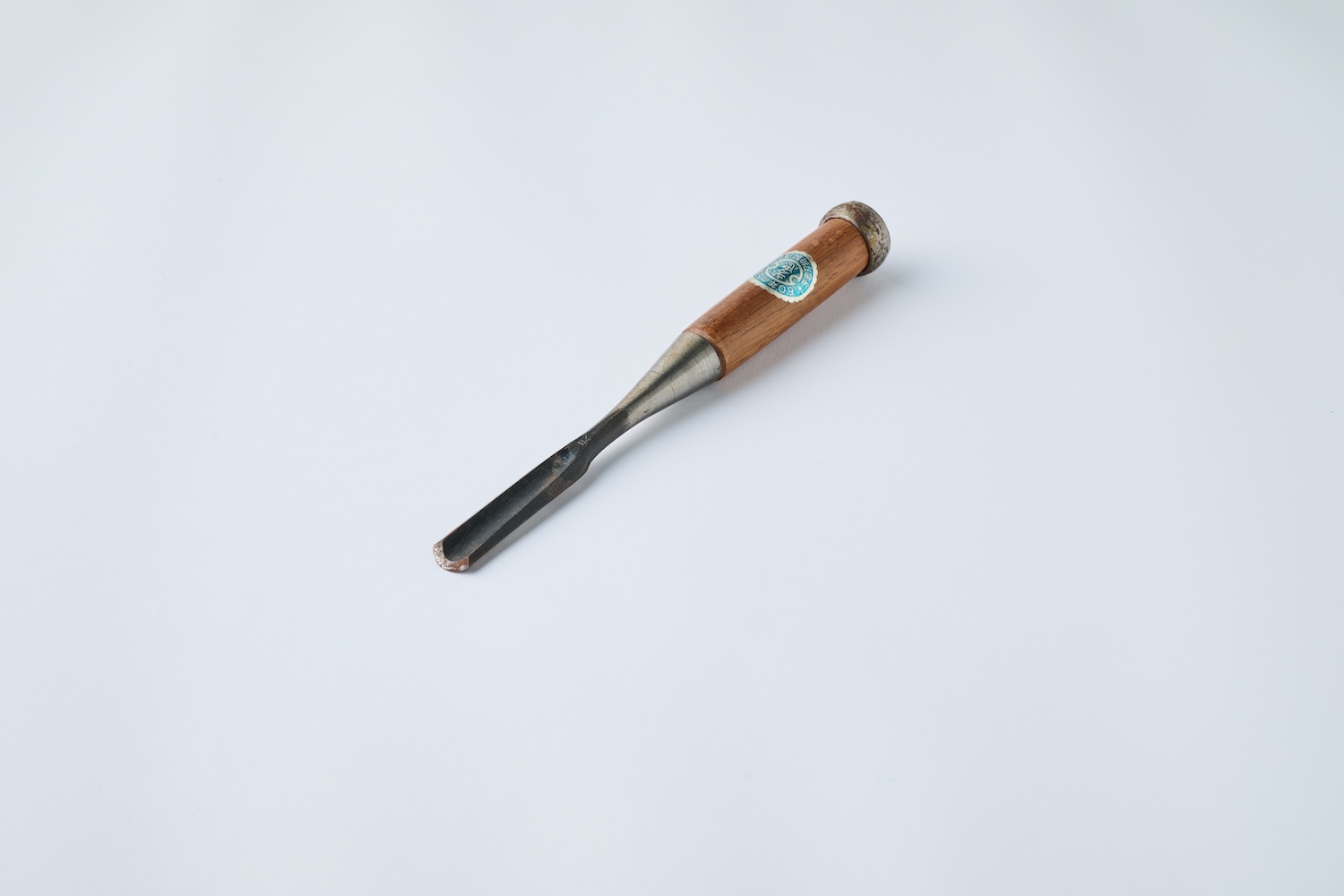
Maru-nomi (Round Chisel)
A chisel with a rounded cutting edge, used to refine and shape detailed areas of wooden items such as bowls.
Place Collected:Yoshino Town, Yoshino District
-
Kata (Template)
A size guide used when shaping wood. It is attached to the piece being worked on, and the wood is carved with an adze (chonna) so that the outer edge becomes roughly the same size as the template.
Place Collected:Yoshino Town, Yoshino District
-
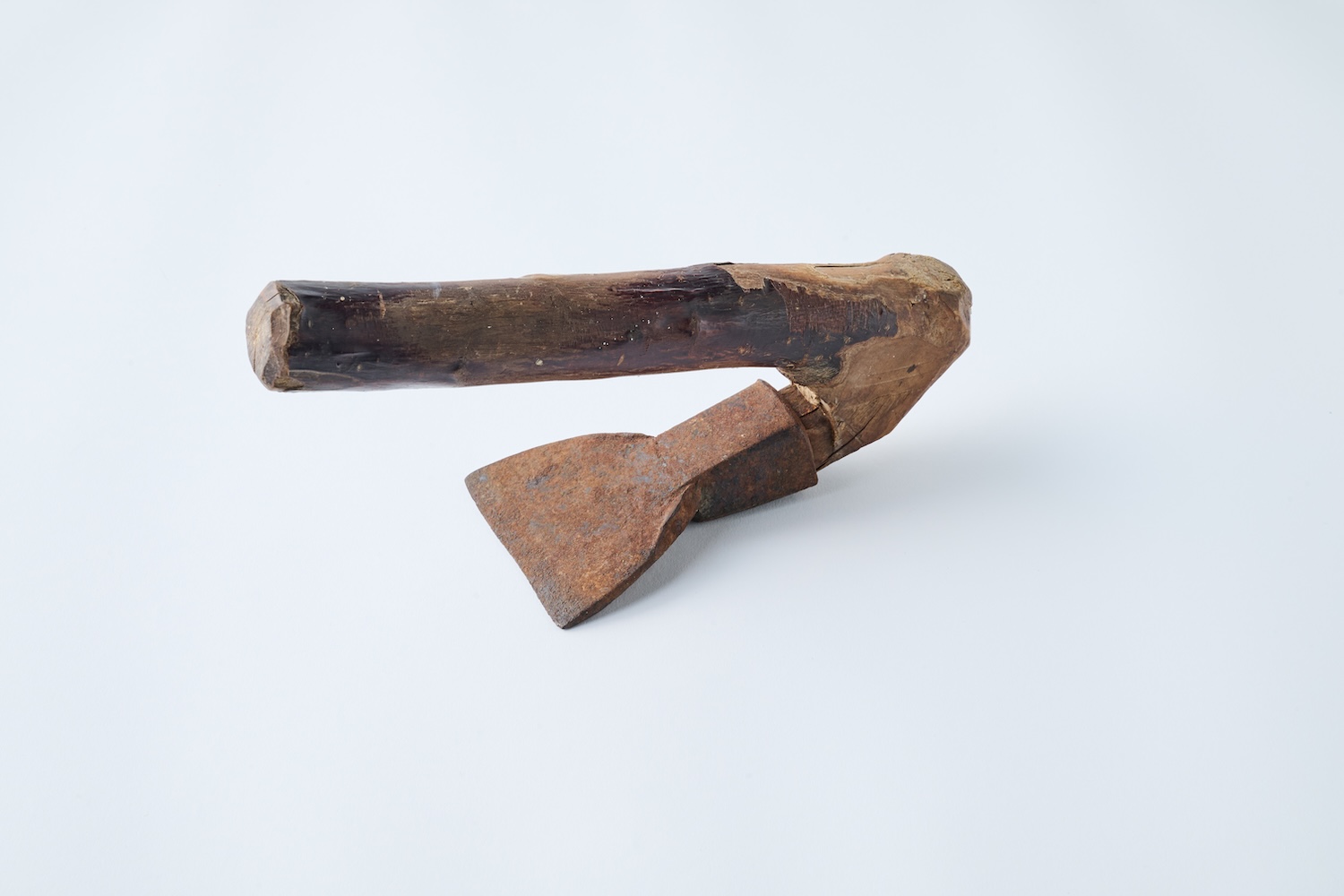
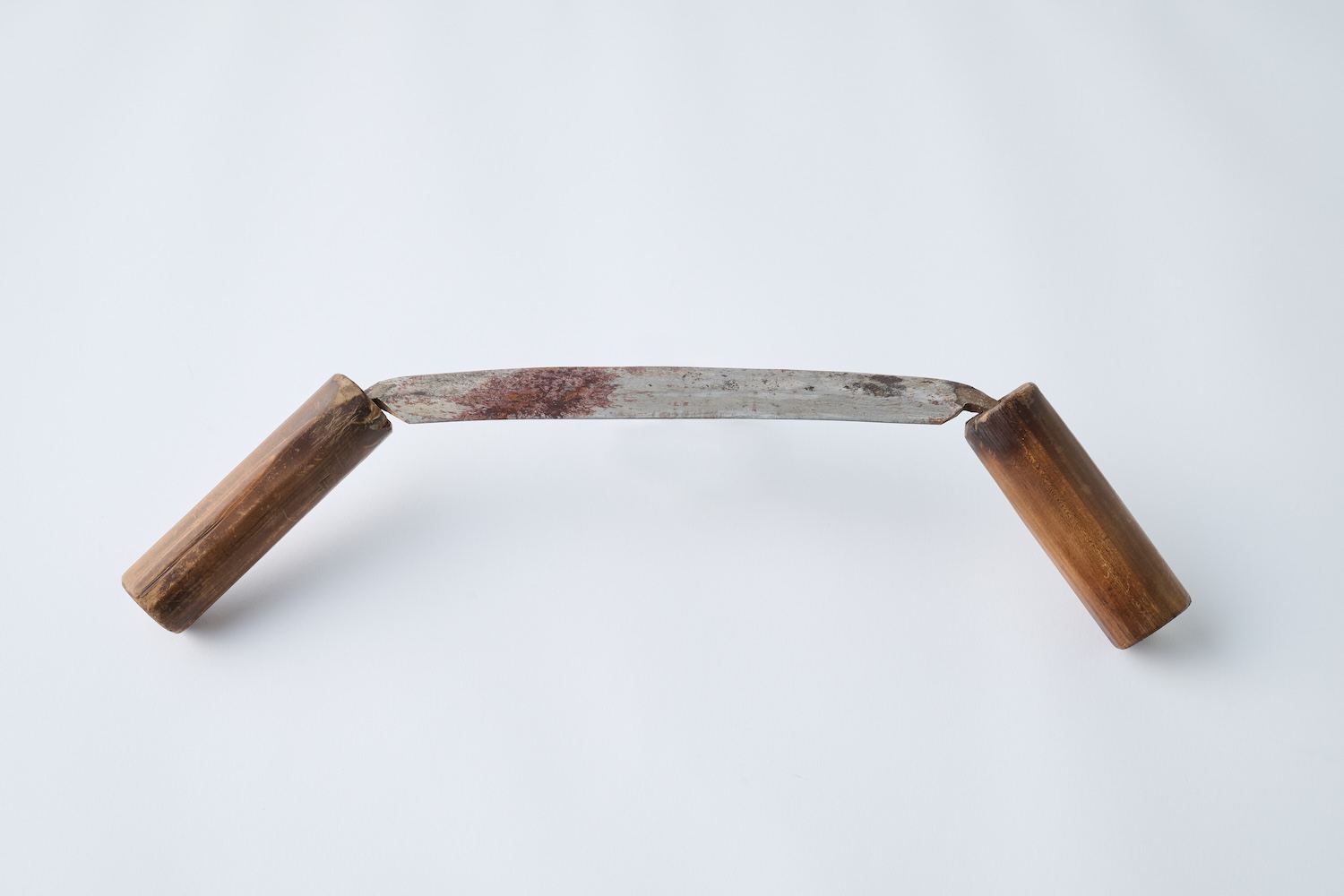
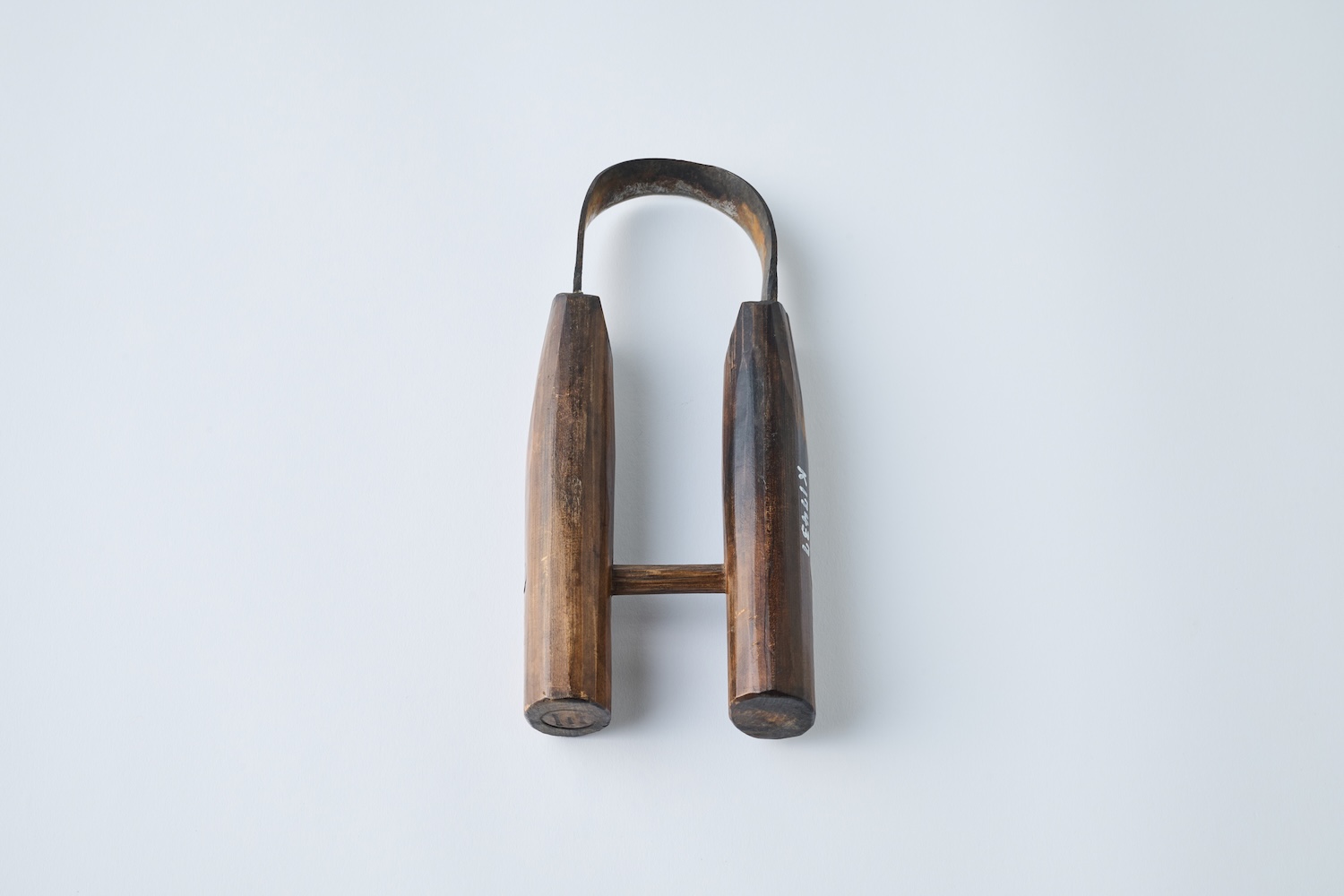
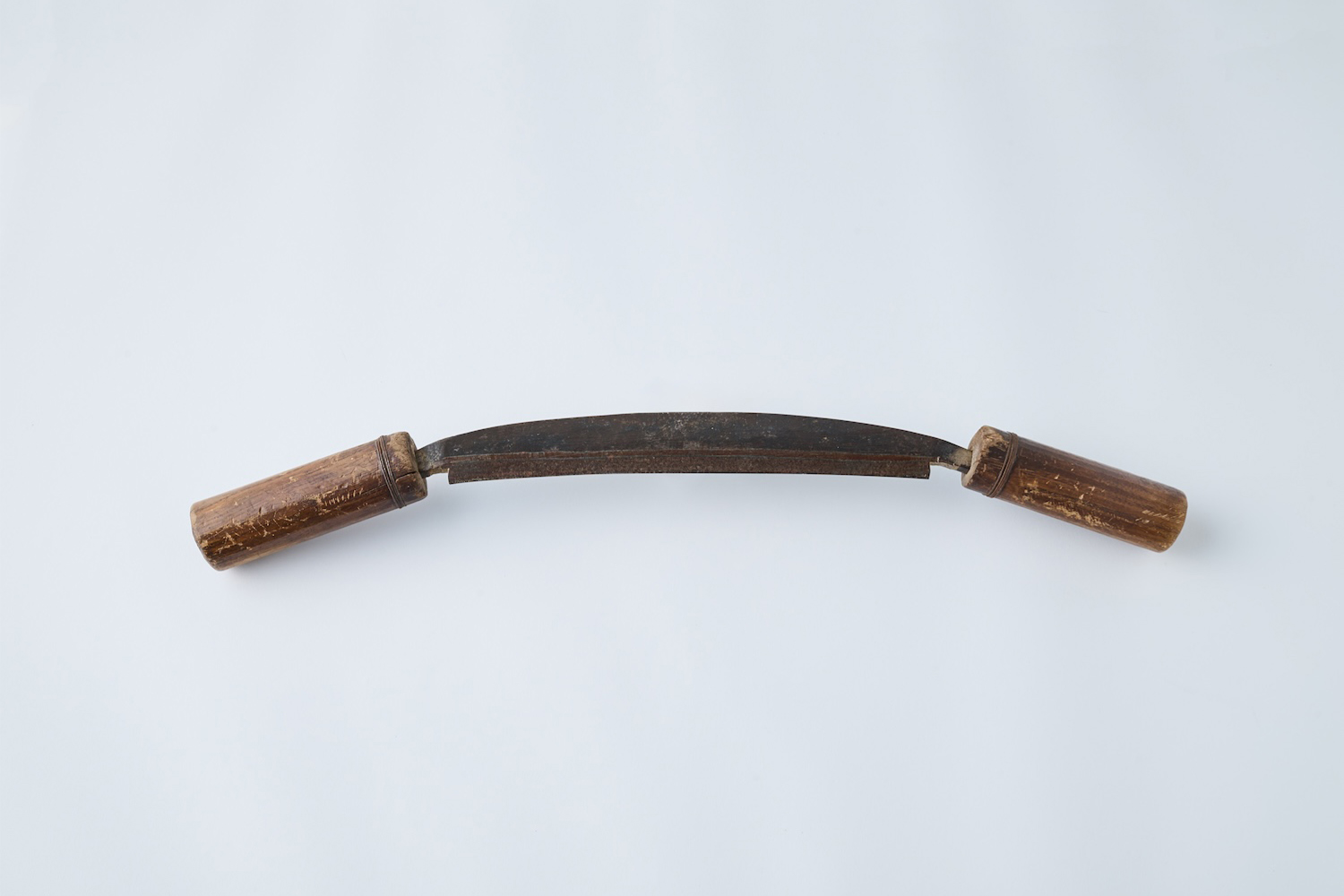
Chonna (Adze)
A woodworking tool used by pulling the blade toward the user to shave wood. The chonna on display was used to round and shape the outer surface when forming bowls.
Place Collected:Yoshino Town, Yoshino District
-
Hakate
A measuring rule used when making shakushi (rice paddles) to measure their length and width. By using a hakate, it was possible to efficiently produce large numbers of shakushi in standardized sizes.
Place Collected:Tenkawa Village, Yoshino District
-
Sotozen
A carving tool used to shape shakushi (rice paddles). It was mainly used to shave the handle and the back side of the paddle—the side opposite the surface used for scooping food.
Place Collected:Koya Town, Ito District(Wakayama Prefecture)
-
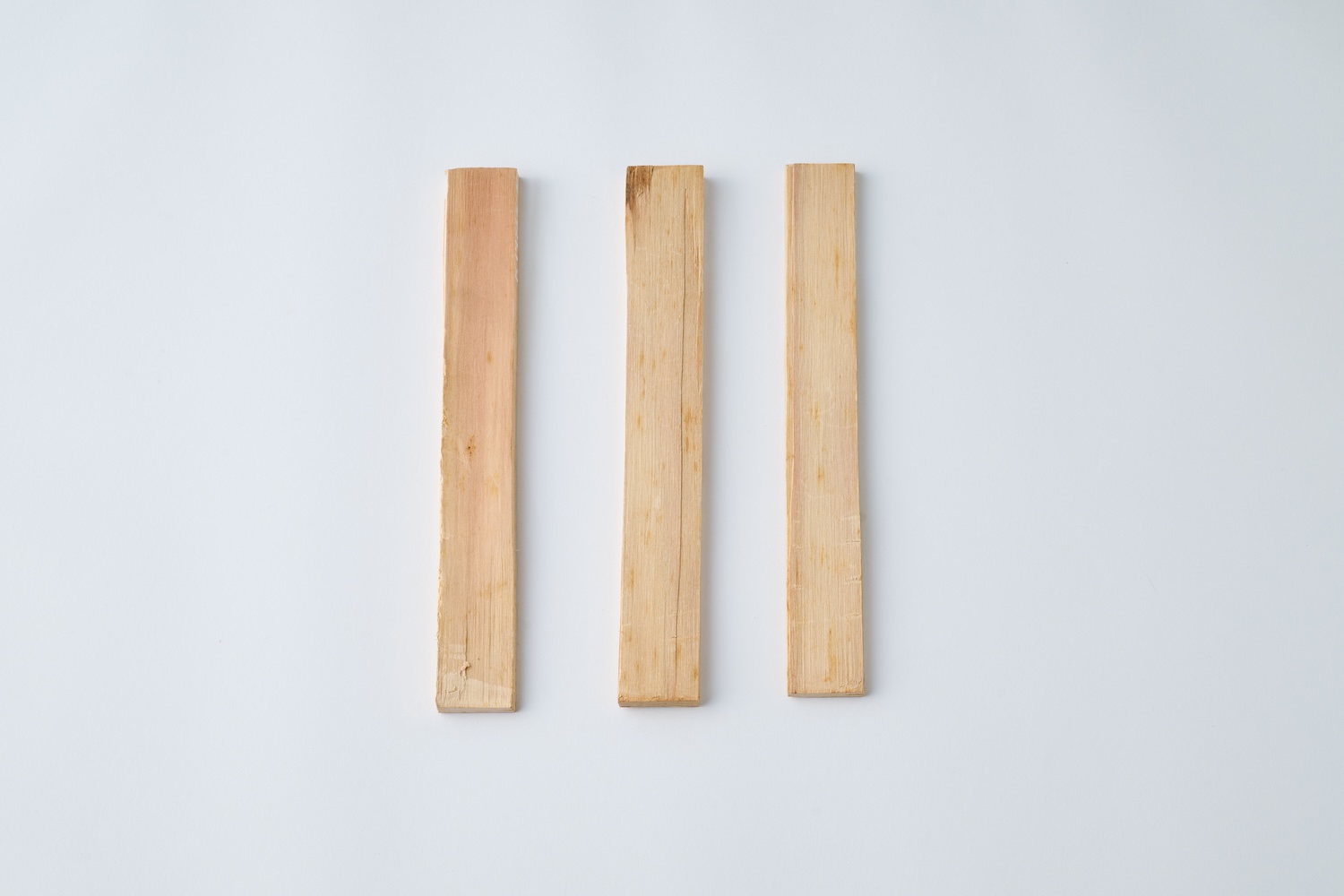
Warinata
A tool used to split flat-grained boards from a log that has been stood upright on a work platform.
Place Collected:Tenkawa Village, Yoshino District
-
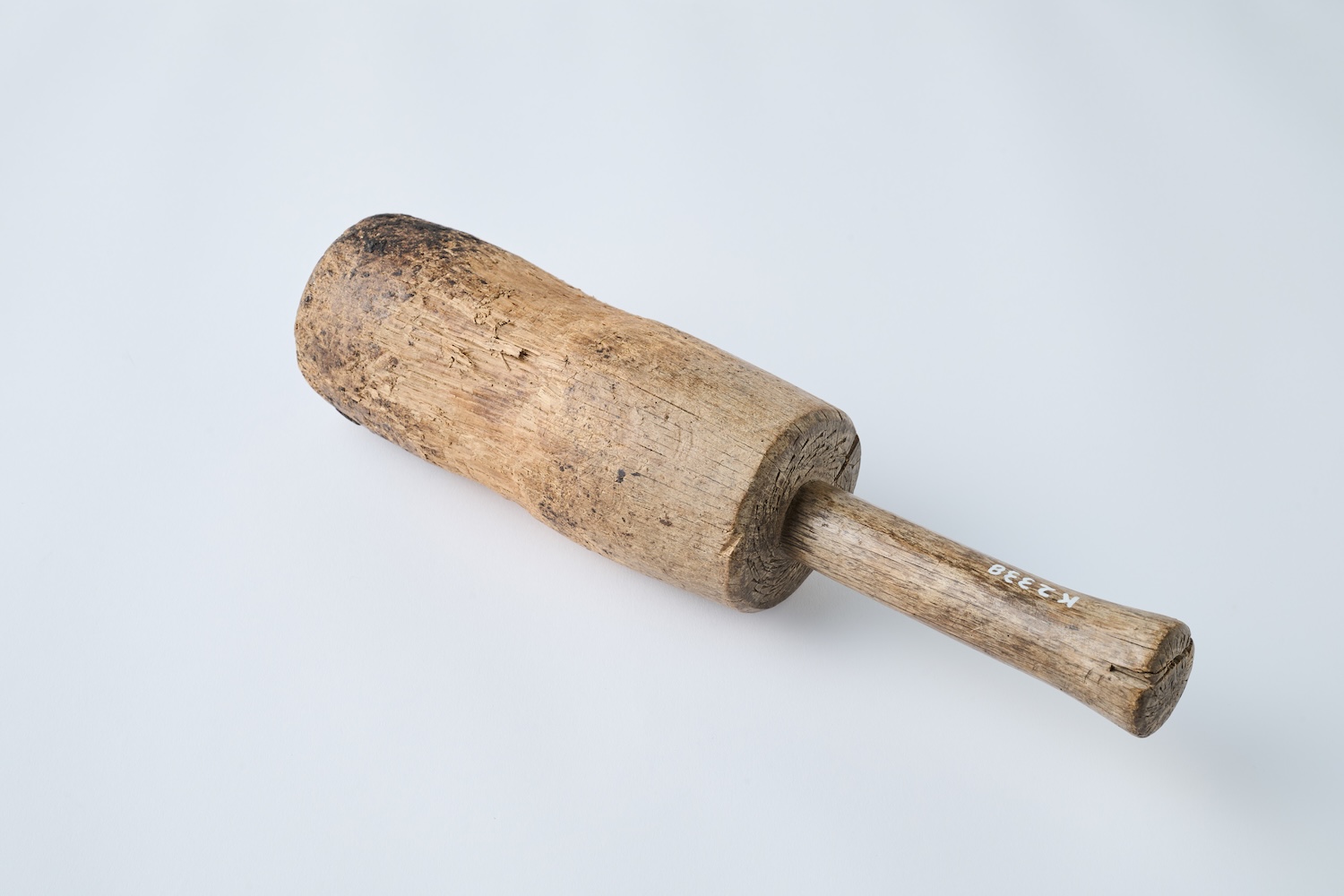
Tsuchi
A mallet used to strike the back of a warinata when splitting material from a log.
Place Collected:Tenkawa Village, Yoshino District
-
Uchiguri Kanna
A plane used to carve out the inner surface of a tsubo-shakushi (rice paddle) where food is scooped. By leaving the center in a shallow, ridge-like shape running across the width, the strength of the paddle was increased.
Place Collected:Gojo City
-
Koguchigiri
A tool used to shave and shape the outer edges when forming wood into thin sheets .
Place Collected:Nosegawa Village, Yoshino District
-
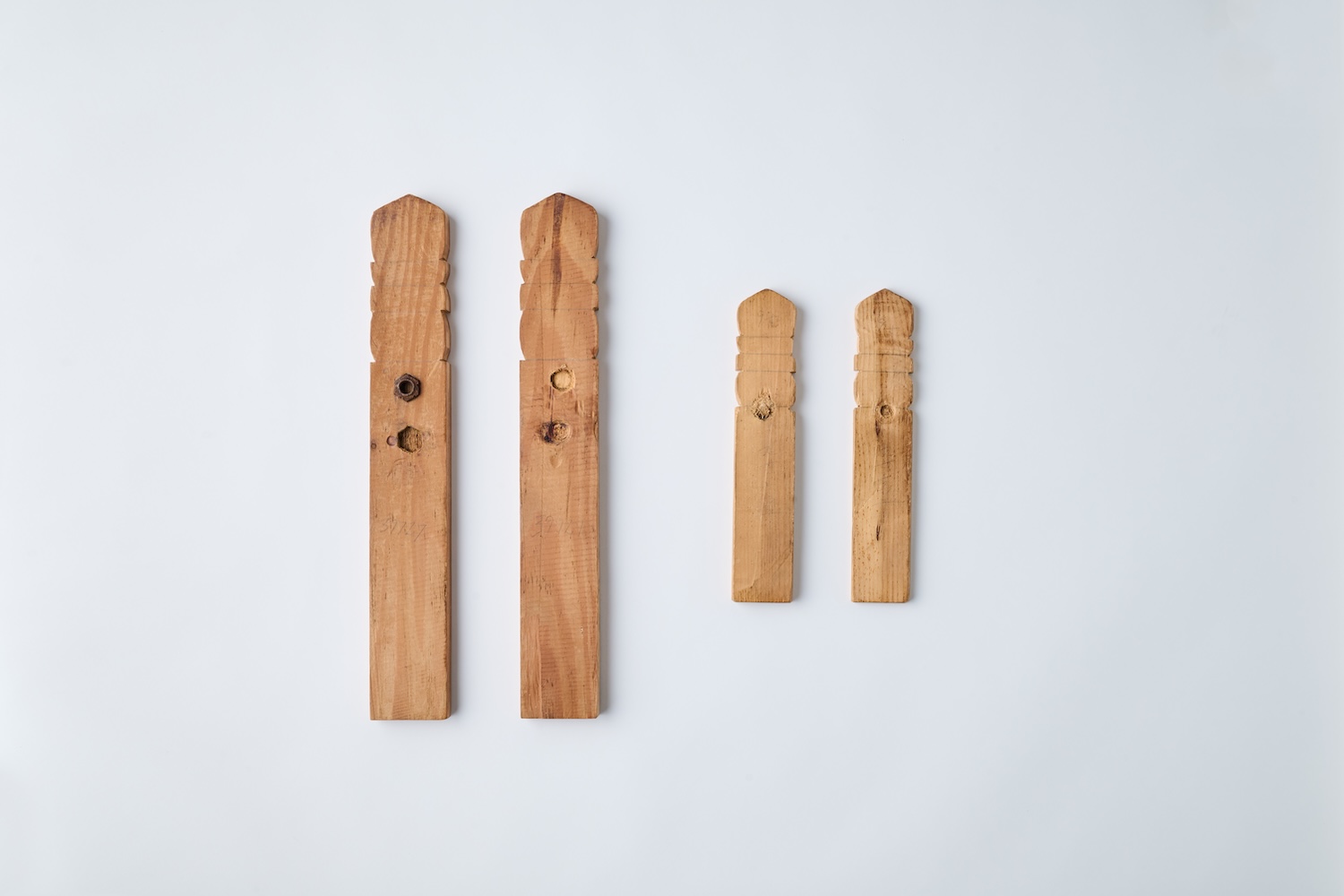
Nomi (Chisel)
A chisel used to carve the five-ring (gorin) shape at the top of a kyogi-toba, a wooden memorial tablet on which the posthumous Buddhist name of the deceased was written to invite their spirit during offerings, such as on a tray. The five rings represent the five elements—space, wind, fire, water, and earth—which were traditionally believed to constitute the world.
Place Collected:Nosegawa Village, Yoshino District
-
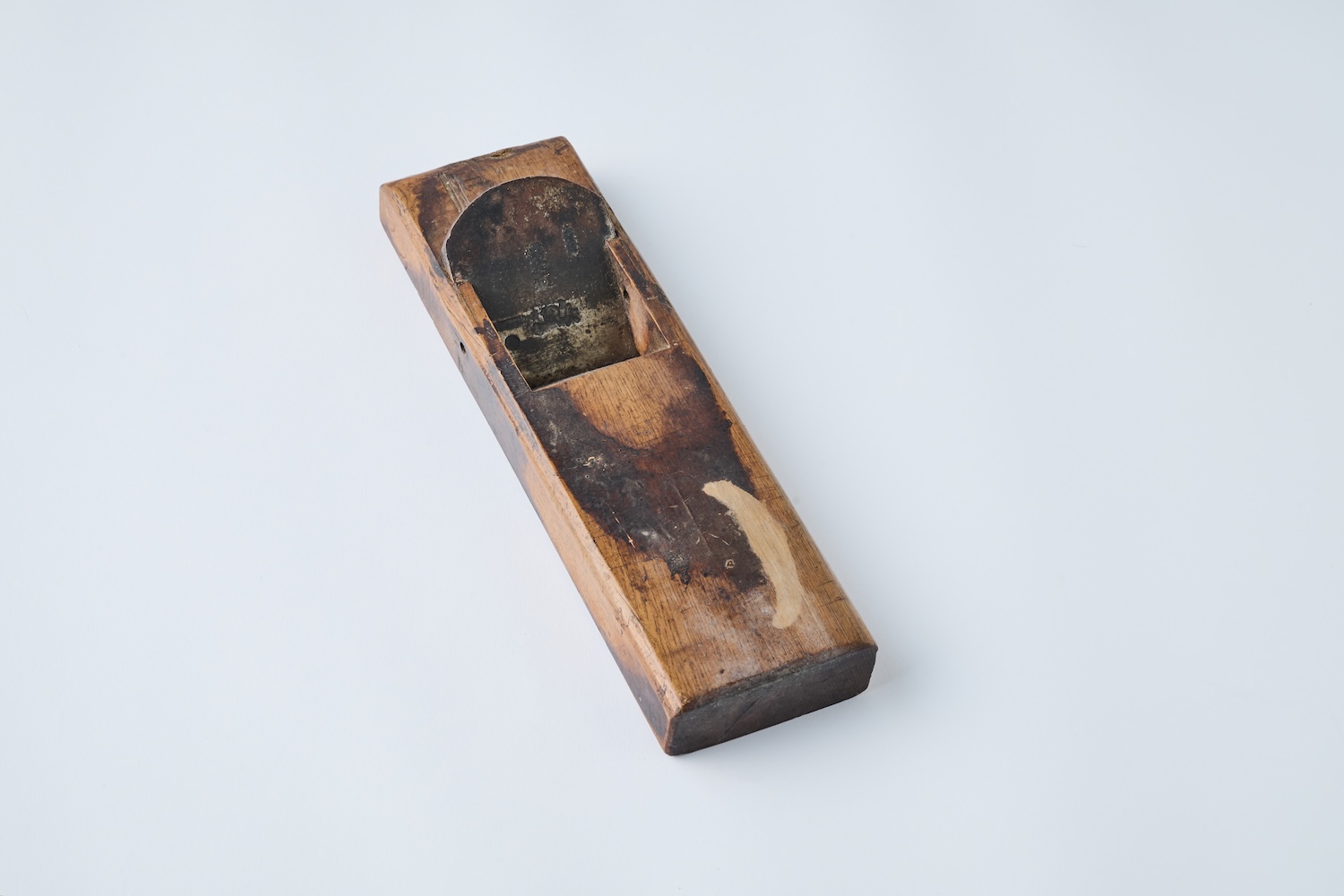
Kanna (Plane)
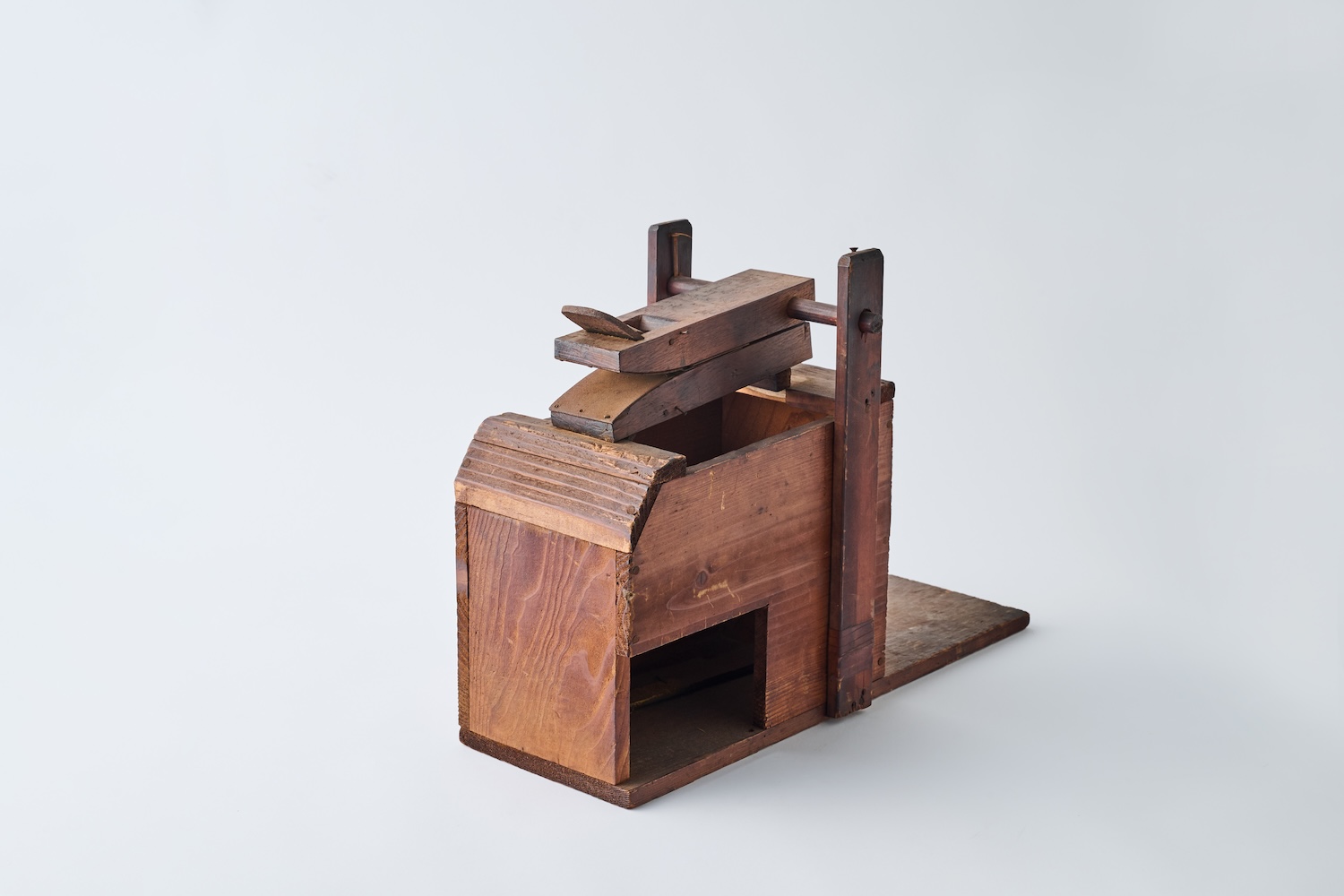
A plane used to round the edges of kyogi by shaving their sides while they are held between kataita, following the shape of the guide boards.
Place Collected:Nosegawa Village, Yoshino District
-
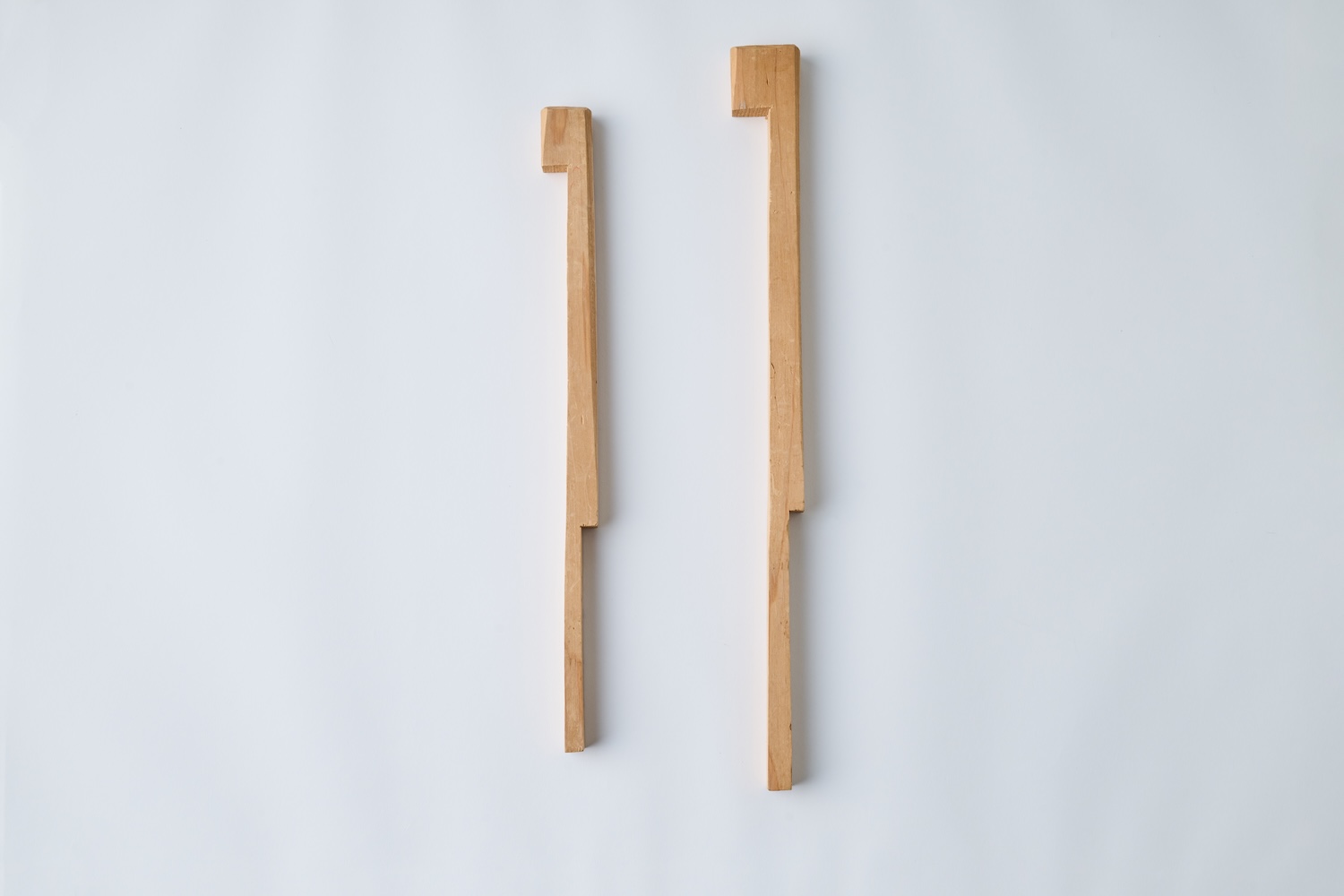
Kataita
A component used when making kyogi—thin wooden boards on which the posthumous Buddhist name of the deceased was written to welcome their spirit during occasions such as the Bon festival. When the kyogi was fixed in place with a jack, these boards were placed on either side to receive the pressure from the jack. Marks left by actual use can still be seen.
Place Collected:Nosegawa Village, Yoshino District
-
Hashiwarinata
A tool used for cutting wood and for making the initial split in the center of disposable chopsticks. It was used by relying on the weight of its metal blade to split the wood.
Place Collected:Shimoichi Town, Yoshino District
-
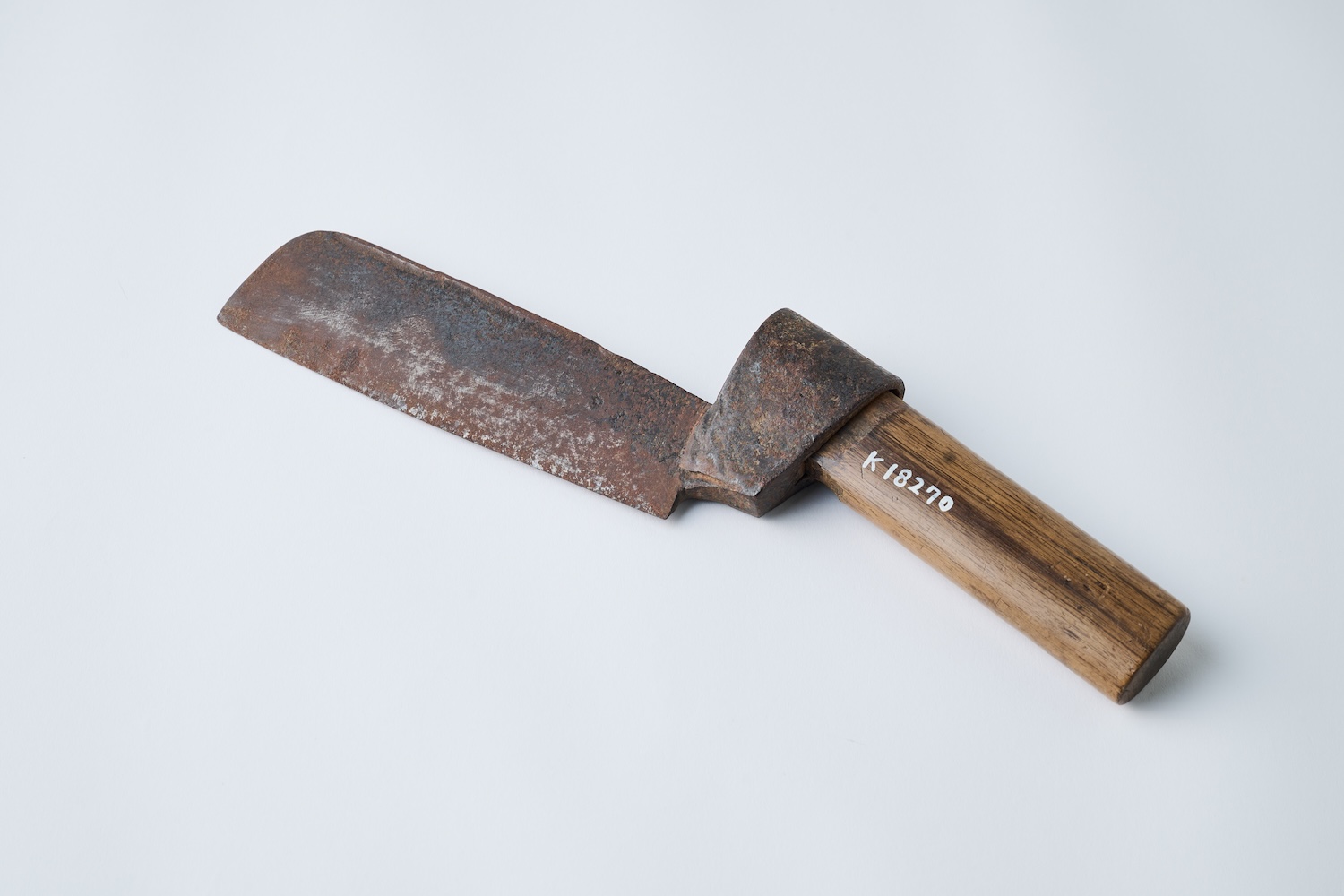
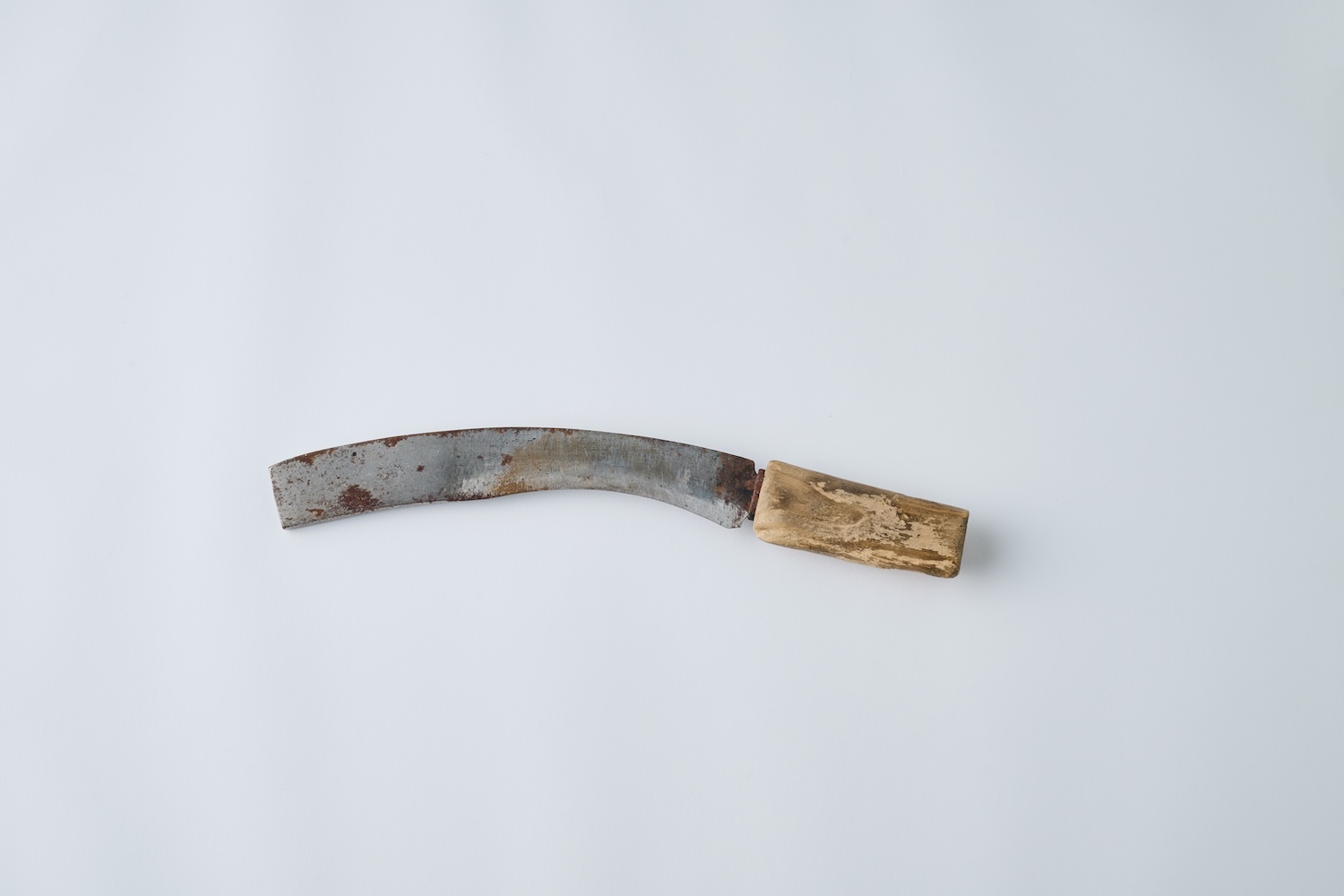
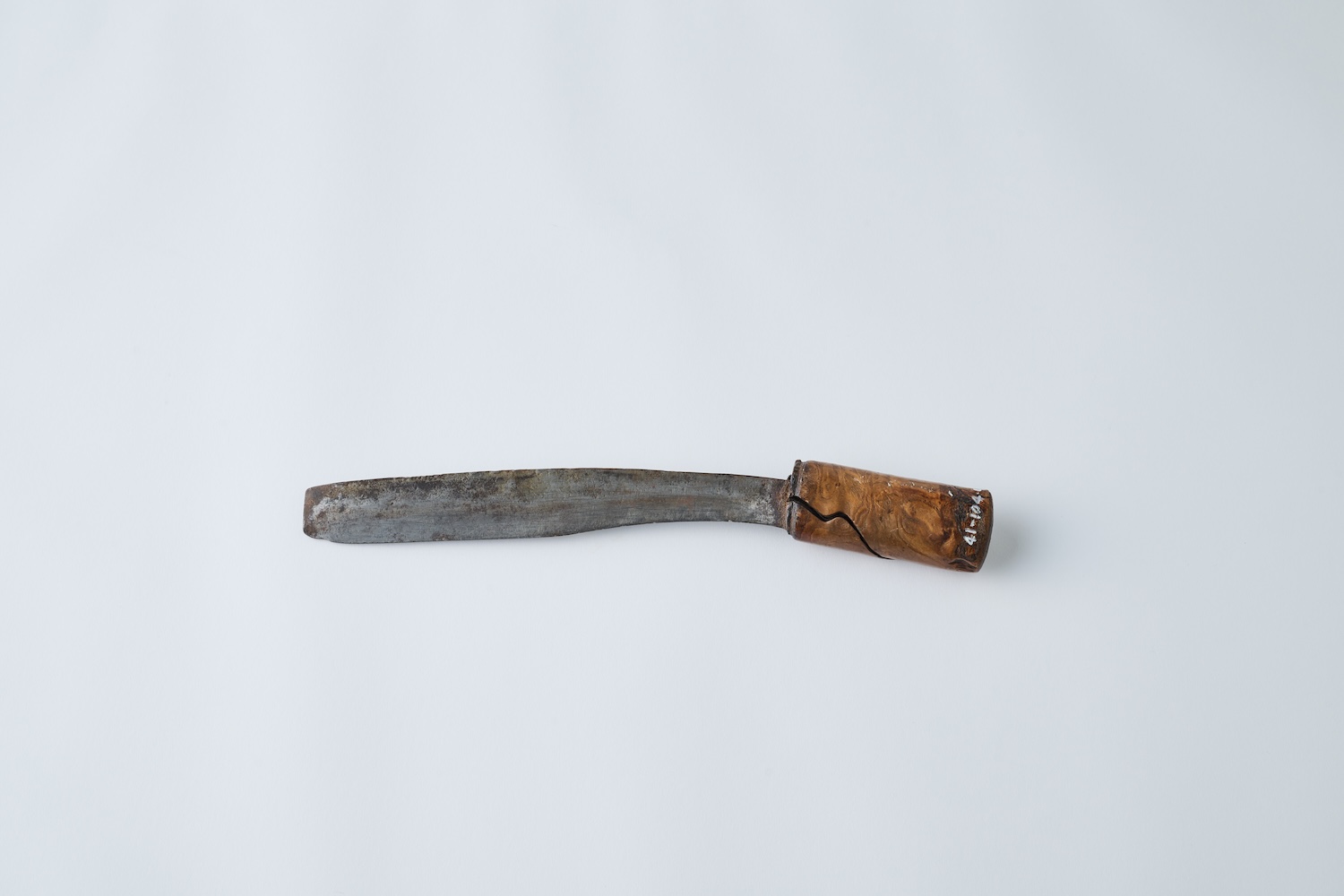
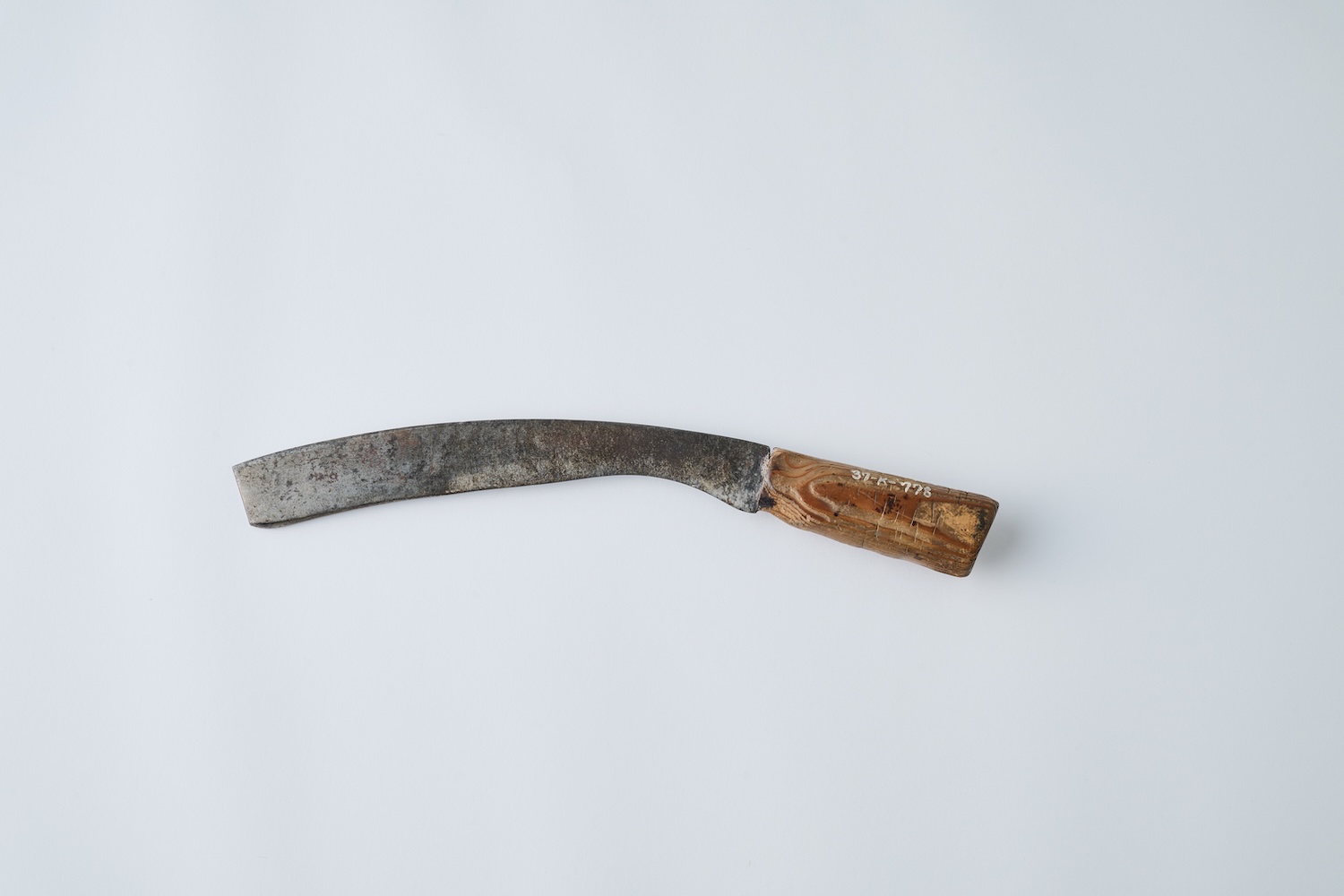
Hocho
A knife used in the process of making round chopsticks to cut small pieces of wood from larger materials such as logs. It can also be used to cut out roughly shaped blanks.
Place Collected:Nosegawa Village, Yoshino District
-
Nata (Hatchet)
A tool used for cutting wood and for making an initial notch in the center of disposable chopsticks. Rather than slicing with the blade, it was used by applying the weight of its metal body to split the wood.
Place Collected:Shimoichi Town, Yoshino District
-
Aburago
Cotton soaked with oil, used to improve the smooth movement of blades such as nata. Rapeseed oil was used. Maintaining cutting tools was one of the important tasks that supported the industry.
Place Collected:Shimoichi Town, Yoshino District
-
Mentoriki
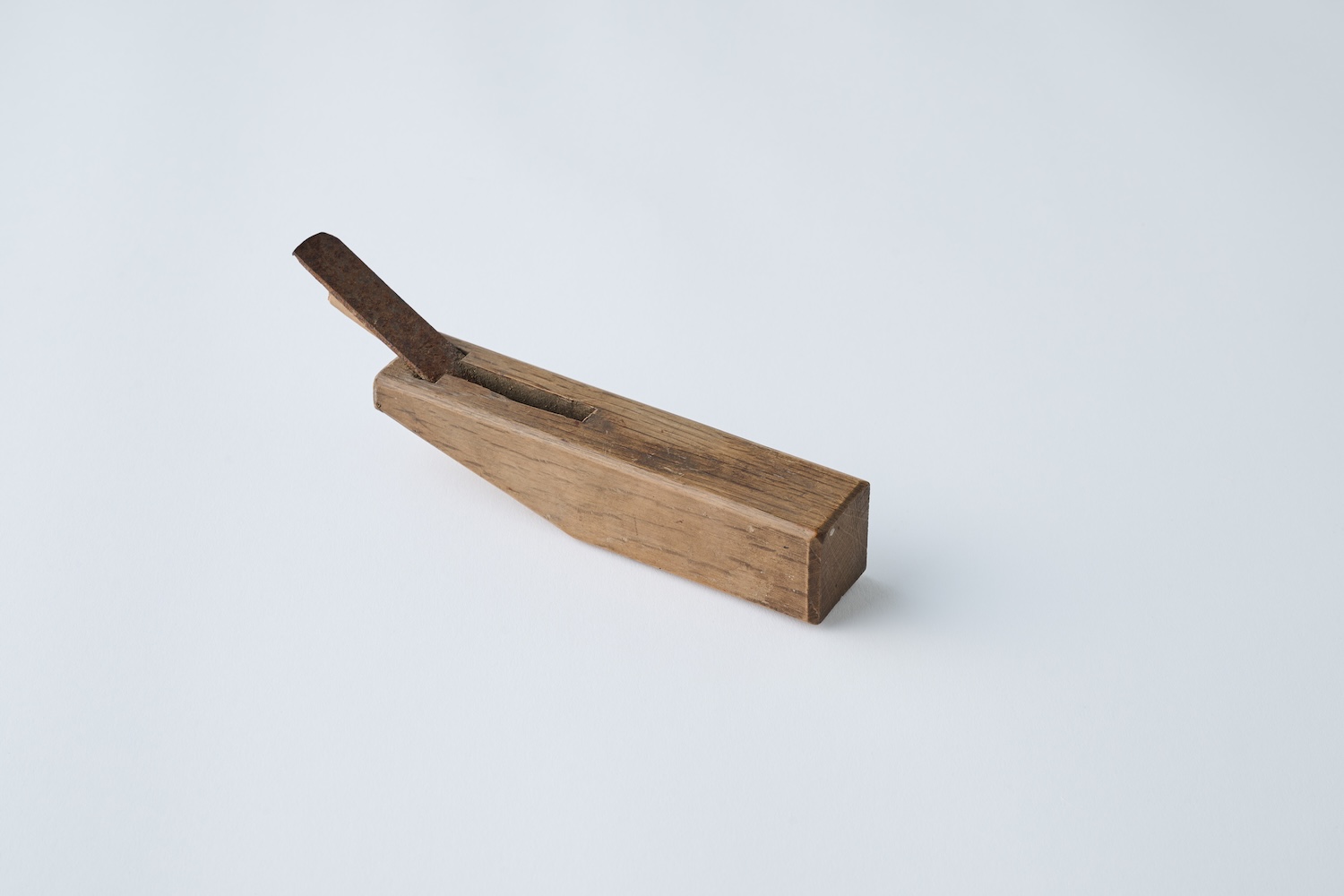
A tool used to round and shape the tips of disposable chopsticks. It is made by combining two planes, and the chopsticks are inserted twice—once to the right and once to the left—to plane them evenly.
Place Collected:Shimoichi Town, Yoshino District
-
Kanna (Plane)
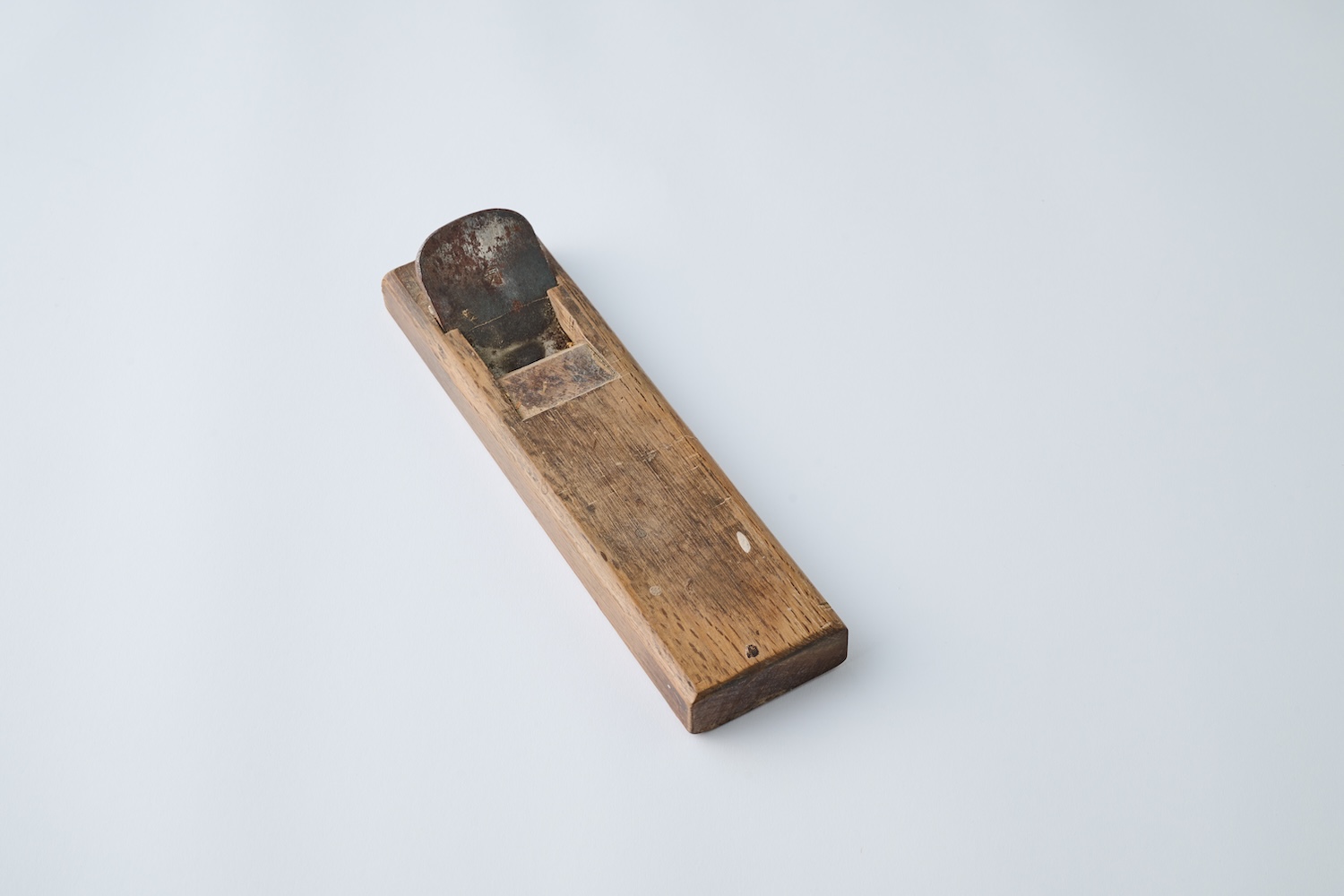
A plane used to shape disposable chopsticks by arranging several at once on a workbench and planing them together in a single pass.
Place Collected:Shimoichi Town, Yoshino District
-
Mentoriki
A tool used to shave the tips of disposable chopsticks to create a rounded shape. Because performing this process quickly helped reduce the overall production time, it is said to have been carried out with particular speed.
Place Collected:Shimoichi Town, Yoshino District
-
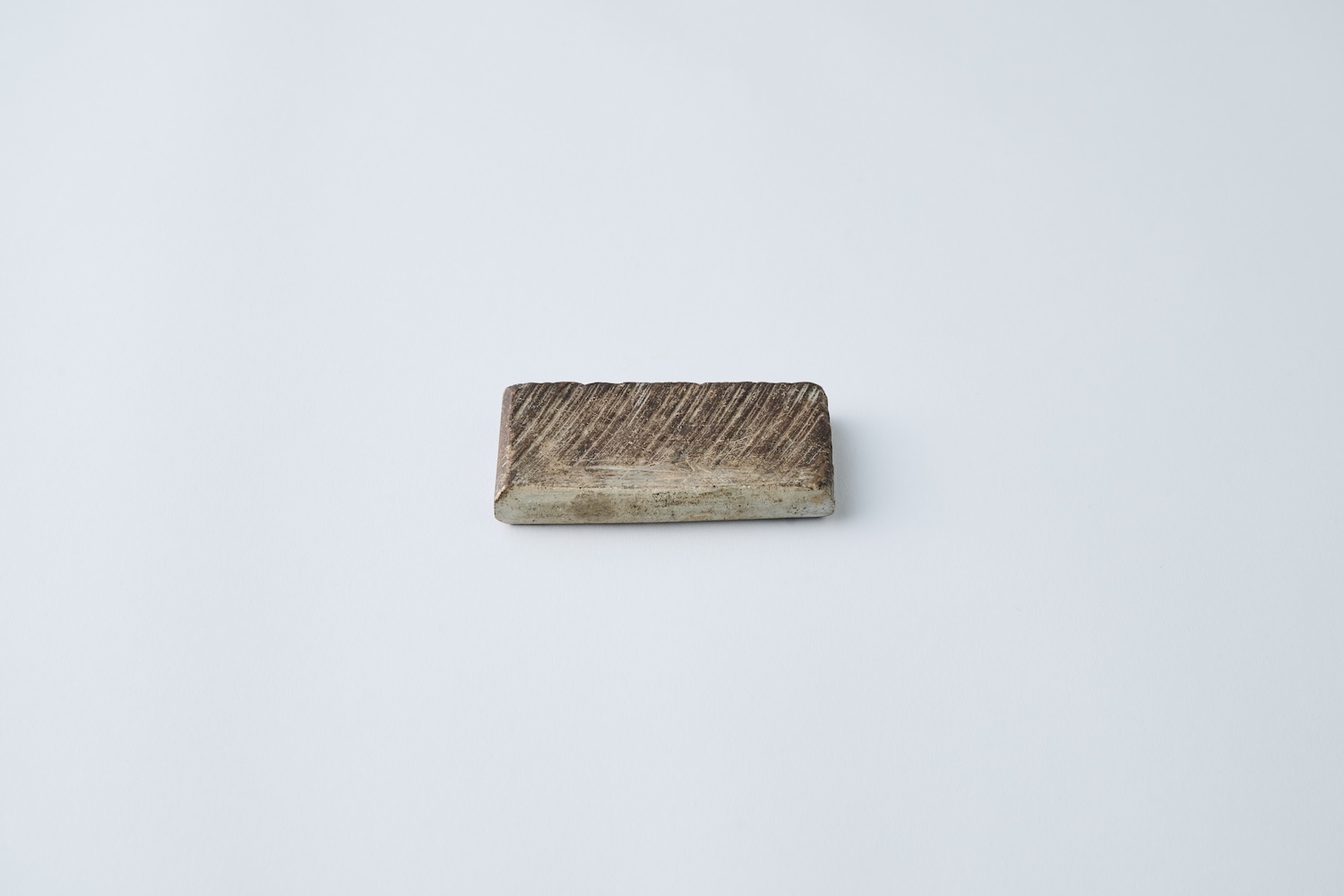
Toishi (Whetstone)
A whetstone used to sharpen the blades of planes for making round chopsticks. The way the blades were sharpened greatly affected how the wood was cut, directly influencing productivity. Blade maintenance was a vital process that supported the industry.
Place Collected:Nosegawa Village, Yoshino District
-
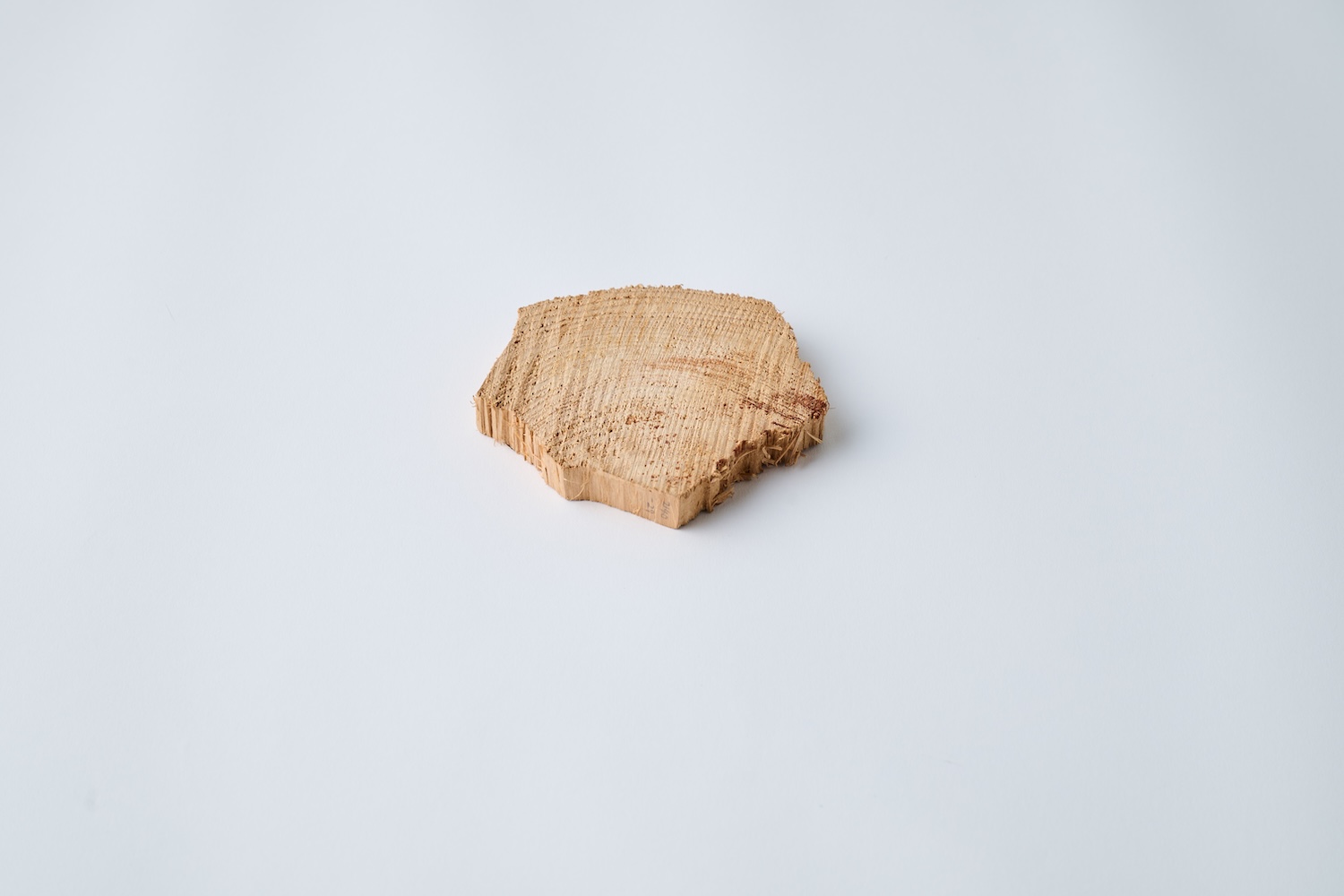
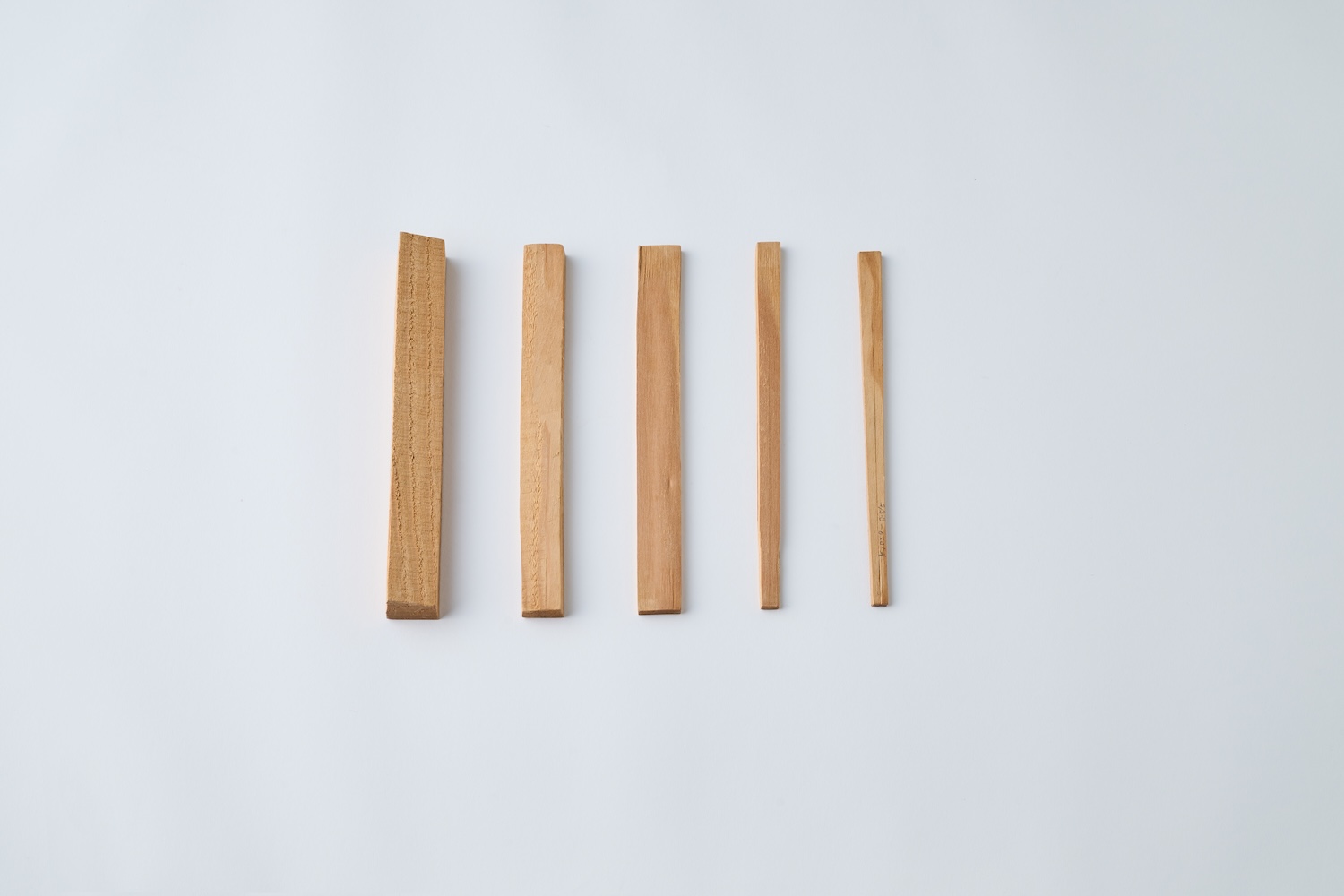
Kowari
A small piece prepared for making round chopsticks, produced by cutting down chopstick blanks taken from wood using a hocho knife.
Place Collected:Nosegawa Village, Yoshino District
Use
-
Tarumaru
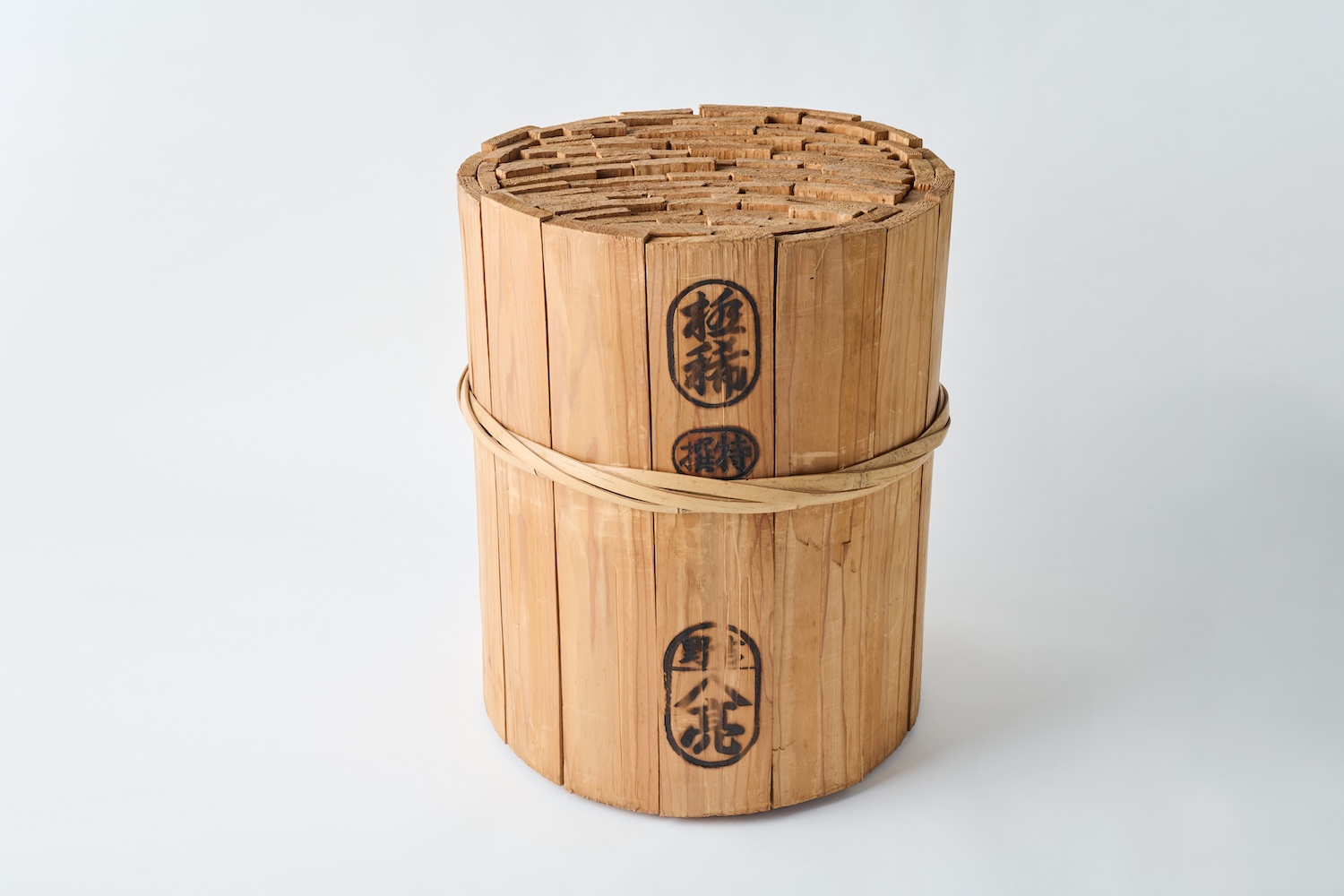
A bundled set of barrel staves, known as kure, gathered together for transport. By packing the staves tightly with no gaps, the contents are prevented from slipping out during transport.
Place Collected:Kurotaki Village, Yoshino District
-
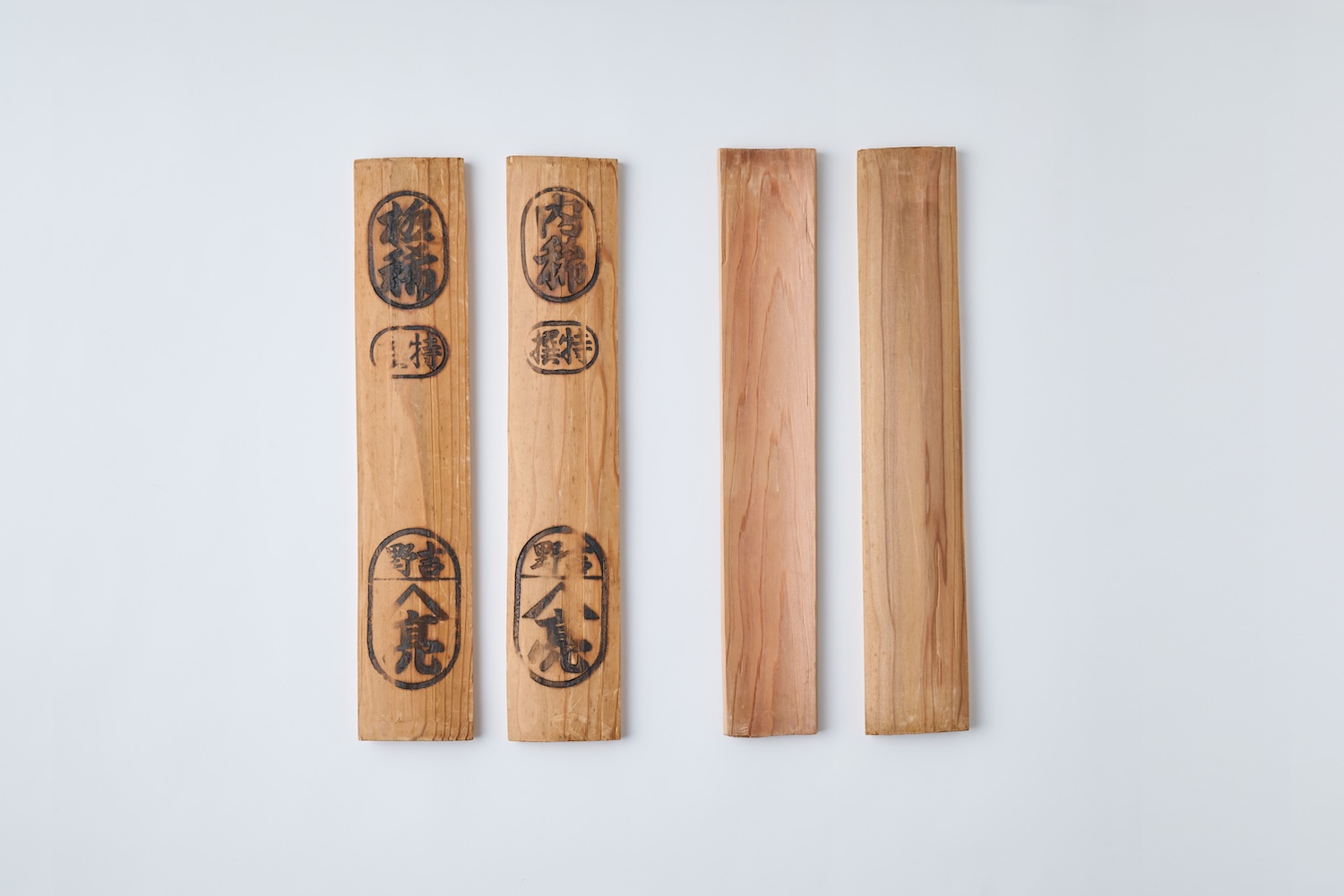
Kure
Wooden staves used as the side boards of barrels. Yoshino cedar is used for this purpose. The burned stamp indicates the name of the workshop that made them and the grade of the material.
Place Collected:Kurotaki Village, Yoshino District
-
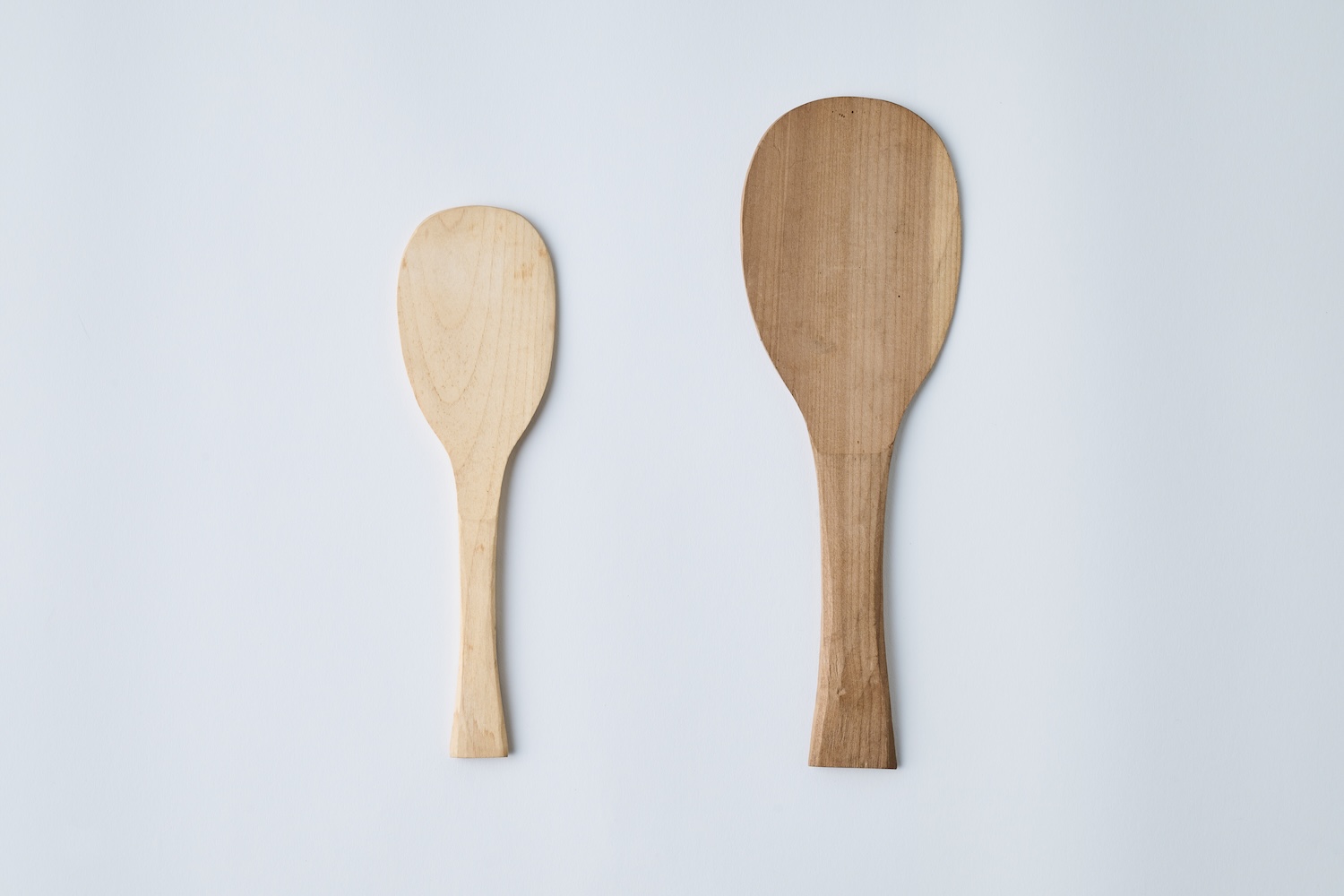
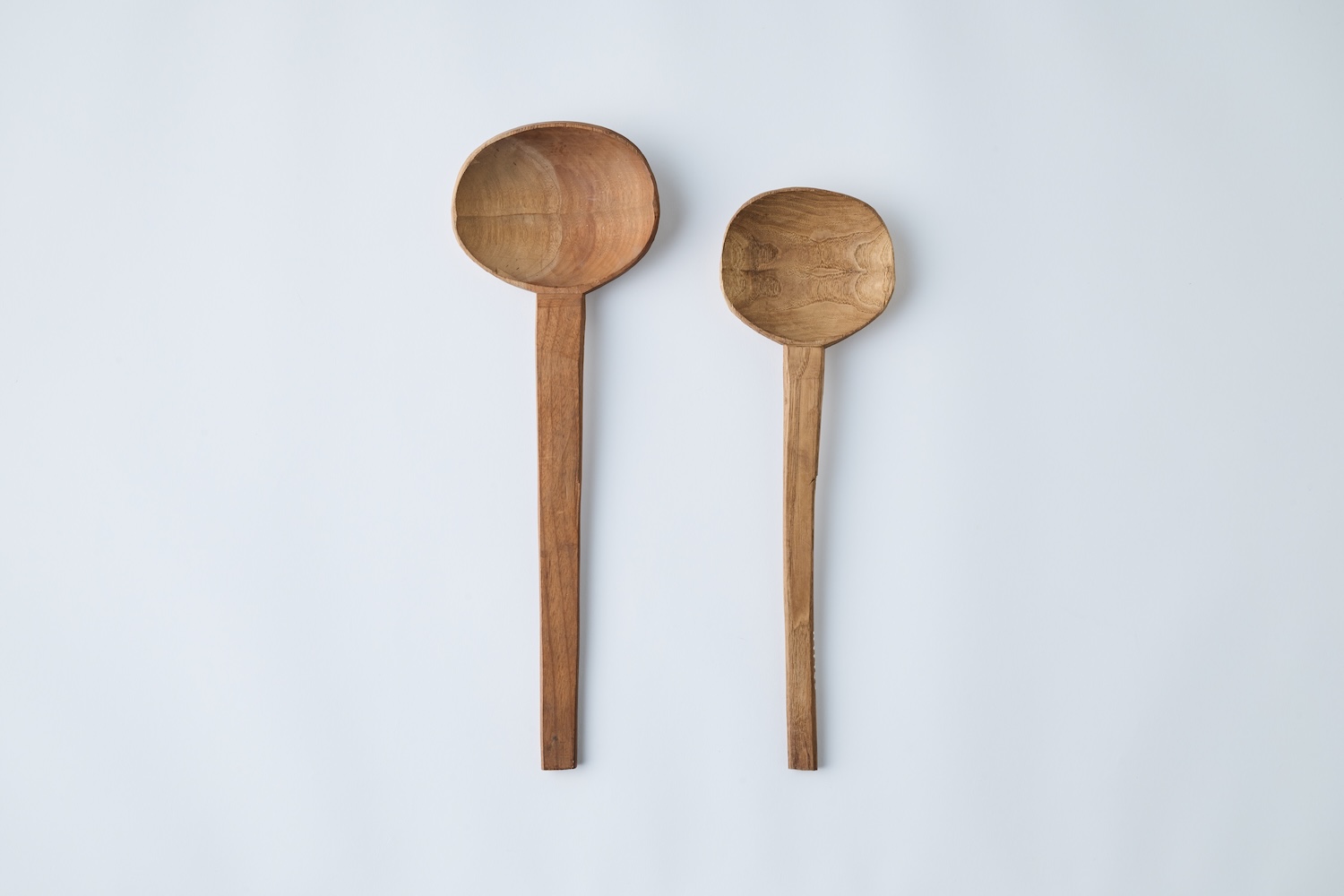
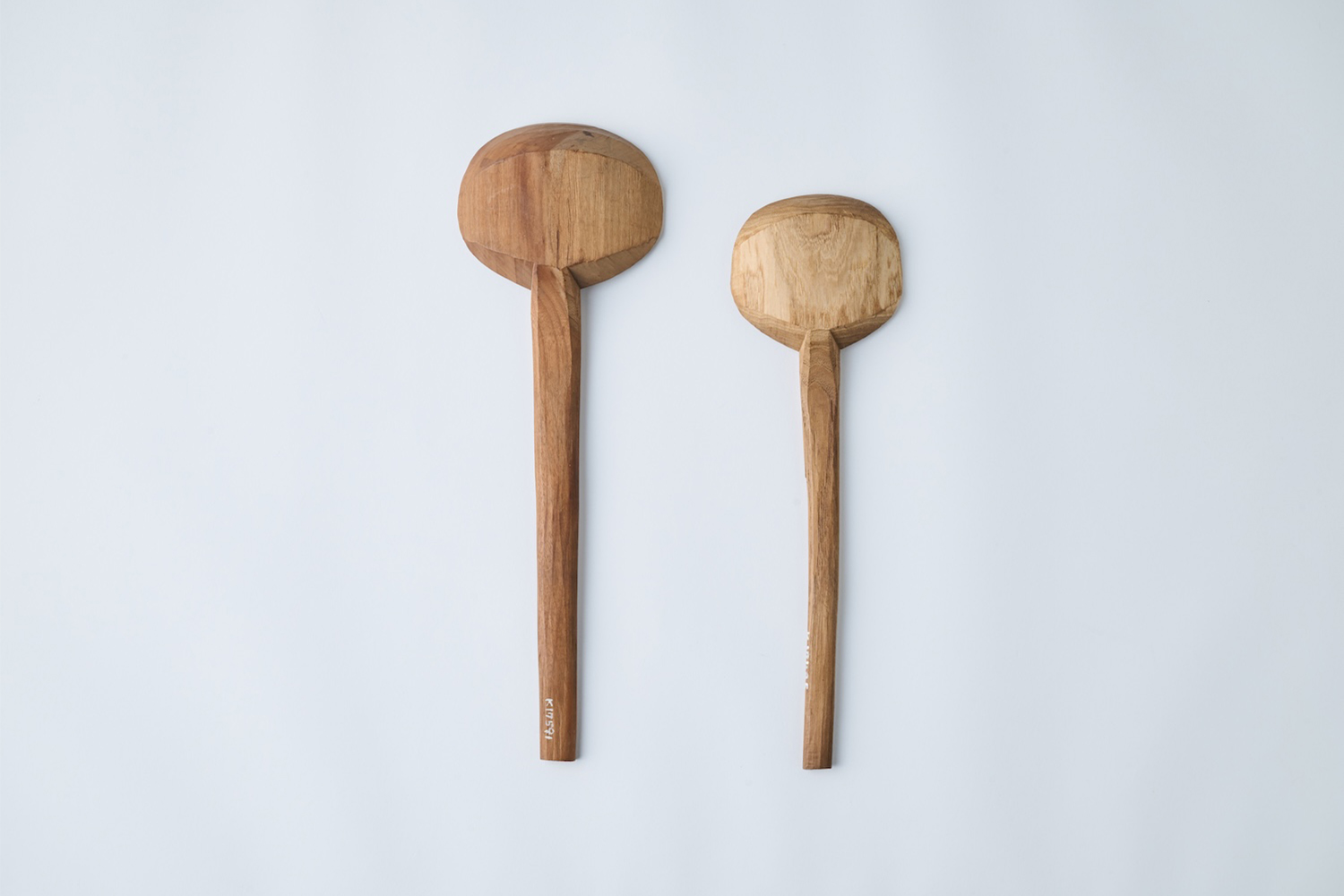
Hira Meshi-shakushi
A completed shakushi (rice paddle). By observing the grain pattern and outer shape, it is possible to see that it was made by cutting a log into flat boards and then carving them. The materials on display are Japanese cypress (hinoki, left) and magnolia (ho, right).
Place Collected:Oto Village, Yoshino District
-
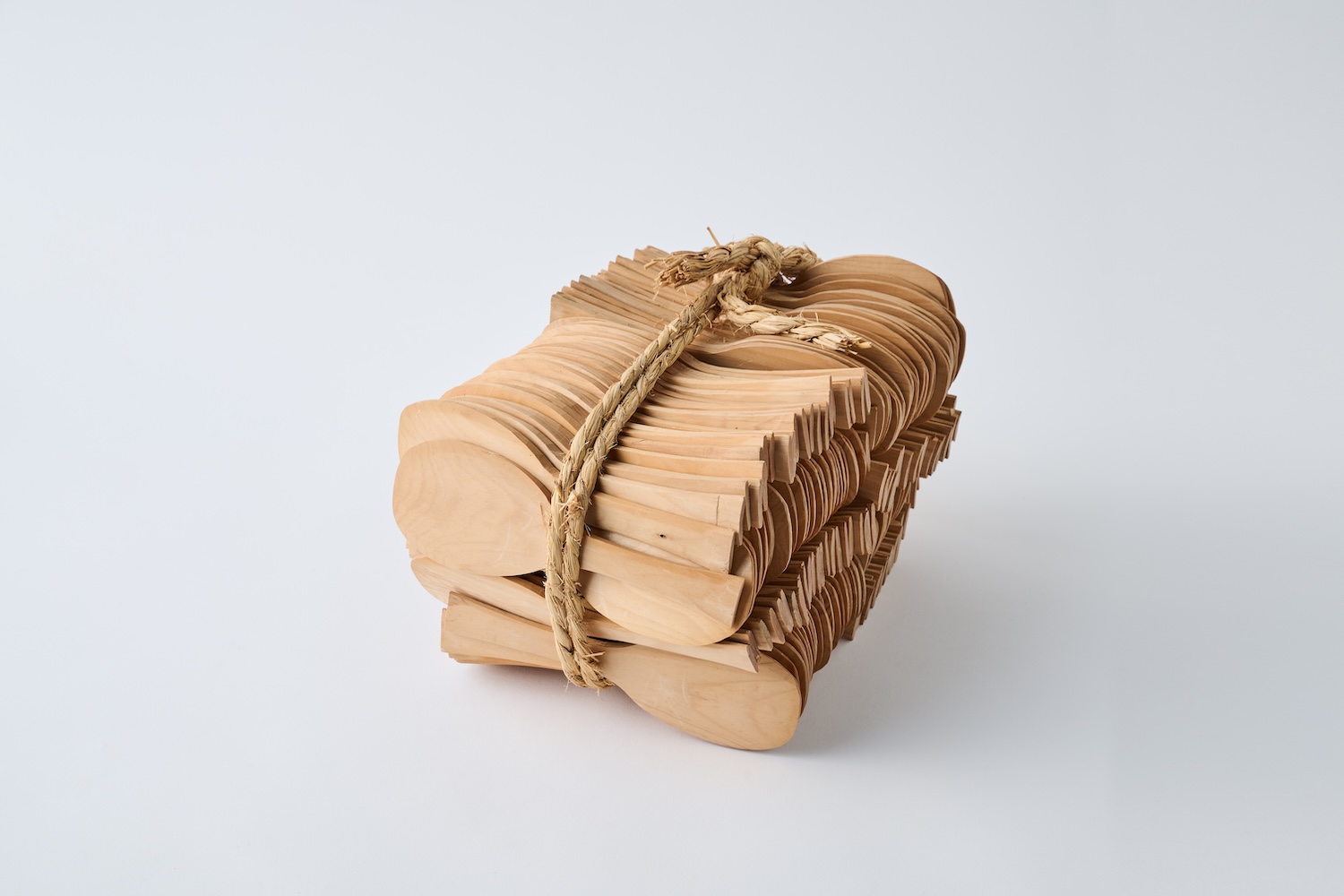
Hirajakushi
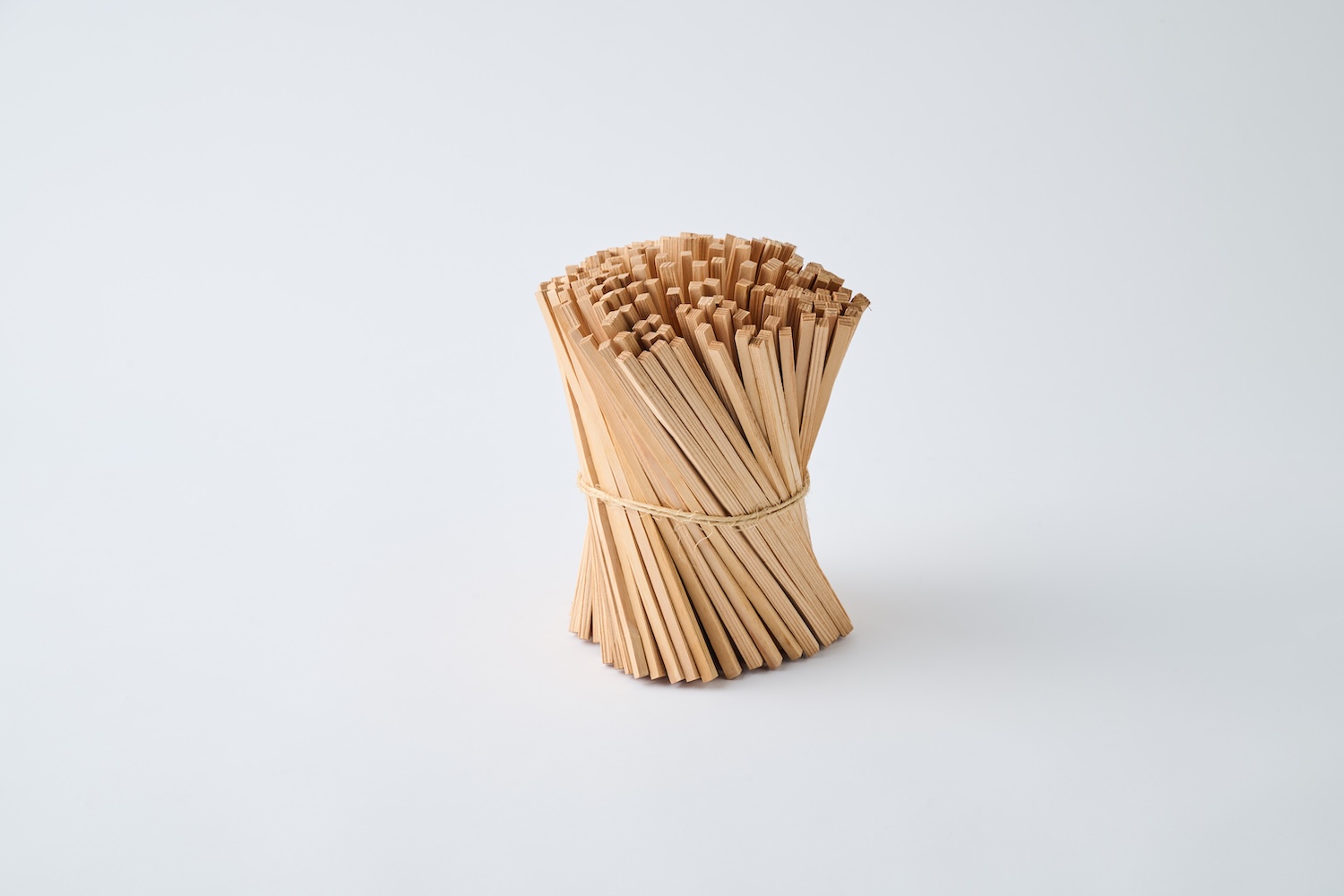
When transporting hira-jakushi to wholesalers, 200 pieces were bundled together as a single unit. One such bundle was called a han-taba (half bundle), and two of these bundles made up one taba (full bundle).
Place Collected:Shinjo Town, Kitakatsuragi District
-
Tsubojakushi
A type of shakushi mainly used for scooping soups or porridge. To increase its strength, the scooping surface features a straight, ridge-like line running across it.
Place Collected:Kurotaki Village, Yoshino District
-
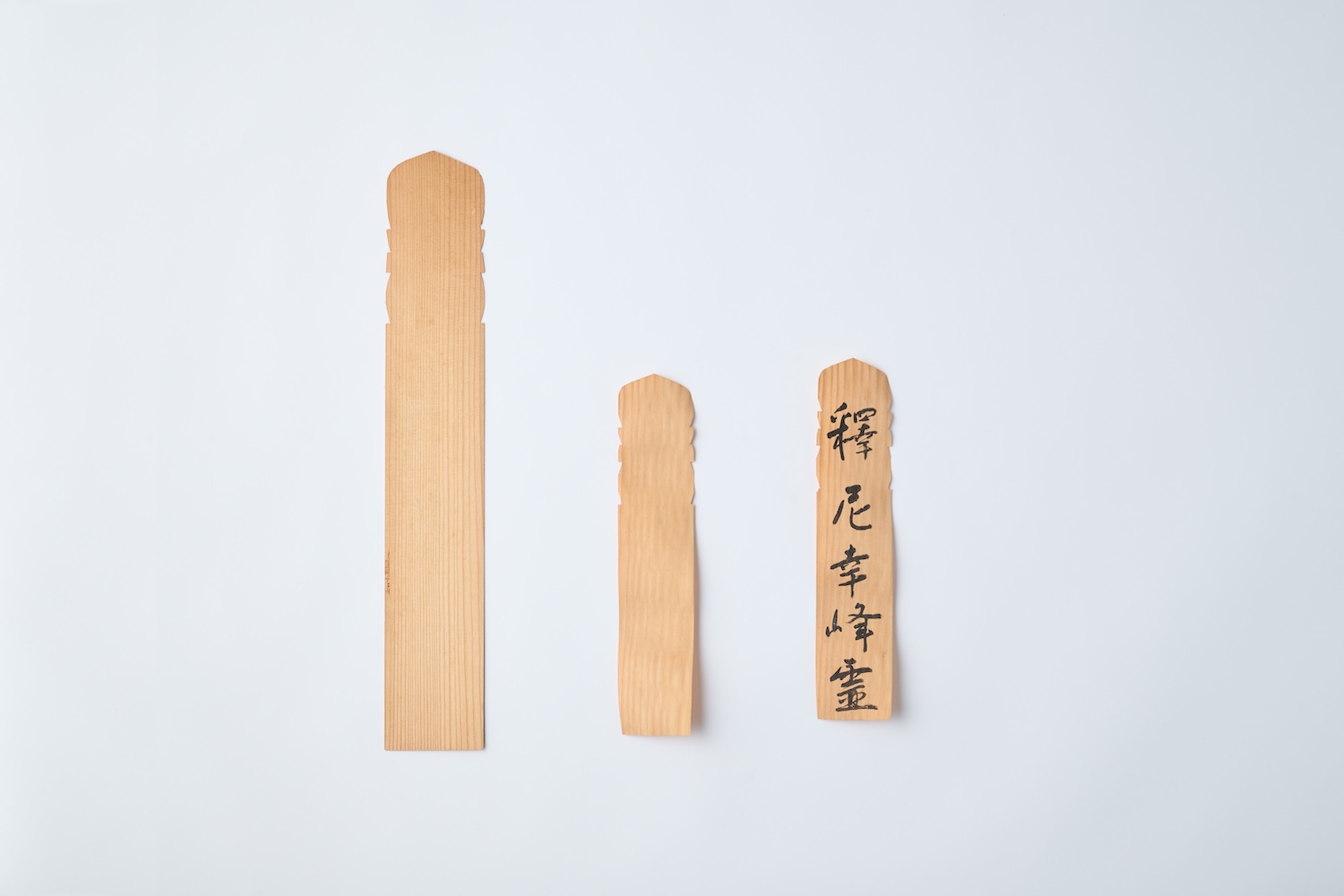
Kyogi
Thin wooden boards used in Bon festival rituals and similar occasions to commemorate the deceased by writing their posthumous Buddhist names on wood shaped like a five-ring pagoda (gorinto). The wood is cut thin, held between kataita, and then shaved and shaped to refine its outline.
Place Collected:Nosegawa Village, Yoshino District
-
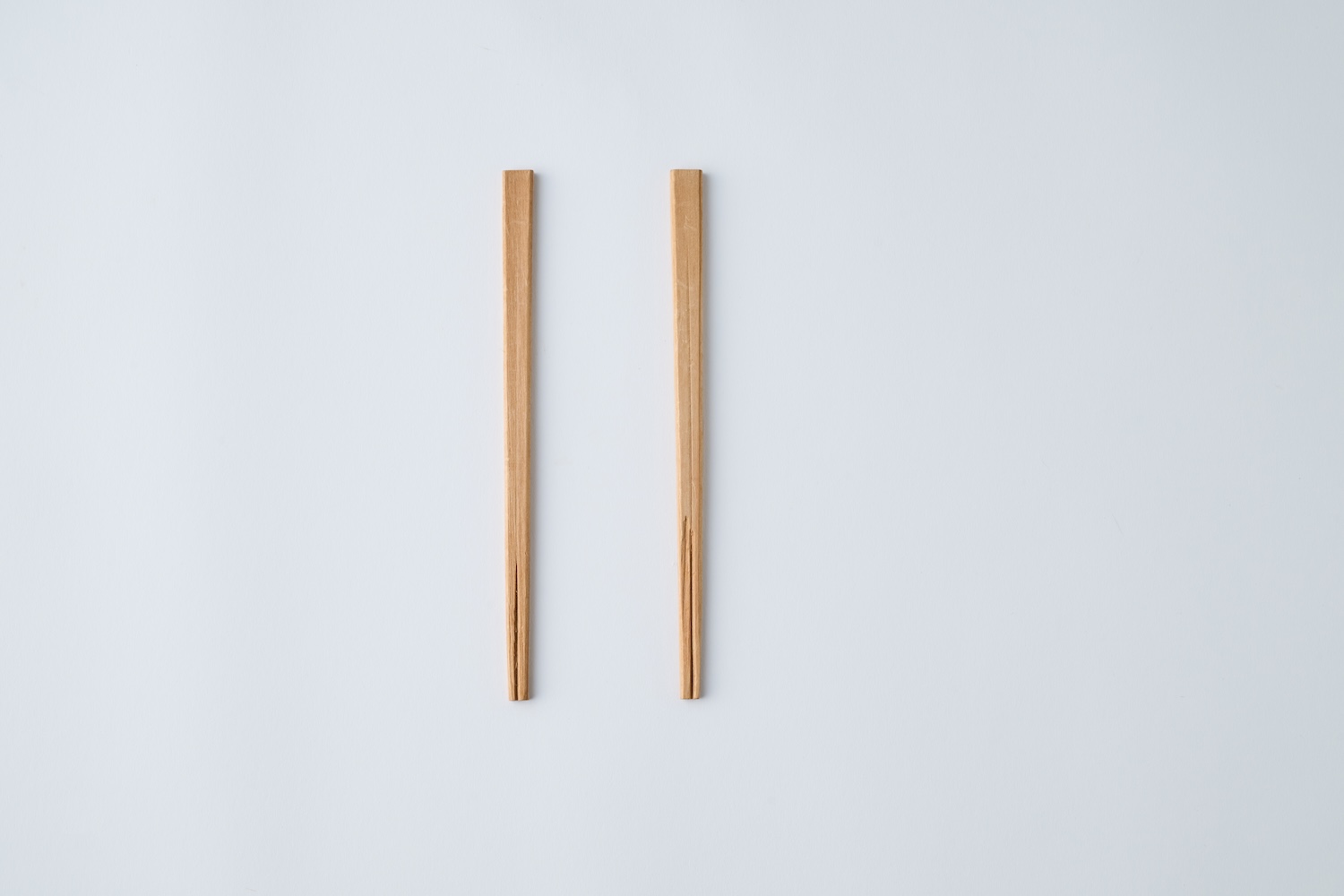
Gokudai-koban
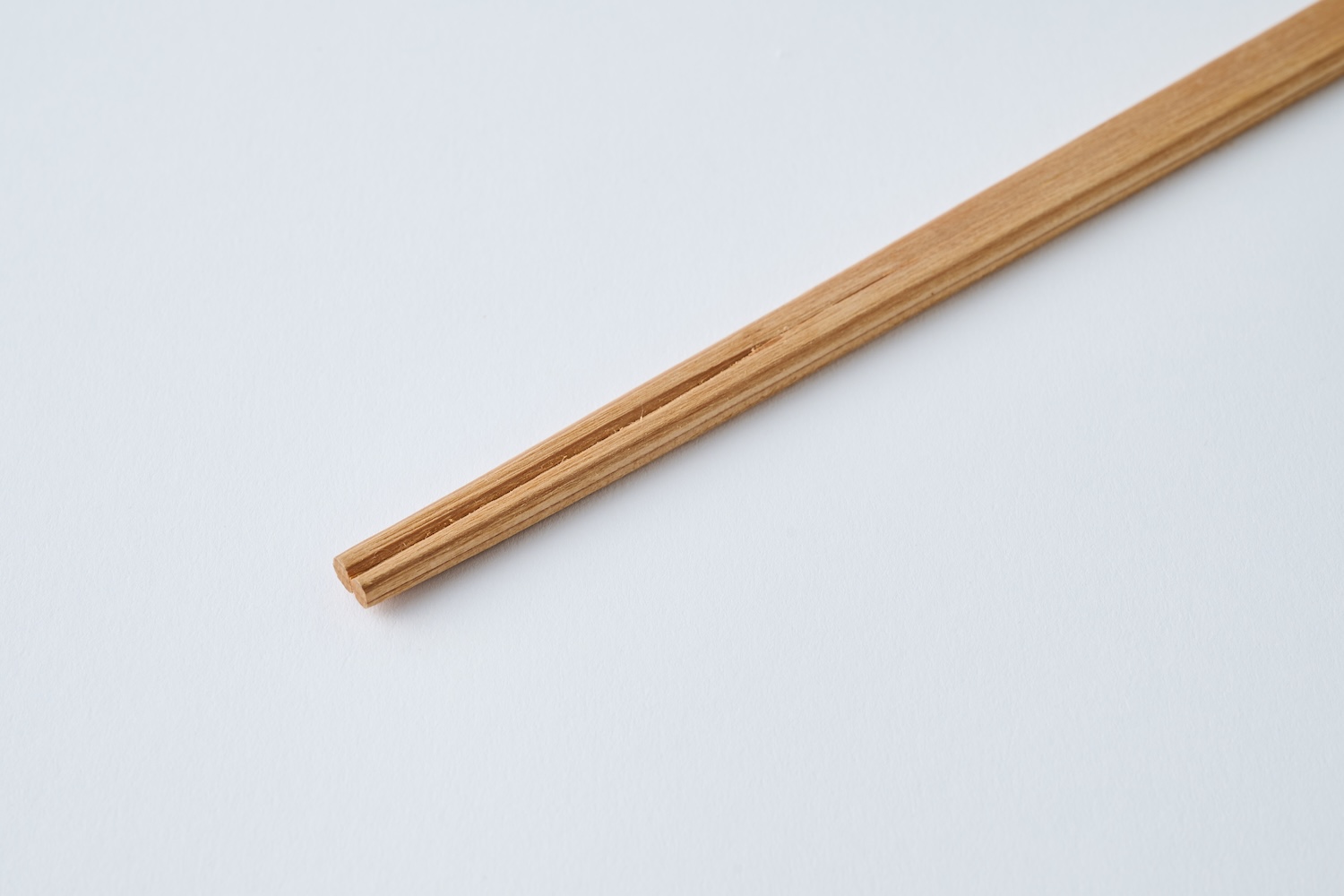
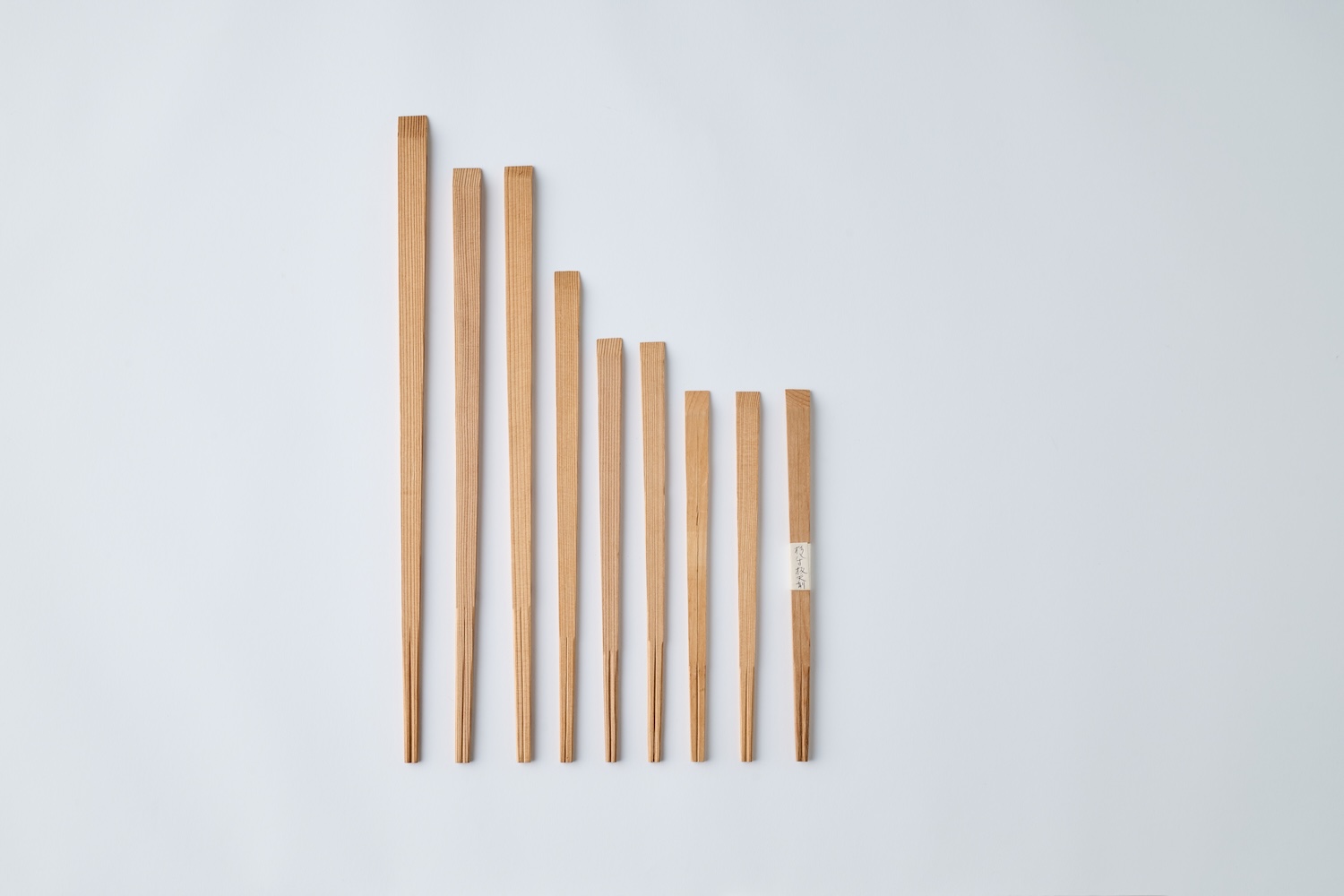
Finished disposable chopsticks sold as products. These are standard chopsticks shaped simply by planing, though the tips have been carefully refined, showing traces of extra work and attention.
Place Collected:Shimoichi Town, Yoshino District
-
Matsuba
A sample of disposable chopsticks produced in Shimoichi Town. Because their shape resembles pine needles, disposable chopsticks were also called matsuba.
Place Collected:Shimoichi Town, Yoshino District
-
Tensoge
Finished disposable chopsticks with the edges left square while only the tips are rounded. They are made from Yoshino cedar or Yoshino cypress.
Place Collected:Shimoichi Town, Yoshino District